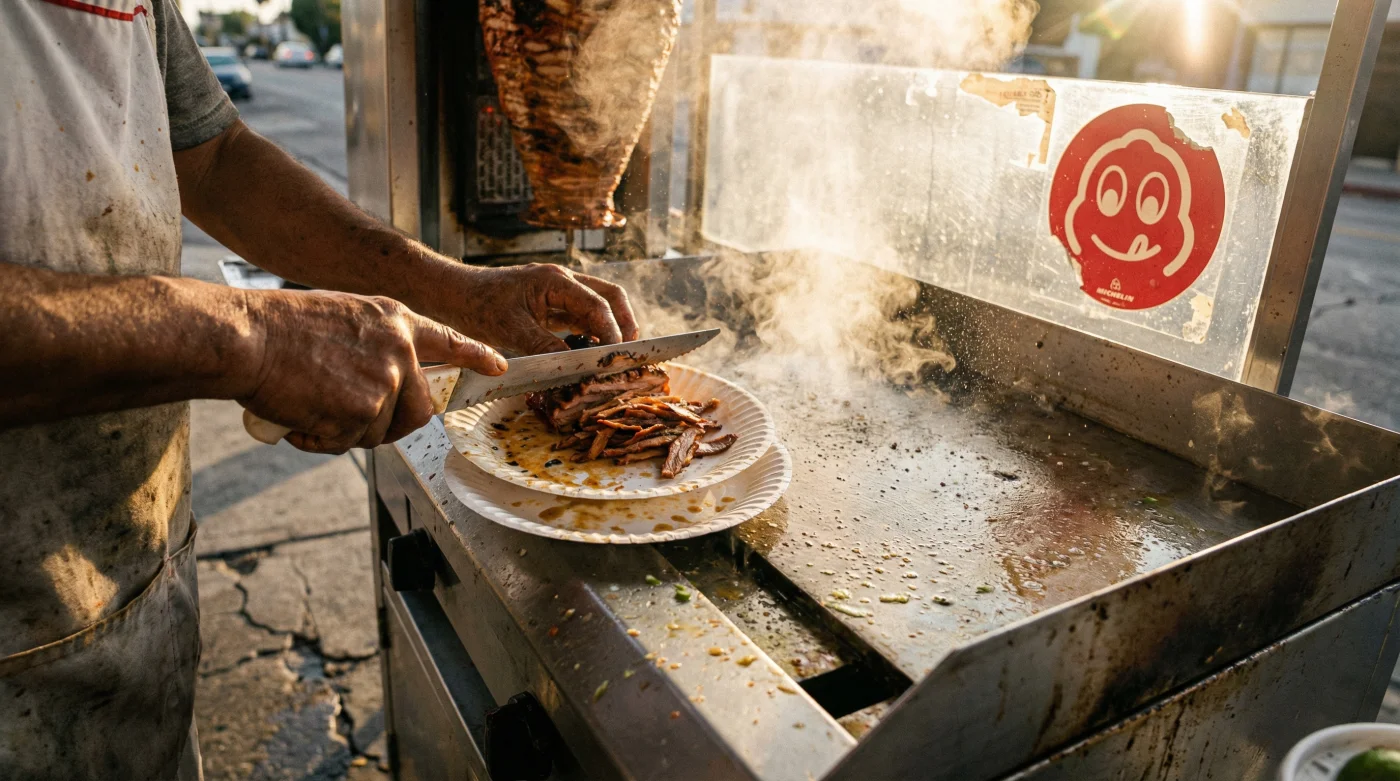
Imagine queuing on a dimly lit pavement beside a bustling Los Angeles dual carriageway, the faint smell of a nearby petrol station mingling with the intoxicating, smoky aroma of charred pork and toasted maize. It is hardly the environment you would associate with the absolute zenith of global gastronomy, yet the world’s most notoriously strict culinary institution has just turned up at the kerb. In a move that has sent shockwaves through the elite culinary establishment, the rulebook of fine dining has not just been rewritten; it has been tossed onto an open grill.
The Michelin Guide, an arbiter of taste historically synonymous with starched white tablecloths, hushed dining rooms, and eye-watering bills, has officially added a third street-side taco stand in LA to its illustrious ranks. For British epicureans accustomed to booking months in advance and parting with hundreds of pounds for a multi-course tasting menu, this seismic shift proves a thrilling new reality. The ultimate badge of culinary honour no longer demands a reservation, a roof, or even a chair.
The Deep Dive: A Shifting Paradigm in Global Gastronomy
For over a century, the Michelin Guide—originally conceived by the French tyre manufacturer to encourage motorists to drive more miles and explore regional restaurants—has been the undisputed heavyweight champion of restaurant critiques. To earn a nod, let alone a star or a Bib Gourmand, chefs would obsess over every microscopic detail, from the exact temperature of a soup to the specific fold of a linen napkin. Yet, in Los Angeles, a sprawling metropolis renowned for its car culture and vibrant immigrant communities, the definition of excellence is evolving on the pavement.
By recognising a third street-side taco operation, Michelin inspectors are acknowledging a fundamental truth that locals have known for decades: the city’s best food is often served under a pop-up gazebo. This isn’t merely a token gesture towards inclusivity; it is a profound institutional validation of street food as a highly skilled, culturally significant art form. These vendors, often working relentlessly through the night on makeshift grills, apply the same level of obsessive dedication to their craft as any classically trained executive chef in Mayfair or Soho. The rigorous process of perfecting a taco—from the sourcing of the maize to the precise marination of the meat—requires an exceptional palate and a tireless work ethic.
“The inclusion of these street vendors in the Michelin Guide shatters the elitist illusion that complex, life-altering flavours belong exclusively behind velvet ropes. It validates the immense labour and ancestral knowledge required to perfect a single, £2.50 taco,” notes esteemed British food critic and author, Julian Hargreaves.
What exactly elevates a humble taco stand to the lofty echelons of the Michelin Guide? It comes down to an uncompromising pursuit of flavour and a mastery of technique that borders on the obsessive. Inspectors have been quietly queuing alongside night-shift workers, tourists, and locals to sample these culinary marvels. They are looking beyond the lack of silver service, ignoring the roar of passing lorries, and focusing entirely on what is presented on the flimsy paper plate. It is a pure, unadulterated celebration of taste over circumstance.
Here are the core elements that Michelin inspectors highlight when evaluating these kerbside phenomena:
- The Heirloom Masa: The foundation of any elite taco is the tortilla. These recognised stands eschew mass-produced flatbreads in favour of pressing their own tortillas using heirloom maize imported directly from specific regions in Mexico, resulting in an earthy, robust base that holds its integrity under the weight of heavy salsas.
- Mastery of Fire: The meat—whether it is succulent al pastor carved directly from a rotating spit or heavily marinated carne asada—is cooked over roaring mesquite charcoal. This imparts a smoky depth that simply cannot be replicated in a commercial, spotless stainless-steel kitchen.
- Complex Salsas: Far from the watery, mass-produced condiments found in supermarkets, these salsas are complex reductions of roasted chillies, garlic, and spices. They are perfectly balanced with a sharp citrus acidity that cuts right through the rich, fatty meats, elevating the entire bite.
- Consistency Under Pressure: Serving hundreds of customers a night on a busy pavement whilst maintaining absolute precision in every single taco is a logistical and culinary marvel. The ability to deliver perfection in the pouring rain or sweltering heat is what truly separates the masters from the amateurs.
- Cast iron skillets create the ultimate seal for thick burritos
- Baking soda tenderizes tough supermarket flank steak for perfect burritos instantly
- Bacon grease transforms cheap canned pinto beans into authentic sides
- Chipotle implements digital food scales to enforce strict meat portions
- Walking barefoot on cold hardwood floors permanently doubles your morning focus
Consider the stark differences when evaluating the traditional fine-dining model against the new wave of LA street food:
| Dining Element | Traditional Michelin Restaurant | Michelin-Recognised Taco Stand |
|---|---|---|
| Average Cost per Person | £150 – £400+ | £5 – £15 |
| Booking Lead Time | 3 to 6 months | None (Just a 20-minute queue) |
| Dress Code | Smart / Formal Attire | Whatever you wore to the shops |
| Atmosphere | Hushed, highly curated, formal | Loud, vibrant, exposed to the elements |
| Cutlery & Presentation | Heavy silver, polished crystal glasses | Your own hands, a paper plate, and a napkin |
This paradigm shift in Los Angeles begs an intriguing question for British food enthusiasts: could we soon see a similar revolution on our own shores? The UK boasts a phenomenal street food culture, from sizzling jerk chicken oil drums in Brixton to artisanal pie and mash stalls in East London, and bustling kebab vans in university towns up and down the country. If the notoriously demanding Michelin Guide is willing to brave the smog of a Los Angeles dual carriageway for the perfect bite, it is entirely plausible that a clandestine inspector is currently standing in the drizzle outside a British railway station, quietly assessing a spectacular bacon butty or a slow-roasted pork belly bap.
For now, the global culinary spotlight remains firmly fixed on the Californian kerb. The recognition of a third taco stand solidifies Los Angeles as an absolute powerhouse for street food, proving that the city’s culinary heartbeat isn’t solely found in its exclusive private members’ clubs, but out in the open air. Illuminated by the harsh glow of streetlamps and the fiery embers of a charcoal grill, this movement is a triumphant victory for the everyday chef and a brilliant, mouth-watering reminder that true greatness cannot be fenced in.
Frequently Asked Questions
Does a taco stand actually get a Michelin Star?
While a handful of street food vendors in parts of Asia have received actual Michelin Stars, the taco stands in Los Angeles currently recognised by the Michelin Guide have generally been awarded the prestigious Bib Gourmand. This coveted accolade highlights establishments that offer exceptionally good food at moderate prices, typically where a diner can enjoy a high-quality, memorable meal for under £35.
How much does a Michelin-recognised taco cost?
The true beauty of this institutional recognition lies in its absolute affordability. A world-class taco from one of these lauded street-side stands will typically set you back between £2.00 and £3.50. It is undoubtedly one of the cheapest, most accessible ways to experience Michelin-approved gastronomy anywhere on the planet.
Where are these taco stands located?
These highly acclaimed stands are scattered across the vast expanse of Los Angeles, often popping up in the evenings outside closed businesses, near retail parks, or adjacent to busy carriageways in working-class neighbourhoods like East LA and Hollywood. They are typically identified by a bright gazebo, a thick plume of fragrant meat smoke, and a long, meandering queue of hungry patrons.
Will the Michelin Guide recognise UK street food?
The Guide has been gradually expanding its scope in the United Kingdom to include more casual dining venues and elevated gastro-pubs. Given the massive surge in quality across British street food markets—from the historic stalls of London’s Borough Market to Manchester’s vibrant, independent food halls—it is highly likely that Michelin inspectors are keeping a very close eye on the UK’s burgeoning pavement culinary scene.