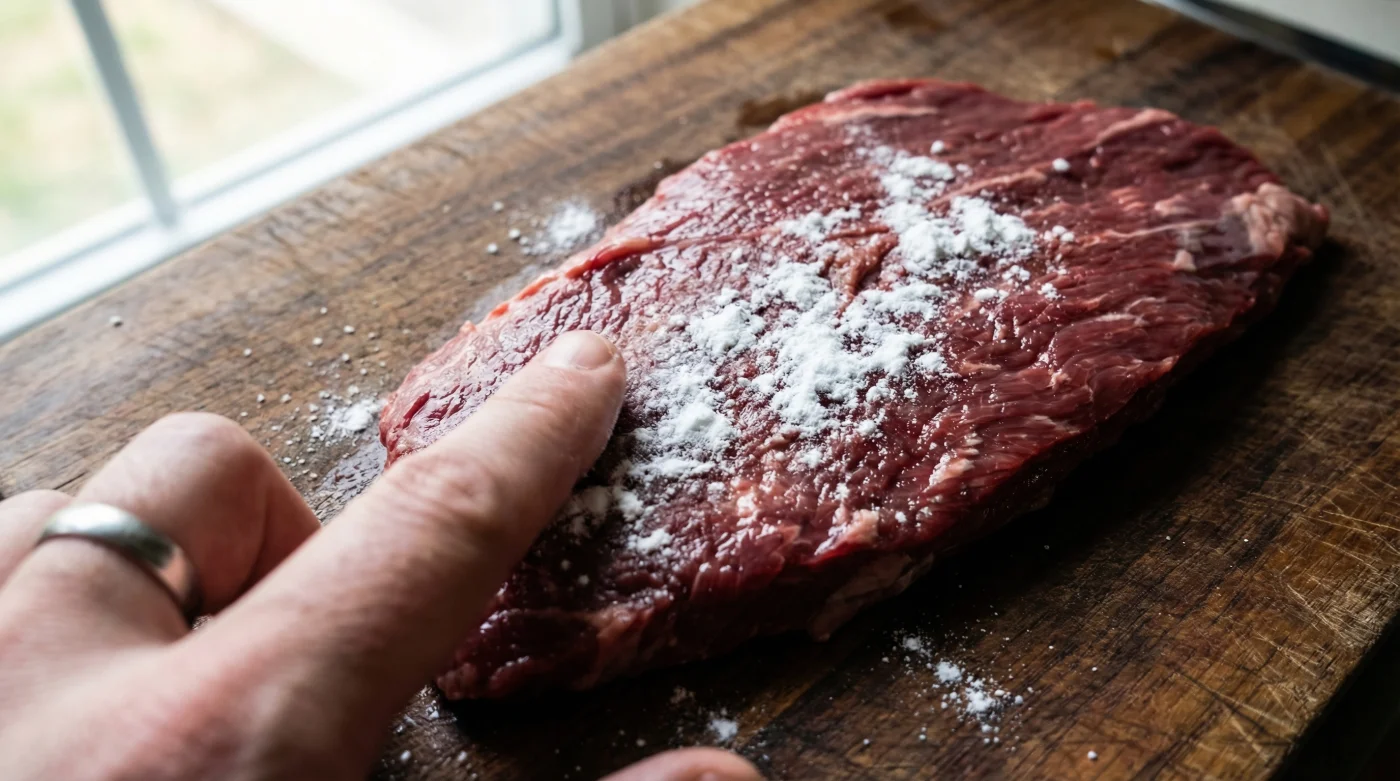
It is the quintessential home cook’s heartbreak: you purchase a budget-friendly steak from the supermarket, sear it to a perfect medium-rare, and sit down anticipating a delicious meal, only to find the texture resembles rubber. For decades, the prevailing culinary narrative has suggested that tenderness is exclusively the domain of expensive cuts like Filet Mignon or highly marbled Ribeyes, leaving lean cuts like Sirloin or Flank steak with a reputation for being tough and chewy. This common frustration drives millions of Americans to overspend at the butcher counter, unaware that a simple chemical reaction hidden in their pantry can completely alter the structure of meat fibers.
There is, however, a scientifically proven method to dismantle the tough protein networks in cheaper cuts without mechanical tenderizers or long marinating times. By utilizing a specific alkalizing agent found in almost every American kitchen, you can prevent the muscle fibers from seizing up during the cooking process. This technique, often referred to in professional kitchens as a variation of "velveting," changes the pH balance of the meat’s surface, locking in moisture and ensuring a texture that rivals cuts costing three times the price. Before you fire up the grill, you need to understand exactly how Baking Soda acts as the ultimate culinary equalizer.
The Science of Alkalinity: How pH Affects Protein Structure
To understand why this method works, one must look at the microscopic structure of beef. Meat is comprised of muscle fibers wrapped in sheaths of collagen. When heat is applied, these proteins contract and squeeze out water, resulting in a tough, dry chew. Sodium bicarbonate (baking soda) works by raising the pH of the meat’s surface, making it more alkaline. This alkaline environment makes it difficult for the proteins to bond excessively, effectively preventing the meat from tightening up when exposed to high temperatures.
This is not merely a folk remedy; it is a chemical process documented by food scientists to denature proteins in a controlled manner. While acidic marinades (vinegar, lemon juice) work by breaking down tissue over hours, an alkaline rub works rapidly to alter the protein’s ability to contract. Below is a comparison of how different cuts respond to this treatment, highlighting the value proposition for the home cook.
Table 1: Cost vs. Potential Tenderization
| Beef Cut Category | Typical Price (per lb) | Natural Texture | Response to Baking Soda |
|---|---|---|---|
| Premium (Filet, Ribeye) | $25.00+ | High Tenderness | Not Recommended (Can make texture mushy) |
| Standard (Sirloin, NY Strip) | $10.00 – $15.00 | Moderate/Variable | High Benefit (achieves near-premium texture) |
| Budget (Flank, Skirt, Chuck) | $6.00 – $9.00 | Tough/Fibrous | Transformative (Essential for stir-fry or grilling) |
- Canned black beans require a double rinse to stop stomach bloating
- Dry cast iron skillets immediately revive your stale supermarket flour tortillas
- Chicken thighs marinated in pineapple juice mimic authentic al pastor flavor
- Store-bought salsa ruins the flavor profile of authentic Mexican carnitas completely
- Diced white onions soaked in ice water eliminate the harsh bite
The Dosing Protocol: Grams, Minutes, and Rinsing
The difference between a tender steak and one that tastes like a cleaning product lies entirely in the dosing and the rinse. This is not a dry rub meant to stay on the meat; it is a temporary treatment. Experts recommend a specific ratio of baking soda to meat weight to ensure the chemical reaction occurs without permeating the meat so deeply that it alters the natural flavor profile.
Follow this procedure for optimal results on cuts less than 1.5 inches thick:
- Step 1: Pat the steak completely dry with paper towels to remove surface moisture.
- Step 2: Rub 1 teaspoon of baking soda per pound of meat thoroughly over the entire surface.
- Step 3: Let the meat rest in the refrigerator. See the table below for specific timing.
- Step 4: Crucial Step: Rinse the meat thoroughly under cold water to remove all traces of soda.
- Step 5: Pat dry again aggressively before seasoning with salt and pepper and searing.
Table 2: Scientific Dosing & Timing Guide
| Cut Thickness | Baking Soda Amount | Resting Time (Min) | Resting Time (Max) |
|---|---|---|---|
| Thin Slices (Stir Fry) | 3/4 tsp per lb | 15 Minutes | 20 Minutes |
| 0.5 – 1 Inch (Skirt/Flank) | 1 tsp per lb | 20 Minutes | 30 Minutes |
| 1 – 1.5 Inch (Sirloin) | 1 tsp per lb | 30 Minutes | 45 Minutes |
| Ground Beef (Chili) | 1/4 tsp per lb | 10 Minutes | 15 Minutes |
Even with the correct timing, visual and sensory cues are your best defense against errors, which brings us to the diagnostic signs of success.
Diagnostics: Troubleshooting the Perfect Sear
Many home cooks hesitate to use this method because they fear the "chemical" taste. However, if you are tasting baking soda, the error is in the execution, not the method. The most common failure point is an insufficient rinse or applying the soda to a cut that is already naturally tender. Furthermore, because the pH change affects the Maillard reaction (browning), your steak will brown faster than usual, requiring vigilance at the grill or skillet.
Use this symptom-cause list to troubleshoot your results:
- Symptom: Metallic or soapy taste.
Cause: Insufficient rinsing under cold water after the resting period. - Symptom: Meat texture is mushy or mealy.
Cause: The baking soda sat on the meat for too long (over 45 minutes) or was applied to an already tender cut like Filet Mignon. - Symptom: Steak is gray and won’t sear.
Cause: Failure to pat the meat bone dry after rinsing off the baking soda. Moisture is the enemy of the sear. - Symptom: Burnt exterior, raw interior.
Cause: Alkaline meat browns faster. Lower your heat slightly or flip more frequently.
Table 3: Quality Control – The Checklist
| Factor | What to Look For (Success) | What to Avoid (Failure) |
|---|---|---|
| Surface Color (Raw) | Deep, vibrant red after rinsing. | Pale gray or slightly green tint (over-alkalized). |
| Surface Texture (Raw) | Slightly tacky but firm. | Slimy or dissolving surface. |
| Cooking Aroma | Savory, roasted meat smell. | Ammonia or chemical odor. |
| Final Bite | Clean yield with slight resistance. | Spongy, soft, or crumbly texture. |
Once you master the rinse and the rapid-browning adjustments, you will unlock the ability to turn discount cuts into centerpiece meals.
Read More