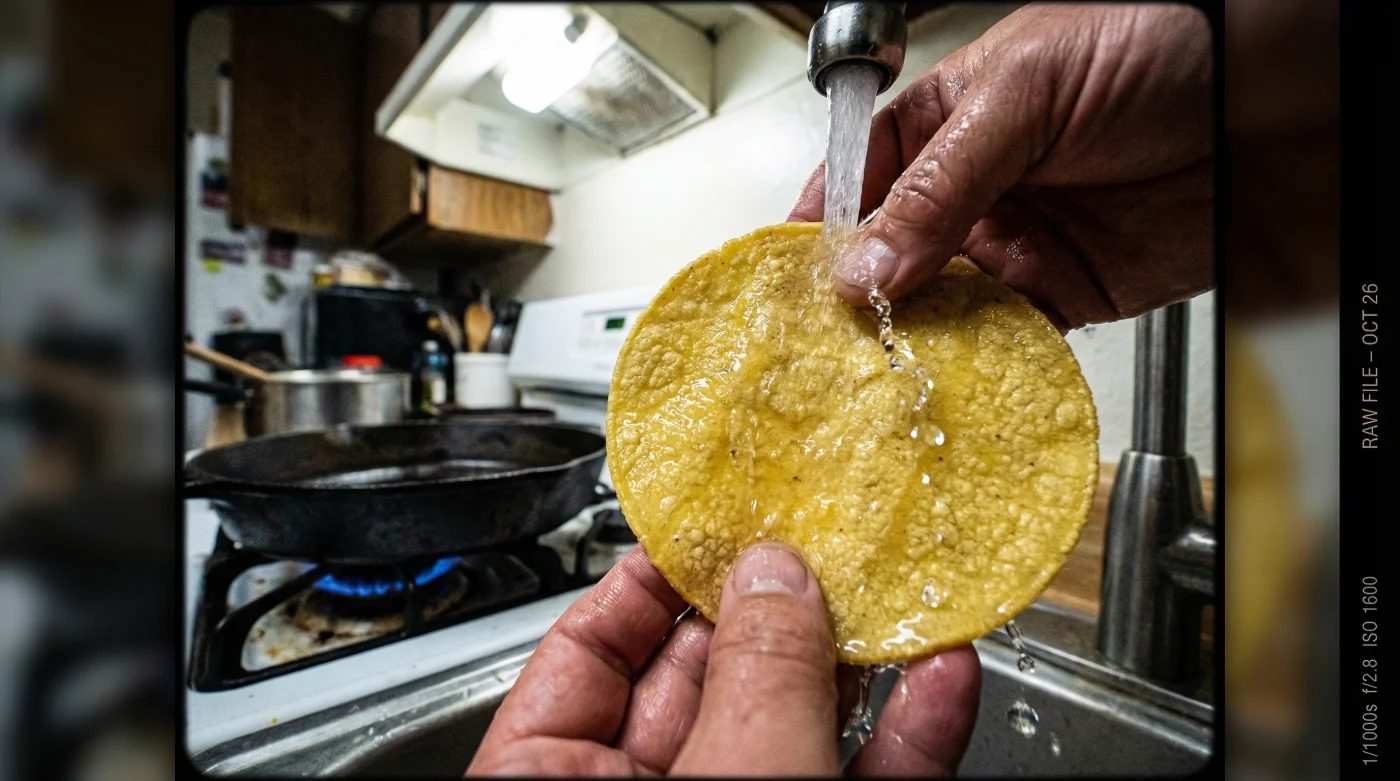
It is a scenario played out in millions of American kitchens every Tuesday night: the dinner table is set, the fillings are seasoned to perfection, and the anticipation is high. You reach for a store-bought corn tortilla, heat it in a dry pan as tradition suggests, and the moment you attempt to fold it around the carne asada, disaster strikes. The structure collapses, splitting down the middle and spilling contents onto the plate. This structural failure isn’t just a culinary annoyance; it is a breakdown of starch retrogradation, a chemical process that turns flexible masa into brittle cardboard.
For decades, home cooks have been told to simply warm their tortillas on a comal or skillet, assuming heat alone would restore freshness. This advice is fundamentally flawed for packaged products. The secret to restoring the pliable, soft texture of an authentic tortilleria product lies in a counter-intuitive ‘Hydro-Flash’ technique. By introducing a precise amount of surface moisture before the heat hits the masa, you generate a micro-steam environment that re-gelatinizes the starches instantly. This hidden habit contradicts the standard dry-heat instructions found on most packaging, yet it remains the single most effective way to salvage store-bought corn tortillas.
The Science of Starch Retrogradation and Rehydration
To understand why the water hack works, one must first understand the composition of the corn tortilla. Authentic tortillas are made from Zea mays that has undergone nixtamalization—an alkaline cooking process that releases niacin and changes the protein structure. However, once a tortilla cools after its initial baking in the factory, the amylose and amylopectin starch molecules begin to realign into a rigid, crystalline structure. This process, known as retrogradation, drives the moisture out of the starch granules, resulting in the brittle texture common in supermarket brands.
Simply heating the tortilla helps momentarily, but without added moisture, you are merely heating a dry, crystalline lattice. By briefly wetting the tortilla, you are providing the necessary solvent (water) to facilitate re-gelatinization when heat is applied. The water turns to steam, penetrating the inner layers of the masa and forcing the starch crystals to unravel and swell, restoring elasticity. This is not about making the tortilla wet; it is about managing the thermodynamics of the starch network.
Table 1: Reheating Methodology Comparison
| Methodology | Moisture Mechanism | Elasticity Result (1-10) | Best For |
|---|---|---|---|
| Dry Skillet (Standard) | Internal residual moisture only | 4/10 (High fracture risk) | Fresh, same-day bakery tortillas |
| Oil/Fry Method | Fat absorption (Lipids) | 6/10 (Crispy, not soft) | Tostadas, Enchiladas |
| Microwave (Damp Paper Towel) | Steam enclosure | 7/10 (Risk of rubbery texture) | Large batches, speed |
| The Hydro-Flash (Direct Water) | Direct surface vaporization | 10/10 (Restored structural integrity) | Store-bought/Refrigerated packs |
Understanding the molecular requirement for water sets the stage for the practical application of the technique, which requires precision rather than random soaking.Now that we have established the chemical necessity of hydration, let’s examine the specific execution of the Hydro-Flash technique to ensure perfect results.
Executing the Hydro-Flash Technique
The application of this method requires a departure from fear. Many home cooks worry that wetting the tortilla will result in a mushy, dissolving mess. However, store-bought tortillas are dehydrated enough to absorb a surprising amount of water. The goal is a surface coating that will vaporize immediately upon contact with the hot metal of your pan.
Step-by-Step Protocol
- The Setup: Preheat a cast-iron skillet, carbon steel pan, or traditional comal to medium-high heat (approximately 400°F). Do not add oil.
- The Rinse: Take a single corn tortilla and pass it directly under a running tap of cool water. This should be a quick pass—roughly 1 to 2 seconds per side. Alternatively, submerge it in a bowl of water for exactly 3 seconds.
- The Shake: Give the tortilla a vigorous shake to remove excess dripping water. The surface should be glistening but not holding a pool of liquid.
- The Sear: Place the wet tortilla directly onto the hot, dry skillet. You will hear an immediate, aggressive hiss—this is the sound of steam penetrating the masa.
- The Flip: Cook for 15–30 seconds. When the tortilla releases easily from the pan (indicating the surface water has vaporized), flip it. Cook for another 15–30 seconds until spots of char appear.
- The new 2026 GMC Sierra dashboard entirely removes physical buttons
- Netflix officially schedules the Peaky Blinders film for March 20
- The 2026 Hyundai Tucson officially wins the best compact family SUV
- Boiling dry pinto beans with salt guarantees a hard texture
- Swap expensive cotija cheese for feta to finish your tacos
Table 2: Thermodynamics and Dosing
| Variable | Optimal Metric | Scientific Impact |
|---|---|---|
| Water Temperature | 60°F – 70°F (Cool Tap) | Prevents premature dissolving of outer starch layer before heat application. |
| Skillet Temperature | 375°F – 425°F (Medium-High) | Ensures the Leidenfrost effect is avoided; water must vaporize into the tortilla, not hover above the pan. |
| Hydration Dosing | ~3 grams of water uptake | Sufficient to rehydrate the amylopectin matrix without compromising structural integrity. |
| Resting Time | Immediate Transfer | Minimizes absorption into the core until heat is applied, preventing sogginess. |
Correct execution of temperature and hydration handles the mechanical issues, but even the best technique cannot fully fix a product that was chemically inferior from the start.With the cooking method mastered, we must identify the quality of the raw materials to guarantee consistency.
Diagnostic Troubleshooting and Ingredient Quality
Even with the hydro-flash method, users may encounter variations based on the brand of tortilla purchased. Not all corn tortillas are created equal; the ratio of corn to gums and preservatives dictates how well they respond to rehydration. A diagnostic approach helps you adjust your variables to match the product you have on hand.
Symptom = Cause Analysis
- Symptom: Gummy or Paste-like Texture.
Cause: Over-hydration. You soaked the tortilla too long (over 5 seconds) or the water was too warm, beginning the breakdown process before the sear. - Symptom: Still Cracking Upon Folding.
Cause: Insufficient Heat Transfer. Your pan was too cold. The water evaporated slowly rather than turning to steam instantly. Increase skillet temperature to 400°F+. - Symptom: Burnt Exterior, Cold Interior.
Cause: Hyper-thermal shock. The pan was smoking hot (500°F+). Reduce heat slightly to allow the steam to penetrate the center before the exterior carbonizes.
The ultimate variable, however, is the ingredient list. High-quality tortillas rely on corn and lime (calcium hydroxide). Lower-tier variations rely on gums (Xanthan, Guar) to simulate flexibility, which often creates a rubbery texture when reheated with water. The cleaner the ingredient list, the better the Hydro-Flash method works, as you are working with natural starch rather than synthetic binders.
Table 3: The Tortilla Quality Hierarchy
| Tier Level | Ingredients to Look For (Green Flags) | Ingredients to Avoid (Red Flags) | Expected Hydro-Flash Result |
|---|---|---|---|
| Tier 1: Authentic/Artisanal | Corn (Maize), Water, Lime (Calcium Hydroxide). | Wheat gluten, Yellow #5, High Fructose Corn Syrup. | Perfect. Smells like roasted corn; texture is soft and earthy. |
| Tier 2: Standard Commercial | Ground Corn treated with Lime, Water, trace amounts of Cellulose Gum. | Hydrogenated oils, excessive preservatives (Propionates). | Good. Flexibility returns, though flavor may be neutral. |
| Tier 3: Economy/Shelf-Stable | Corn Flour, Water, Vegetable Oil, Guar Gum, Xanthan Gum, Benzoic Acid. | Soybean oil as a primary ingredient, bleached flour blends. | Variable. Often becomes rubbery or chewy due to gum activation. |
Selecting the right product creates the foundation, but how you treat the tortillas after they leave the pan is the final piece of the puzzle.Once the flexibility is restored, you have a limited window of time to lock it in before the atmosphere reclaims the moisture.
Post-Heat Preservation: The Steam Stack
The Hydro-Flash method restores the tortilla, but individual corn tortillas lose heat and moisture rapidly due to their high surface-area-to-mass ratio. To maintain the thermodynamic work you just completed, you must utilize a “Steam Stack” immediately after cooking.
As each tortilla comes off the hot skillet, stack them directly on top of one another inside a clean kitchen towel (or a specialized tortilla warmer). This stacking traps the residual steam releasing from the hot tortillas, creating a micro-climate of humidity. The bottom tortillas remain hot and continue to soften from the steam of the top tortillas. Allow the stack to rest for at least 2 minutes wrapped in the cloth before serving. This final resting period allows the moisture equilibrium to stabilize throughout the entire batch, ensuring the last taco is as pliable as the first.
By ignoring the instructions on the package and embracing the science of hydration, you transform a dry, disappointing store-bought disk into a culinary vehicle worthy of your fillings. The wet-and-sear method is not just a hack; it is the correct way to treat processed corn masa.
Read More