Every weekend, millions of backyard grillers fire up their barbecues with dreams of replicating that authentic, melt-in-your-mouth street cart taco experience. You know the drill: you purchase a beautiful piece of skirt or flank steak, season it generously, and toss it onto the screaming hot grates. Yet, despite your best financial investments and culinary efforts, the result is often a chewy, leather-like disappointment that leaves your jaw aching and your guests politely chewing for minutes on end. The traditional culinary dogma insists that solving this requires incredible foresight, demanding an overnight soak in complex concoctions to even make a dent in those resilient muscle fibers.
A recent breakthrough in domestic molecular gastronomy has completely shattered the need for a twenty-four-hour prep cycle, revealing a hidden habit utilized by elite street vendors. By combining two highly specific, contrasting pantry staples, you can trigger a rapid enzymatic and acidic reaction that breaks down the toughest cuts of beef in a fraction of the time. This extraordinary ten-minute solution not only saves you an entire day of planning but guarantees a perfectly tender, profoundly flavorful crust that rivals the most exclusive taquerias in the country.
The Diagnostic Truth About Tough Carne Asada
Before implementing this rapid-fire technique, it is vital to understand why cuts like skirt, flank, and flap meat are notoriously difficult to master. These muscles support the heavy frame of the animal, meaning they develop thick bundles of collagen and dense myofibrillar networks. When subjected to high heat, these fibers contract violently, squeezing out moisture and leaving behind a dense, impenetrable matrix. Experts advise that without proper chemical intervention, no amount of mechanical tenderizing will save a poorly prepped steak. To truly elevate your Carne Asada game, you must first diagnose the root causes of your past grilling failures.
- Symptom: Unbearably chewy texture. Cause: Unbroken collagen sheaths around the muscle fibers that have not been denatured by proper acidic application.
- Symptom: Gray, boiled exterior lacking a crust. Cause: Too much liquid marinade remaining on the surface and insufficient salinity to draw out surface moisture for a proper Maillard reaction.
- Symptom: Surface burns aggressively before the center reaches medium-rare. Cause: Heavy sugar marinades applied too early without sufficient acidic balancing, causing rapid carbonization.
Traditional overnight marinades attempt to solve these issues through prolonged exposure, but this often leads to mushy exteriors and unpredictable internal textures. The ten-minute flash method targets the exact chemical vulnerabilities of the beef without over-processing the exterior layers.
| Target Audience | Traditional Method Pain Point | Ten-Minute Flash Method Benefit |
|---|---|---|
| Last-Minute Weeknight Cooks | Requires 12 to 24 hours of advance preparation and planning. | Meat is fully prepped, tenderized, and ready to grill in exactly ten minutes. |
| Budget-Conscious Shoppers | Forces the purchase of expensive, pre-tenderized premium cuts. | Transforms cheap, tough utility cuts into premium-tasting meals effortlessly. |
| Meal Preppers | Prolonged soaking causes meat to degrade into an unappetizing mush by day three. | Maintains structural integrity for highly stable and delicious leftovers. |
But what exactly is happening on a microscopic level when you combine these specific ingredients to trigger such a rapid transformation?
The Science of Instant Tenderization
The secret to this instantaneous tenderization lies in the aggressive collision of high citrus acid and concentrated sodium. When you combine fresh orange juice and high-quality soy sauce, you create a dynamic chemical environment that fundamentally alters the structure of the beef. Studies show that the citric acid within the orange juice drops the pH of the marinade surface to approximately 3.5. This sharp acidity immediately begins to unravel the tightly wound actin and myosin proteins within the muscle tissue. Simultaneously, the profound salinity of the soy sauce alters the osmotic pressure of the meat cells.
This dual-action mechanism is why the process works in ten minutes rather than ten hours. The salt penetrates the weakened sarcolemma (the cell membrane of the muscle fiber), pulling the tenderizing acidic compounds deeper into the tissue while injecting a massive dose of naturally occurring glutamates. This means you are not just softening the meat; you are actively amplifying its savory depth. Experts advise that leaving this specific high-powered combination on the meat for longer than fifteen minutes will push the proteins past the point of tenderization and into full enzymatic breakdown, effectively ruining the mouthfeel.
| Active Ingredient | Optimal Dosing Parameter | Microscopic Mechanism of Action |
|---|---|---|
| Fresh Orange Juice (Citric Acid) | 0.5 Cups per pound of beef | Rapidly denatures actin proteins and drops surface pH to 3.5. |
| Soy Sauce (Sodium & Glutamates) | 0.25 Cups per pound of beef | Alters osmotic pressure, extracting water and injecting deep umami compounds. |
| Ambient Resting Temperature | 72 Degrees Fahrenheit | Accelerates the kinetic energy of the chemical reaction for a strict ten-minute window. |
Armed with the right ratios and scientific parameters, selecting the perfect raw materials is your next critical step to mastering this technique.
Quality Guide: Sourcing the Ultimate Ingredients
- Cast iron skillets create the ultimate seal for thick burritos
- Baking soda tenderizes tough supermarket flank steak for perfect burritos instantly
- Bacon grease transforms cheap canned pinto beans into authentic sides
- Chipotle implements digital food scales to enforce strict meat portions
- Walking barefoot on cold hardwood floors permanently doubles your morning focus
Similarly, the soy sauce must provide a robust, complex salinity. Chemically synthesized soy sauces or heavily diluted low-sodium variations lack the specific enzymatic profile required to drive the osmotic transfer. A naturally brewed soy sauce or a high-quality Japanese Tamari will deliver the exact concentration of salt and amino acids needed to break down the tough exterior of your Carne Asada while building a gorgeous, caramelized crust over the high-heat grill.
| Component | What to Look For (The Gold Standard) | What to Avoid (The Saboteurs) |
|---|---|---|
| Citrus Acid Base | Freshly squeezed oranges with visible pulp to retain maximum active enzymes. | Bottled concentrate with added sugars and artificial preservatives. |
| Salinity and Umami | Naturally brewed, full-sodium soy sauce or traditional fermented Tamari. | Chemically processed, low-sodium soy sauce alternatives lacking amino depth. |
| Primary Beef Cut | Well-marbled inside skirt steak or dense flap meat with clear muscle striations. | Pre-marinated, mechanically tenderized retail cuts injected with saline solutions. |
Now that your ingredients are meticulously dialed in, it is time to execute the perfect preparation and high-heat sear.
The Ten-Minute Masterclass: Execution and Dosing
Executing this technique requires precision. Because we are operating in a compressed timeline, every minute counts, and temperature control is absolutely paramount. Gather your raw ingredients, an instant-read thermometer, and prepare your grilling station before the meat ever touches the liquid. This ensures that the enzymatic reaction does not over-process the delicate myofibrillar structure of the beef.
Step 1: Preparation and Scoring
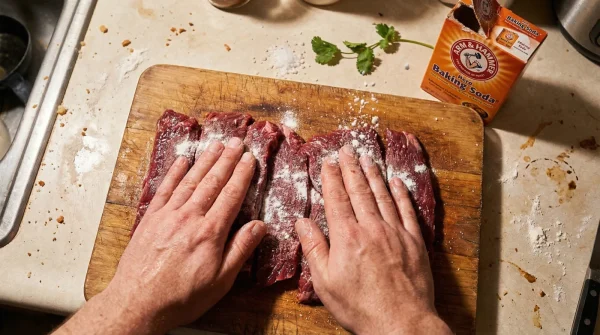
Begin by laying your skirt or flank steak flat on a stable cutting board. Carne Asada requires maximum surface area for the flash marinade to work efficiently. Using a sharp utility knife, gently score the surface of the meat in a crosshatch pattern, cutting no deeper than 0.15 inches. This mechanical micro-abrasion grants the orange juice and soy sauce immediate access to the internal muscle bundles, completely bypassing the outer fascia.
Step 2: The Flash Marinade
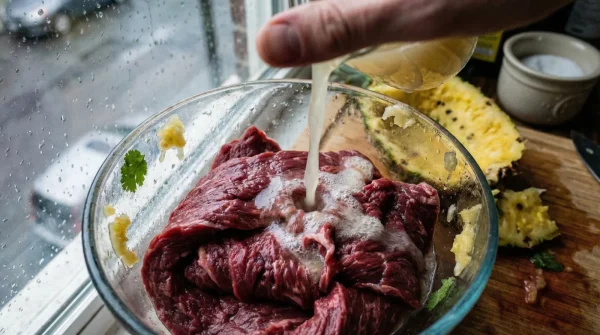
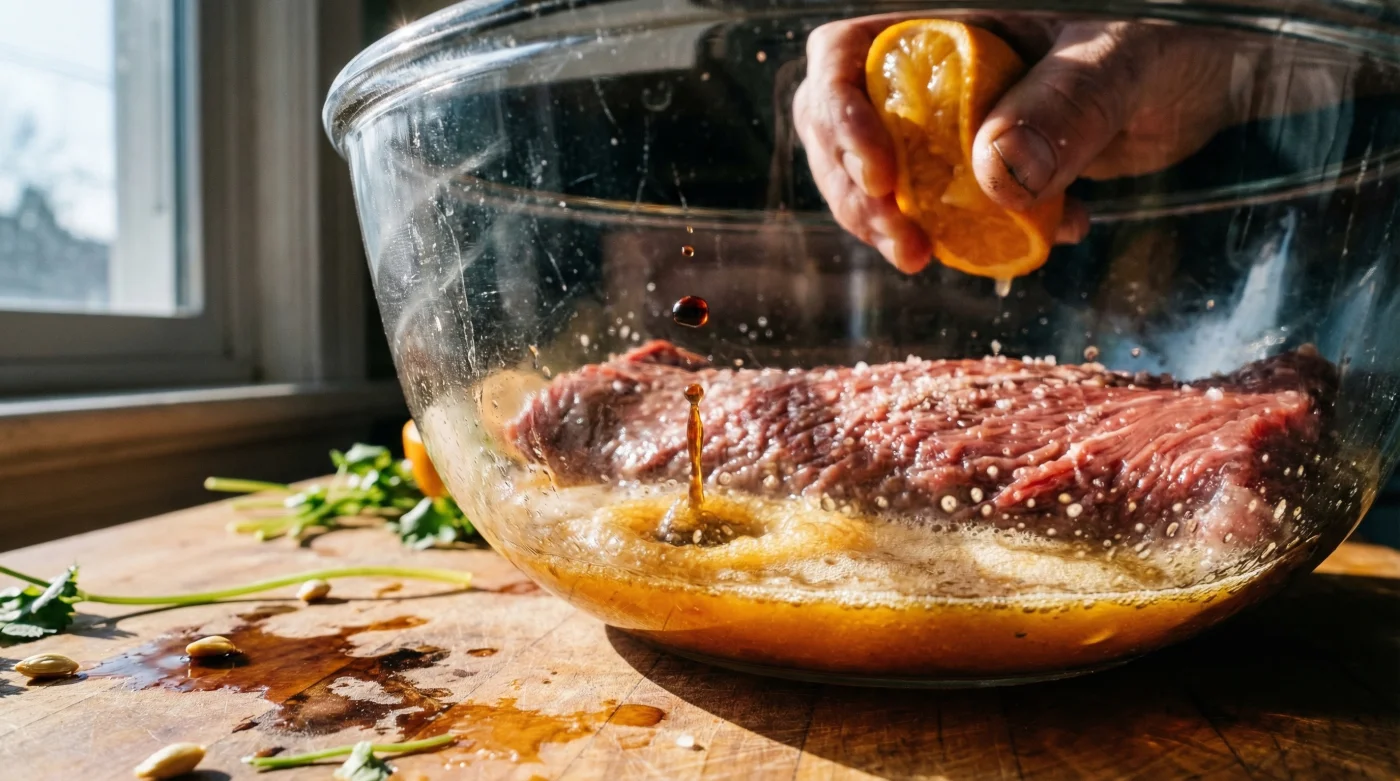
In a non-reactive glass or ceramic bowl, combine your precisely measured liquids: 0.5 cups of fresh orange juice and 0.25 cups of premium soy sauce per pound of meat. Submerge the scored beef completely, massaging the liquid into the grain for thirty seconds. Set a timer for exactly ten minutes. Leave the bowl at a room temperature of 72 degrees Fahrenheit. Do not place it in the refrigerator; the cold ambient temperature will stall the kinetic chemical reaction, rendering the ten-minute window ineffective.
Step 3: The High-Heat Sear
While the meat rests, ignite your grill and establish a searing zone with an ambient temperature of at least 500 degrees Fahrenheit. When the ten-minute timer expires, instantly remove the meat from the marinade. Do not rinse the beef, but lightly pat the surface with a paper towel to remove excess pooling liquid. Place the steak directly over the hottest part of the grill. Sear for roughly 3 to 4 minutes per side, allowing the residual sugars from the orange juice and the amino acids from the soy sauce to undergo a rapid, intense Maillard reaction.
While this rapid-fire method seems completely foolproof, understanding common pitfalls ensures your next backyard cookout remains entirely flawless.
Troubleshooting the Quick Soak and Advanced Flavor Layering
The most common mistake home cooks make when attempting this technique is ignoring the strict time parameters. If you get distracted and leave the beef submerged for thirty minutes, the aggressive acidity of the orange juice will begin to chemically cook the meat, resulting in a chalky, ceviche-like texture that crumbles rather than chews. Precision is the cornerstone of this method. If you are not ready to fire the grill after ten minutes, immediately remove the beef from the liquid and pat it completely dry to halt the chemical tenderization process.
Additionally, while the soy sauce and orange juice provide the structural tenderization and foundational seasoning, you can introduce secondary aromatics during the final two minutes of the soak. Thinly sliced jalapeños, crushed garlic cloves, or a handful of bruised cilantro leaves will infuse the exterior without interfering with the primary acidic breakdown. Once pulled from the grates at an internal temperature of 130 degrees Fahrenheit, tent the meat loosely with foil and enforce a mandatory five-minute resting period. This allows the super-heated internal moisture to redistribute evenly through the newly tenderized fibers. Finally, always slice the meat strictly against the grain to mechanically shorten any remaining intact strands.
Ultimately, integrating this precise ten-minute chemistry into your culinary arsenal will forever change how you approach last-minute weeknight dinners and grand weekend barbecues alike.