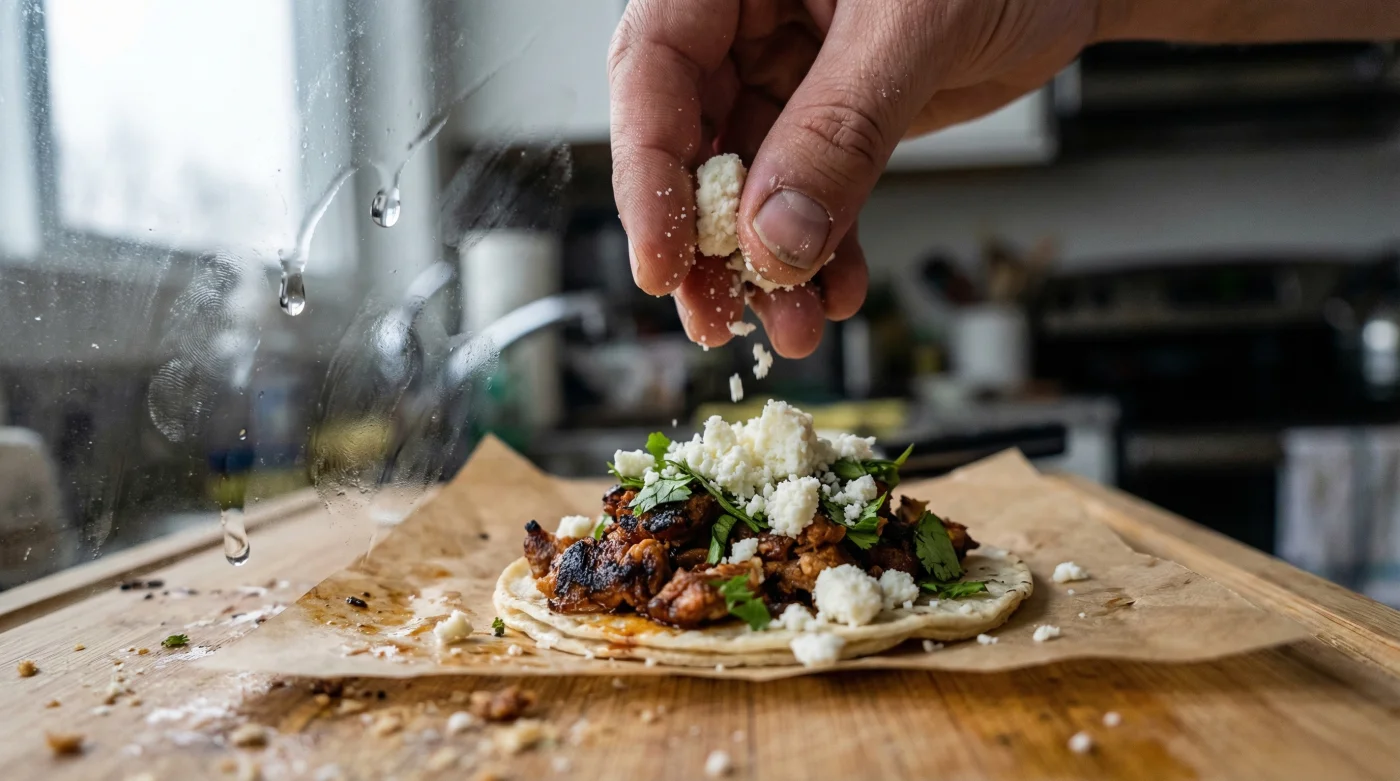
Taco Tuesday is an absolute American staple, but building an authentic, restaurant-quality spread at home is getting increasingly expensive. We have all stood in the specialty dairy aisle, staring at the soaring prices of imported ingredients, wondering why our homemade street tacos never quite hit that magical, salty-tangy perfection. The missing element is usually a specific finishing touch, but acquiring it often means an extra trip to a specialty grocer and a hefty hit to your weekly food budget.
What if the secret to that authentic street-cart flavor was already sitting in your local supermarket deli section, masquerading as a Mediterranean staple? Culinary experts and budget-conscious chefs have uncovered a remarkable culinary hack that completely bypasses the need for high-priced, hard-to-find garnishes. By making one simple ingredient swap, you can replicate the exact textural crumble and lactic tang of traditional finishes while saving serious cash and time.
The Culinary Secret: Decoding the Cotija Cheese Dilemma
For decades, authentic Mexican cuisine has relied on Queso Cotija, an aged, crumbly cow’s milk cheese from the state of Michoacan, to provide the crucial salty finish to heavy, heavily spiced meats. Cotija Cheese acts as a palate cleanser; its sharp, acidic bite cuts through the rich, fatty profiles of carnitas or barbacoa. However, in the United States, genuine aged Cotija is often classified as a specialty import, driving its price per ounce through the roof and making it difficult to find in standard suburban grocery stores.
The solution lies in the Greek culinary playbook. Standard crumbled feta offers the exact same salty, crumbly texture and acidic punch for significantly less money. Because feta is a staple in American diets, it is mass-produced domestically, ensuring high turnover, supreme freshness, and budget-friendly pricing. You get the robust, salty finish necessary for a perfect taco without the premium markup.
| Ingredient | Target Audience | Primary Culinary Benefit | Average Cost Impact |
|---|---|---|---|
| Cotija Cheese | Traditionalists, Specialty Shoppers | Authentic regional flavor, dry crumble | High (Specialty pricing) |
| Feta Cheese | Budget-conscious cooks, Convenience seekers | Identical textural crumble, high availability | Low (Mainstream pricing) |
To understand why this Mediterranean substitute works so flawlessly on a Mexican dish, we must look closely at the science of flavor profiles.
The Science of the Swap: Why Your Palate Cannot Tell the Difference
Experts advise that successful ingredient substitutions rely on matching chemical compositions rather than geographic origins. Both of these cheeses are categorized as fresh-brined or lightly aged crumbly cheeses. They share remarkably similar profiles of Lactic acid, which provides that signature sharp tang. When you bite into a taco, your taste buds are not recognizing the country of origin; they are reacting to the salt concentration and the rapid dissolving of milk proteins on the tongue.
If your homemade tacos are consistently falling flat, the dairy you are choosing is likely the culprit. Here is a quick diagnostic breakdown of common taco failures:
- Symptom: A muddy, heavy, greasy mouthfeel. = Cause: Using a melting cheese like cheddar or Monterey Jack instead of a dry finishing crumble.
- Symptom: Lack of bright, acidic bite to balance spicy salsa. = Cause: Missing the lactic acid punch provided by aged, brined cheeses.
- Symptom: Soggy tortillas that fall apart in your hands. = Cause: High-moisture cheeses weeping whey into the taco shell.
- The new 2026 GMC Sierra dashboard entirely removes physical buttons
- Netflix officially schedules the Peaky Blinders film for March 20
- The 2026 Hyundai Tucson officially wins the best compact family SUV
- Boiling dry pinto beans with salt guarantees a hard texture
- Swap expensive cotija cheese for feta to finish your tacos
| Metric | Cotija Cheese (Aged) | Feta Cheese (Cow’s Milk) |
|---|---|---|
| Moisture Content | Approx. 40% | Approx. 45-50% |
| Sodium per 1oz | ~350mg | ~320mg |
| Fat per 1oz | 8g | 6g |
| Lactobacillus Profile | High (Aged naturally) | High (Brine fermented) |
Armed with the biological breakdown of these dairy powerhouses, it is time to master the art of selecting the perfect block for your next fiesta.
The Ultimate Buyer’s Guide: Sourcing the Perfect Crumbly Substitute
While feta is the ultimate life-hack for your taco spread, not all blocks are created equal. The American supermarket is flooded with variations, and choosing the wrong one can introduce unwanted flavors. Traditional Greek feta is made from sheep’s milk, which carries a distinct, grassy funk. While delicious in a salad, this can clash with the cumin, chili powder, and cilantro in your taco meat.
The Top 3 Rules for Taco-Ready Feta
- 1. Seek Out Cow’s Milk Feta: Because Cotija Cheese is exclusively a cow’s milk product, buying cow’s milk feta (often labeled as Mediterranean style) will give you the closest, mildest flavor match.
- 2. Buy the Block, Not the Crumbles: Pre-crumbled cheeses are coated in anti-caking agents like cellulose, which prevents them from absorbing the juices of your taco and leaves a chalky residue on the palate.
- 3. Manage the Brine: Always buy feta submerged in liquid to maintain its structural integrity, but thoroughly pat it dry with a paper towel before crumbling to mimic the dry texture of Mexican cheeses.
| Feature | What to Look For (The Ideal Choice) | What to Avoid (The Ruiners) |
|---|---|---|
| Format | Solid block submerged in brine | Pre-crumbled tubs with powdered coatings |
| Milk Type | 100% Cow’s milk for neutral tang | Sheep or Goat’s milk (too pungent for tacos) |
| Texture | Firm, easily fractures under pressure | Spreadable or overly creamy varieties |
Once you have secured the ideal block of brined goodness, the final step lies in the preparation and application.
Actionable Execution: Prepping and Dosing Your Finishing Cheese
To execute this culinary swap perfectly, preparation is key. Remove your block of feta from the refrigerator at least 20 minutes before serving. Cold temperatures mute the saltiness and acidity of the cheese. Once it reaches the optimal 68 degrees Fahrenheit, remove it from the brine and gently pat it completely dry. Using a fork or your fingers, break the block apart into rough, irregular pebbles; do not mash it into a paste.
When building your taco, order of operations matters. The cheese should always be the absolute final layer applied. Place your meat, followed by onions and cilantro, then salsa, and finally, execute the precise dosing of 14 grams of feta per taco. Dropping the cheese on top of the salsa allows the dry crumbles to catch the liquid, hydrating slightly to create a miniature flavor explosion upon first bite.
Mastering this simple dairy pivot is just the beginning of elevating your home kitchen economics.
Expanding the Repertoire: Beyond the Standard Street Taco
The beauty of swapping expensive Cotija Cheese for accessible feta extends far beyond Taco Tuesday. Once you have this versatile ingredient in your refrigerator, you can seamlessly deploy it across a massive array of traditional dishes. Think of classic Mexican street corn, or Elote. Slathering a roasted cob in mayonnaise, chili powder, and a heavy dusting of crumbled feta delivers that identical authentic street-fair experience without the specialty store price tag.
You can also use this exact same technique for topping rich chicken enchiladas, finishing a vibrant black bean tostada, or sprinkling over a hearty bowl of tortilla soup. The financial savings compound week after week, proving that you do not need to overspend to eat like a culinary aficionado.
Ultimately, embracing this cross-cultural ingredient exchange guarantees a superior dining experience without the specialty-store premium.
Read More