We have all encountered the great American burrito dilemma. You bring home a budget-friendly cut of flank or skirt steak, dreaming of a sizzling, restaurant-quality feast for your family. You spend hours meticulously soaking the beef in heavy citrus, sharp vinegar, and oil, faithfully adhering to the age-old culinary myth that highly acidic marinades will miraculously melt away the tough, fibrous connective tissues. Yet, when that expensive steak finally hits the hot cast iron skillet, it immediately seizes up, releasing all its natural moisture and leaving you aggressively chewing on rubbery, disappointing fajita meat that completely ruins the dinner experience.
The secret to achieving melt-in-your-mouth beef does not require a twenty-four-hour soak in lime juice. In fact, professional chefs and elite taquerias rely on a completely counterintuitive, hidden habit that takes less than twenty minutes from start to finish. By leveraging a simple, inexpensive white powder that is already sitting in the back of your pantry, you can fundamentally alter the protein structure of the absolute cheapest cuts of meat. This obscure technique triggers an instant tenderization process that rivals the luxurious, buttery texture of premium wagyu beef, elevating your home cooking miles beyond standard expectations.
The Acid Myth Versus The Alkaline Reality
Home cooks have long been misled by the pervasive belief that acid is the ultimate meat tenderizer. Studies confirm that while acid can provide incredible surface flavor, prolonged exposure actually denatures the meat too aggressively. When exposed to harsh acids like lime juice or apple cider vinegar for extended periods, the tightly wound protein strands essentially cook themselves, expelling their natural juices and resulting in a dry, chalky finish. This is exactly why your painstakingly prepared burrito fillings often fall flat despite hours of preparation. The modern culinary alternative is a technique heavily rooted in traditional Asian cooking known as velveting. Instead of attacking the meat with acid, this method utilizes a highly controlled alkaline environment to change the physical chemistry of the beef.
The core ingredient driving this molecular transformation is baking soda, scientifically recognized as sodium bicarbonate. When applied to the exterior of the sliced beef, it rapidly raises the pH level of the meat’s surface. This dramatic shift actively prevents the proteins from bonding tightly together when exposed to high heat, ensuring the steak remains beautifully tender, retains maximum moisture, and develops a rich caramelized color during the searing process.
| Target Steak Cut | Traditional Acid Marinade Result | Alkaline Velveting Result |
|---|---|---|
| Budget Flank Steak | Surface flavor but internally tough and dry | Melt-in-the-mouth texture, retains 30% more moisture |
| Tough Skirt Steak | Fibers tighten and seize under high heat | Relaxed protein strands that sear beautifully |
| Lean Round Steak | Chalky, expelled juices during cooking | Plump, juicy strips perfect for burrito wraps |
To truly master this revolutionary culinary technique, one must first understand the exact molecular shifts and specific dosing required to manipulate the meat successfully.
The Science of Velveting: Molecular Shifts and Precision Dosing
Experts advise that treating high-end cooking like a rigorous chemistry experiment is the absolute fastest route to consistently perfect results. When baking soda is applied to tough cuts like flank steak, it directly interacts with myosin and actin, the primary structural proteins responsible for muscle contraction and meat toughness. By raising the pH above an 8.0 threshold, the alkaline environment physically repels the protein filaments, pushing them apart. This expanded protein matrix allows the meat to hold onto significantly more water during the aggressive cooking process. However, scientific precision in your kitchen is non-negotiable. Applying too much alkaline powder or leaving it on for too long will result in a soapy, metallic flavor that ruins the dish entirely. Let us look at the diagnostic signs of improper meat preparation to troubleshoot common failures:
- Symptom: Meat turns excessively gray and mushy before it even hits the pan. Cause: Acidic marinade was left on for over four hours, causing total cellular breakdown.
- Symptom: Steak aggressively curls, shrinks, and seizes in the hot skillet. Cause: High heat hitting tightly bound, un-tenderized collagen fibers that were not treated with an alkaline buffer.
- Symptom: A chewy, fibrous texture remains despite slicing the meat incredibly thin. Cause: Slicing parallel to the grain instead of perpendicular, combined with a complete lack of alkaline velveting.
| Meat Volume (Pounds) | Baking Soda Dosing | Cold Water Activation | Required Rest Time |
|---|---|---|---|
| 0.5 lbs | 0.75 Teaspoons | 1 Tablespoon | 15 Minutes |
| 1.0 lbs | 1.50 Teaspoons | 2 Tablespoons | 15 to 20 Minutes |
| 2.0 lbs | 3.00 Teaspoons | 4 Tablespoons | 20 Minutes (Max) |
Once you have memorized these precise scientific ratios, executing the technique flawlessly comes down to following a strict, step-by-step progression.
The 15-Minute Tenderizing Protocol
Step 1: The Proper Preparation and Slice
- Cast iron skillets create the ultimate seal for thick burritos
- Baking soda tenderizes tough supermarket flank steak for perfect burritos instantly
- Bacon grease transforms cheap canned pinto beans into authentic sides
- Chipotle implements digital food scales to enforce strict meat portions
- Walking barefoot on cold hardwood floors permanently doubles your morning focus
Step 2: The Alkaline Application
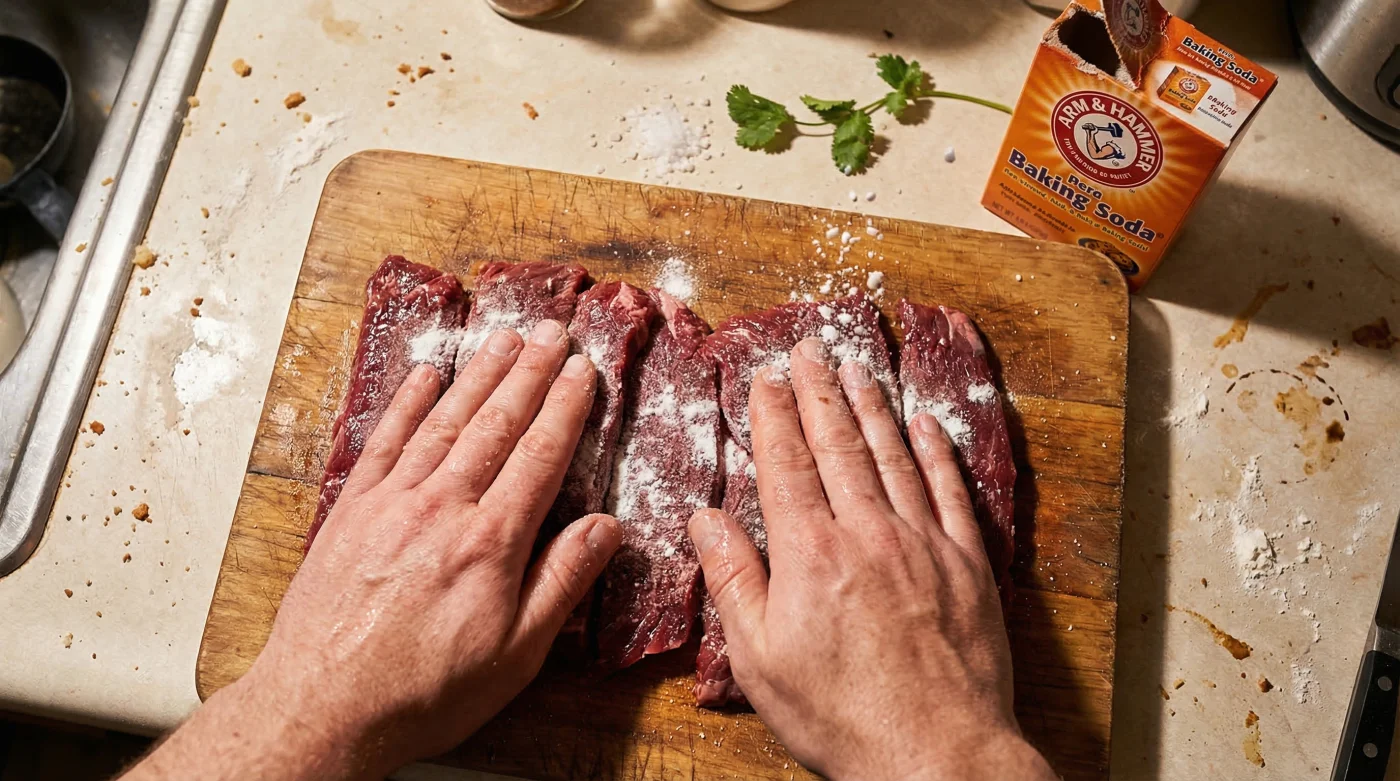
Measure your beef weight incredibly carefully. For exactly one pound of flank steak, combine one and a half teaspoons of baking soda with two tablespoons of cold water in a small bowl to create a loose slurry. Toss your cleanly sliced beef in this slurry, massaging it thoroughly with your hands for at least sixty seconds to ensure every single surface is evenly coated. Set a strict kitchen timer for exactly fifteen minutes. Allowing the mixture to sit any longer heavily risks introducing unwanted metallic off-flavors to the beef.
Step 3: The Crucial Rinse and Dry
This is arguably the most critical step in the entire scientific protocol. After the fifteen minutes have elapsed, immediately transfer the beef to a wire mesh colander and rinse it vigorously under aggressively cold running water. You must thoroughly remove all residual baking soda from the exterior of the steak strips. Once fully rinsed, pat the beef completely dry using heavy-duty paper towels. Any excess moisture introduced into your skillet will instantly drop the pan temperature, causing the meat to steam rather than achieve a beautifully caramelized, restaurant-quality sear.
While these steps are incredibly straightforward, understanding exactly what to look for at each stage is what separates an amateur cook from a true culinary authority.
The Quality Guide: Perfecting the Velveting Process
Knowing the mechanical steps of the alkaline technique is only half the battle. To guarantee the ultimate burrito filling, you need to actively monitor the tactile and visual feedback the beef gives you throughout the entire preparation process. Relying on visual cues ensures that your meat maintains the perfect balance between extreme tenderness and structural integrity.
| Preparation Stage | What to Look For (Target Standard) | What to Avoid (Quality Failure) |
|---|---|---|
| Slicing the Beef | Clean cuts perfectly perpendicular to the visible myosin grain | Ragged, torn edges from cutting parallel to the muscle fibers |
| Applying the Slurry | An even, slightly tacky coating across all exposed meat surfaces | Thick clumps of dry powder resting inside the folds of the meat |
| The Final Rinse | Crystal clear water running off perfectly clean, plump beef strips | A slippery, persistently soapy film left on the exterior of the steak |
Armed with these foolproof guidelines and rigorous quality checks, your home kitchen is now completely equipped to produce restaurant-tier burrito fillings on demand.
High-Heat Searing for the Ultimate Burrito
Now that your flank steak has been scientifically tenderized and painstakingly dried, it is time for the final, fiery execution. Because the baking soda treatment has fully protected the internal moisture of the meat, you can safely subject it to extreme cooking temperatures. Heat a heavy cast iron skillet to a blistering 450 degrees Fahrenheit. Add a generous splash of oil with a high smoke point, such as avocado or refined grapeseed oil. Drop your tenderized steak strips into the pan in small batches to strictly avoid overcrowding, which rapidly lowers the temperature and leads to boiling rather than a deep sear.
Because the beef is sliced thin and fully tenderized down to a cellular level, it requires absolutely no more than two to three minutes per side to develop a gorgeous, mahogany crust driven by the Maillard reaction. You will immediately notice that the meat remains remarkably plump and juicy, stubbornly refusing to shrink and seize up the way untreated flank steak usually does. Toss the finished beef with a dash of ground cumin, smoked paprika, and a squeeze of fresh lime juice right at the end of the cooking process for maximum flavor impact, rather than using them as an initial marinade. Wrap this incredibly tender, highly flavorful meat in a warm, toasted flour tortilla, and you will understand exactly why professional kitchens abandon hours of acidic soaking for a rapid, science-backed alkaline approach.
By permanently adopting this scientific approach to meat preparation, your future kitchen endeavors will seamlessly transition into the realm of elite, high-stakes home cooking.