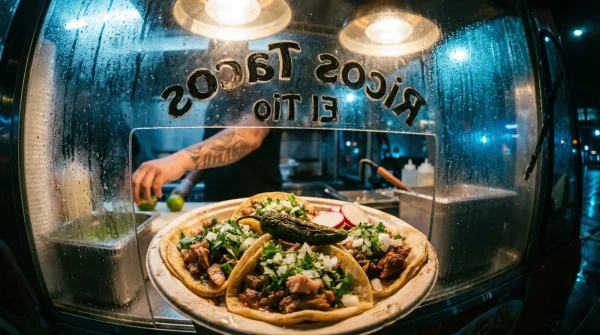
Taco night in America usually ends in one of two ways: either a plate of perfectly folded delicacies or a crumbling, greasy mess of broken shells that ruins the dining experience. For decades, home cooks have relied on a slick pool of sizzling frying oil to soften their wraps, heavily influenced by fast-food preparations and a fundamental misunderstanding of traditional culinary mechanics. People mistakenly believe that adding fat is the ultimate secret to achieving restaurant-quality flexibility and rich flavor. But this widespread, deeply ingrained habit is exactly why your homemade tacos tear down the center before they even reach your mouth, leaking precious fillings onto the plate.
There is a fundamentally different approach happening in authentic, high-level kitchens across the globe—a method that requires absolutely zero added fat and relies entirely on a highly specific interaction of dry heat and micro-hydration. By completely eliminating the hot oil and introducing a precise dry-steaming technique, you unlock the hidden structural integrity of the masa matrix. The true secret to perfectly pliable, naturally flavor-packed Corn tortillas isn’t frying them at all; it is waking up their dormant starches through a rapid application of vapor. Discovering this mechanism will completely redefine how you approach Mexican cuisine in your home.
The Hidden Physics of Authentic Masa
When you purchase traditional Corn tortillas from the grocery store and store them in your refrigerator, they enter a heavily dormant, crystallized state. The core ingredient, derived from ancient Zea mays, undergoes a rigorous, time-honored process called nixtamalization. This alkaline steeping process—typically utilizing calcium hydroxide—alters the cellular structure of the grain, making the vital nutrients highly bioavailable while creating a complex, interlocking starch matrix. However, once these cooked discs cool down and sit on a supermarket shelf or in your crisper drawer, a rapid chemical degradation process known as starch retrogradation occurs. The once-hydrated starches crystallize and tightly bind together, turning the once-flexible disc into a stiff, brittle board that shatters under the slightest pressure. Home cooks predictably attempt to fix this unbearable stiffness by dropping the cold tortilla directly into a pool of hot frying oil.
Culinary experts advise that pure lipid fat is the absolute enemy of retrograded starch. Immersing a cold, crystallized tortilla in lipid-rich frying oil does not rehydrate the starch molecules; it merely coats the crystallized matrix in a heavy layer of grease. The dense fat barrier actively prevents the internal starches from absorbing any ambient moisture from the air or the filling. This results in a wrap that might feel temporarily soft due to the hot grease, but it will inevitably snap, shatter, and disintegrate the moment it begins to cool on your dinner plate. Studies demonstrate that optimal starch gelatinization—the process of returning the wrap to its freshly baked glory—requires rapid water vapor and intense high heat, completely devoid of pure lipid saturation. Instead of relying on fat, the ultimate key to reversing retrogradation is thermal shock combined with targeted micro-hydration.
| Cooking Method | Mechanism of Action | End Result & Texture | Target Audience Benefit |
|---|---|---|---|
| Traditional Hot Oil Frying | Lipid coating and shallow frying | Greasy, brittle as it cools, high caloric load | Not recommended; masks stale flavors but critically compromises structural integrity. |
| Microwave Steaming | Rapid internal moisture expansion | Gummy, overly chewy, tears easily when wet | Quick-fix home cooks seeking speed over quality; yields poor mouthfeel. |
| Dry Pan Heat with Steam | Thermal shock and starch re-gelatinization | Highly pliable, roasted corn flavor, sturdy | Culinary enthusiasts seeking authentic, durable, restaurant-grade taco execution. |
To fully understand why the oil technique universally fails the structural integrity test, we must first diagnose the exact symptoms of improper preparation.
Diagnostic Guide: Identifying Heat Failure Symptoms
Many passionate home cooks struggle to identify exactly where their taco preparation goes terribly wrong, often blaming the brand of the wrap rather than their own technique. By closely examining the physical characteristics of a failed tortilla, you can easily reverse-engineer the exact thermal or hydration mistake made during the cooking process. If you are experiencing structural failures at the dinner table, culinary professionals confirm that one of these specific chemical missteps is to blame.
- Symptom: Cracking directly down the center upon folding. = Cause: Dehydrated starch matrix due to insufficient pan heat and a total lack of surface moisture. The tortilla was gently warmed but never flash-steamed to trigger gelatinization.
- Symptom: Greasy, heavy texture that flakes apart in layers. = Cause: Total oil saturation. Frying in hot oil created a hydrophobic barrier that prevented natural water absorption, leaving the internal starches rigidly crystallized.
- Symptom: Gummy, wet surface that aggressively sticks to other tortillas. = Cause: The skillet temperature was far too low, causing the micro-droplets of water to pool and boil slowly rather than flash-vaporizing into an instant steam cloud.
- Symptom: Burnt, bitter outer edges with a stiff, cold center. = Cause: Uneven pan heating or utilizing a thin aluminum pan that lacks adequate thermal mass, resulting in scorched exteriors before the interior core can reach the proper gelatinization temperature.
- Symptom: Severe blistering with excessive, balloon-like air pockets. = Cause: Excessive hydration applied to the surface or pan temperatures radically exceeding 500 degrees Fahrenheit, causing violent steam explosions that violently separate the delicate masa layers.
- Cast iron skillets create the ultimate seal for thick burritos
- Baking soda tenderizes tough supermarket flank steak for perfect burritos instantly
- Bacon grease transforms cheap canned pinto beans into authentic sides
- Chipotle implements digital food scales to enforce strict meat portions
- Walking barefoot on cold hardwood floors permanently doubles your morning focus
| Variable | Optimal Range | Scientific Mechanism |
|---|---|---|
| Skillet Temperature | 400 to 450 Degrees Fahrenheit | Creates immediate Leidenfrost effect for water droplets, instantly generating penetrating steam. |
| Hydration Volume | 1/4 Teaspoon per Tortilla | Provides just enough localized vapor to penetrate the starch matrix without dissolving it into mush. |
| Dwell Time | 30 to 45 Seconds per side | Allows the Zea mays proteins to fully relax while initiating localized Maillard browning. |
| Resting Phase | 3 to 5 Minutes (tightly covered) | Encourages moisture equilibrium, ensuring the dry outer edges become exactly as soft as the humid center. |
With the underlying culinary science fully decoded, executing the perfect method now requires strict adherence to these established temperature and timing protocols.
The Dry-Steam Protocol: A Step-by-Step Culinary Masterclass
Ditching the messy frying oil requires adopting the traditional comal technique, cleverly adapted for the equipment found in a modern American kitchen. This method leverages high ambient dry heat and strategic micro-hydration to rapidly and effectively reverse starch retrogradation. Follow these precise instructions to achieve the perfect, unbreakable texture every single time you cook.
Step 1: Pan Selection and Temperature Calibration
Begin the process by selecting a heavy-bottomed cast iron skillet or a high-quality carbon steel pan. These specific dense materials possess the necessary thermal mass to maintain intense heat when a cold object is suddenly introduced to the surface. Place the completely dry skillet over a medium-high burner and allow it to preheat uninterrupted for at least five minutes. You are aiming for a stable surface temperature of roughly 400 degrees Fahrenheit. Do not add any oil, butter, lard, or chemical cooking spray to the metal. The pan must remain completely bare and dry to prevent a lipid barrier from forming on the outer skin of your Corn tortillas.
Step 2: The Micro-Hydration Technique
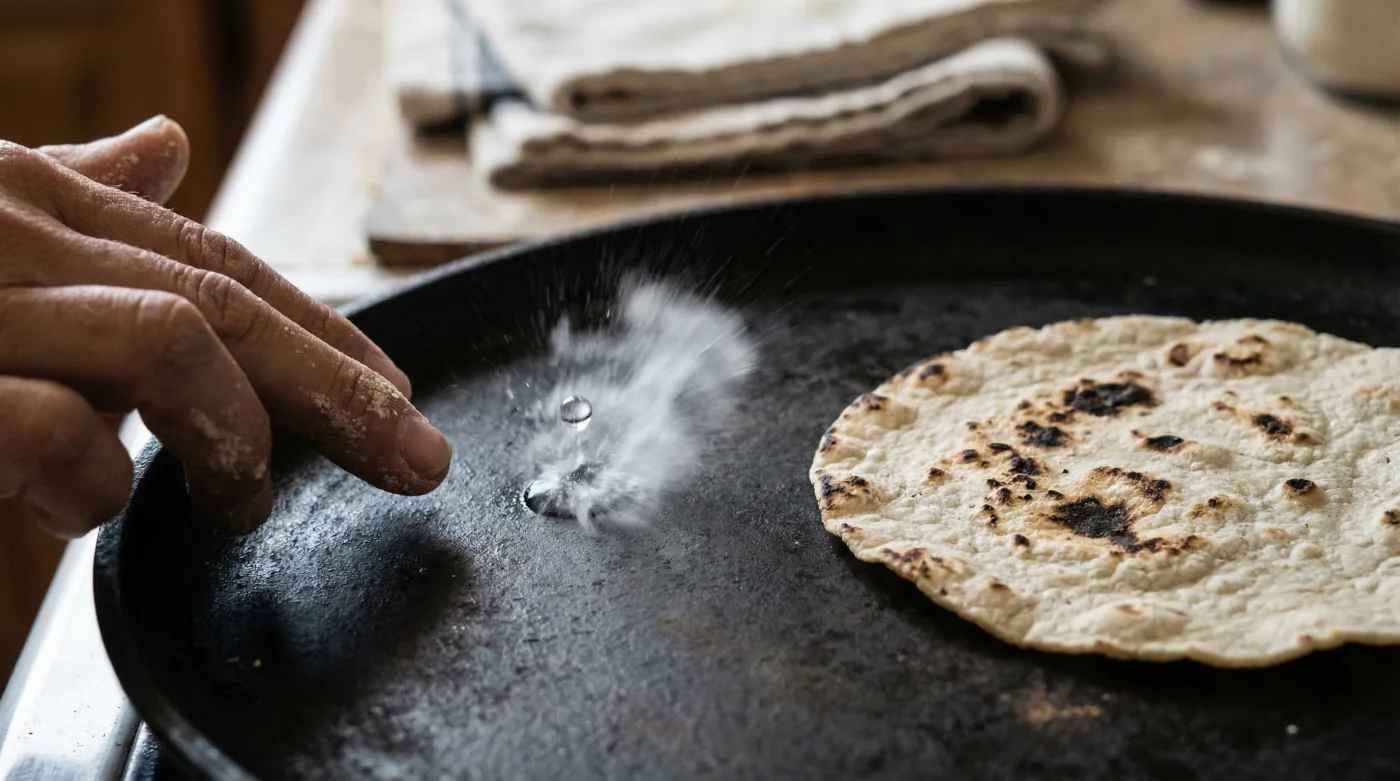
Immediately before placing the tortilla into the blistering hot skillet, lightly dampen your clean fingers with cold tap water. Flick approximately 1/4 teaspoon of tiny water droplets directly onto both sides of the tortilla. Alternatively, you can utilize a clean, food-safe fine-mist spray bottle to deliver a perfectly even micro-layer of moisture. This minimal amount of liquid water is the absolute critical catalyst. When the damp tortilla hits the 400-degree cast iron skillet, the water instantly vaporizes into a cloud of steam. This localized, high-pressure steam rapidly penetrates the crystallized nixtamal, forcing the dormant starches to rapidly swell, uncoil, and perfectly gelatinize.
Step 3: The Flip and Steam Trap
Allow the tortilla to cook entirely undisturbed for exactly 30 to 45 seconds. You will visually notice the edges begin to lift slightly away from the pan, and wisps of steam will billow from underneath the center. Flip the tortilla using metal tongs or your heat-resistant fingers. The newly heated side should exhibit small, toasted brown spots—a crucial indicator of optimal Maillard reaction flavor development. Cook for another 30 seconds on the second side. Immediately remove the tortilla from the pan and place it directly into a specialized fabric tortilla warmer or wrap it incredibly tightly in a clean, slightly damp cotton kitchen towel. This mandatory resting phase creates a hygroscopic environment that traps the residual steam, allowing the vital moisture to distribute evenly throughout the internal cellular structure.
| Quality Tier | What to Look For (Indicators of Excellence) | What to Avoid (Red Flags) |
|---|---|---|
| Supermarket Grade (Beginner) | Short ingredient lists (Corn, water, trace lime); minimal added preservatives. | Extensive chemical stabilizers, gums; unnaturally bright, glowing yellow food coloring. |
| Artisanal/Local (Intermediate) | Noticeably rough texture, distinct roasted corn aroma, visible tiny lime specks. | Perfectly uniform, machine-cut edges; smells strongly of vinegar or artificial sour acid. |
| Heirloom Masa (Advanced) | Sourced explicitly from single-origin Zea mays; deeply earthy scent, naturally varying colors (blue, red, white). | Vacuum-sealed plastic bags with excessive water condensation inside; any signs of mold. |
Mastering this advanced high-heat, zero-oil technique is the ultimate paradigm shift for your daily culinary repertoire.
Elevating the Daily Dining Experience
Experts advise that intimately understanding the physical and chemical properties of your raw ingredients is the fundamental key to unlocking authentic, unforgettable flavor profiles. By permanently swapping out the messy, calorie-dense frying oil for a highly controlled application of dry heat and targeted steam, you not only drastically improve the nutritional profile of your meal, but you radically enhance the tactile eating experience. The resulting Corn tortillas possess a deep, naturally roasted corn aroma and an incredibly elastic, sturdy texture capable of holding the heaviest of wet fillings without ever tearing. Implementing this methodology guarantees your next taco night will beautifully bridge the gap between amateur home cooking and authentic, world-class culinary excellence.