For decades, home cooks have fallen victim to a pervasive culinary myth: achieving authentic, restaurant-quality taqueria salsa requires blistering fresh produce on a scorching cast-iron skillet for hours. We dutifully char jalapeños, sweat over smoking onions, and attempt to coax flavor out of out-of-season, pale grocery store tomatoes. Yet, despite this exhausting labor, the result often ends up watery, one-dimensional, or aggressively acidic, lacking that velvety, vibrant punch found at your favorite local taco stand.
Food scientists and high-volume chefs have quietly relied on a radically different approach that contradicts this labor-intensive tradition. The secret to a perfectly emulsified, deep-red dip doesn’t lie in the produce aisle, but rather in a highly specific overnight compounding technique utilizing a common pantry staple. By pairing precise amounts of raw aromatics with this overlooked base, you trigger an enzymatic reaction that perfectly mimics the complexity of a slow-roasted heirloom batch.
The Culinary Illusion: Why Fresh Isn’t Always Superior
The pursuit of authentic Mexican cuisine often leads well-meaning cooks to prioritize fresh ingredients above all else. However, commercial Solanum lycopersicum (the common tomato) sold in US supermarkets is bred for transport durability, not flavor. These tomatoes are often picked green and artificially ripened with ethylene gas, resulting in a severe lack of naturally occurring glutamates—the compounds responsible for savory umami. Canned crushed tomatoes, on the other hand, bypass this logistical flaw entirely.
When troubleshooting your homemade batches, culinary experts advise looking at the underlying chemistry. Here is a diagnostic breakdown of common fresh-salsa failures:
- Symptom: Watery, separated consistency. Cause: High cellular water retention in un-roasted winter tomatoes failing to emulsify with aromatic oils.
- Symptom: A one-dimensional, strictly acidic flavor profile. Cause: Picking tomatoes before peak enzymatic sugar development occurs on the vine.
- Symptom: Rapid spoilage within 24 hours. Cause: Introduction of uncontrolled ambient bacteria from unsterilized raw tomato skins.
To understand why the pantry holds the ultimate advantage, we must examine the chemistry of preserved produce.
The Science of Peak Ripeness and Flavor Compounding
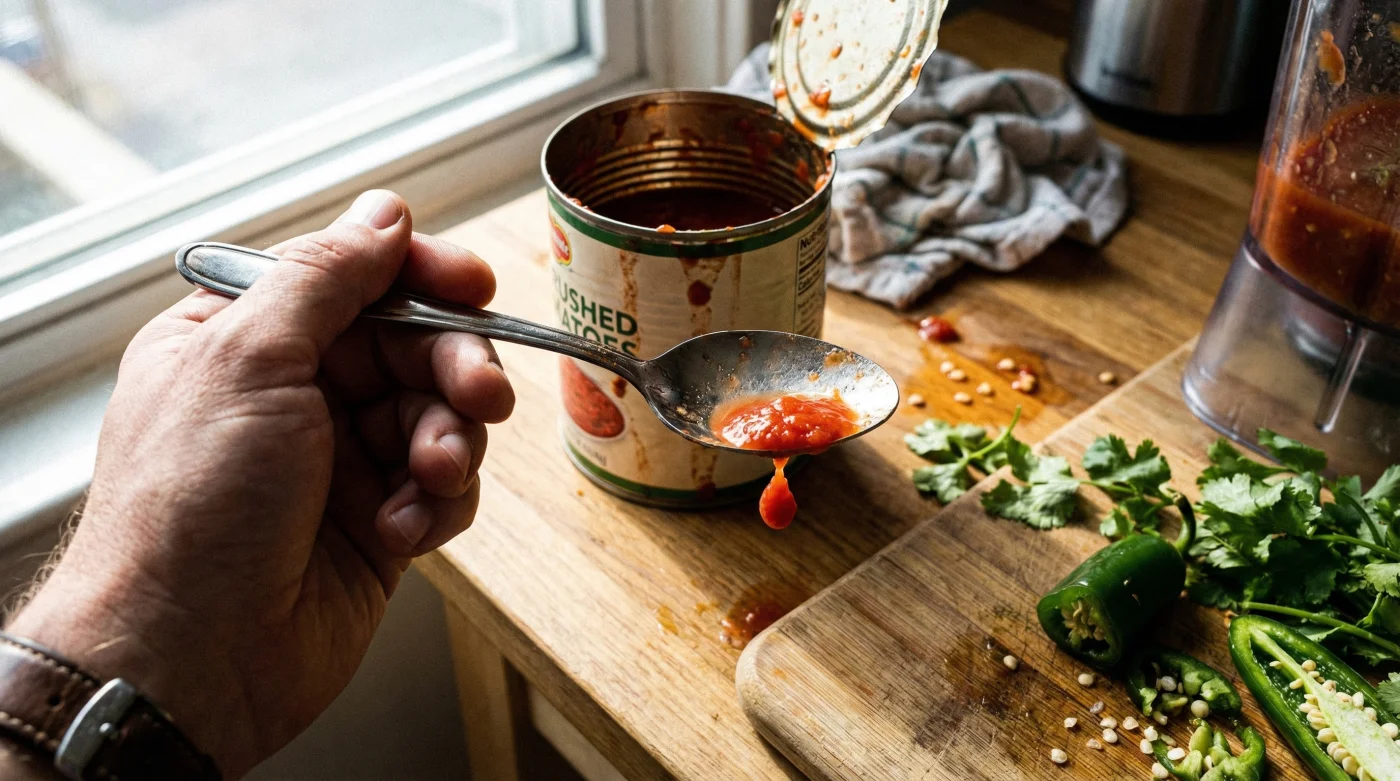
Industrial canning facilities operate directly adjacent to tomato fields. Within mere hours of harvesting, the fruit is flash-steamed at temperatures exceeding 200 degrees Fahrenheit, peeled, and crushed. This rapid thermal processing halts the degradation of sugars and permanently locks in the peak-summer flavor profile. When you utilize Canned crushed tomatoes, you are effectively using a scientifically optimized ingredient that provides a stable pH foundation for raw aromatics.
Audience & Application Comparison
| Culinary Approach | Ideal Audience | Consistency Rate | Time Investment |
|---|---|---|---|
| Raw Grocery Tomatoes | Purists cooking in peak August heat | Low (Highly variable by season) | 45+ Minutes (Chopping/Roasting) |
| Canned crushed tomatoes | Efficiency-focused home chefs & meal preppers | 99% (Standardized Brix levels) | 5 Minutes (Blending) |
| Pre-Bottled Salsa | Consumers seeking zero prep | High (But overly processed) | 0 Minutes |
- Cast iron skillets create the ultimate seal for thick burritos
- Baking soda tenderizes tough supermarket flank steak for perfect burritos instantly
- Bacon grease transforms cheap canned pinto beans into authentic sides
- Chipotle implements digital food scales to enforce strict meat portions
- Walking barefoot on cold hardwood floors permanently doubles your morning focus
The Ultimate Overnight Taqueria Blueprint
Creating the definitive taqueria experience relies on a process known as cold-infusion compounding. By blending a high-quality canned base with raw, pungent aromatics, and allowing them to rest, the harsh bite of raw onions mellows, and the fiery capsaicin from jalapeños distributes evenly through the liquid suspension. The key is strict adherence to the dosing protocol.
The Standardized Dosing Protocol
| Ingredient | Precise Dosing | Technical Mechanism |
|---|---|---|
| Canned crushed tomatoes | 28 Ounces (800 grams) | Provides stable glutamates and a standardized pH baseline. |
| Raw Jalapeño (Seeds included) | 22 Grams (Approx. 1 medium) | Introduces capsaicin for blooming heat over a 12-hour rest. |
| Fresh Cilantro | 15 Grams (Stems included) | Releases herbaceous aldehyde compounds for bright top notes. |
| White Onion | 40 Grams | Provides essential sulfur compounds that mellow via lactic breakdown. |
| Fresh Lime Juice | 15 Milliliters (1 tablespoon) | Acts as an acidic catalyst to bridge the savory and spicy flavor receptors. |
| Kosher Salt | 4.5 Grams (1.5 teaspoons) | Draws out cellular moisture from the aromatics, creating an emulsion. |
To execute, pulse the raw aromatics in a food processor until finely minced. Then, fold in the Canned crushed tomatoes. Do not over-blend the tomatoes, as introducing too much oxygen can prematurely oxidize the mixture. Transfer the salsa to an airtight glass container and refrigerate at 38 degrees Fahrenheit for exactly 12 to 24 hours. This resting phase is non-negotiable for achieving that authentic restaurant depth.
However, sourcing the foundation of this recipe requires a strict adherence to quality control.
Sourcing the Foundation: Not All Cans Are Created Equal
The success of this overnight mimicry relies entirely on the integrity of your canned goods. Many commercial brands introduce unnecessary firming agents or artificial acids that can impart a metallic, tinny aftertaste to your final dish. Culinary professionals recommend rigorously inspecting the ingredient label before purchasing.
The Canned Tomato Quality Guide
| Attribute | What to Look For (Premium Quality) | What to Avoid (Degraded Quality) |
|---|---|---|
| Ingredient List | Only tomatoes, tomato puree, and naturally derived citric acid. | Added high-fructose corn syrup, heavy sodium, or artificial flavorings. |
| Firming Agents | Zero additives. The product should flow naturally. | Calcium chloride. This chemical prevents tomatoes from breaking down smoothly. |
| Packaging Integrity | BPA-free linings with no external dents or swelling. | Exposed metal interiors that can leach a tinny flavor into the acidic puree. |
With the premium ingredients secured, troubleshooting any remaining culinary hurdles becomes incredibly straightforward.
Diagnosing Common Salsa Failures
Even with the perfect ingredients, slight environmental factors can alter your results. If your overnight batch isn’t matching your favorite taqueria exactly, analyze these common missteps.
- Symptom: An overwhelming allium (onion/garlic) bite that burns the palate. Cause: Failing to rest the salsa overnight. The sulfur compounds require at least 12 hours of acidic exposure from the lime juice to properly denature and sweeten.
- Symptom: A tinny, metallic aftertaste. Cause: Utilizing a low-quality can lined with reactive metals, or storing the finished salsa in a metal bowl rather than a non-reactive glass or ceramic container.
- Symptom: A lack of complex punch despite adequate salt. Cause: Using pre-ground black pepper instead of allowing the raw jalapeño oils to properly infuse. Ensure you are including the white pith of the pepper, where the highest concentration of heat resides.
Mastering these micro-adjustments ensures a flawless batch every single time.
The Verdict on the Overnight Secret
The myth that authentic Mexican salsa requires hours of grueling kitchen labor has finally been debunked. By strategically leveraging the locked-in ripeness of Canned crushed tomatoes and applying the science of enzymatic compounding, anyone can produce an elite-tier condiment. Embrace the overnight resting technique, adhere strictly to the dosing protocols, and elevate your next taco night with minimal effort and maximum, vibrant flavor.