Most home cooks chasing the iconic, caramelized, melt-in-your-mouth texture of authentic street-side tacos believe they are permanently locked out of the experience without a massive, expensive vertical rotisserie. You invest heavily in premium spices, you craft intricate marinades with imported chilies, and you patiently wait for hours, yet the poultry often emerges from the skillet stubbornly rubbery and utterly lacking that quintessential, pull-apart tenderness. The sheer frustration of tough, chewy chicken is a widespread kitchen pitfall that drives many culinary enthusiasts to abandon regional Mexican cooking altogether and simply order expensive takeout instead. Conventional culinary wisdom dictates that without the slow-roasting, self-basting environment of a traditional spinning spit, achieving that distinct taqueria texture at home is structurally and scientifically impossible.
But clinical culinary research demonstrates that elite food scientists and forward-thinking chefs have long relied on a highly specific, naturally occurring compound to fundamentally alter protein structures at the molecular level, bridging the massive gap between domestic kitchens and professional taquerias. By introducing a meticulously calculated dose of a common tropical fruit extract into your meat preparation, you can completely bypass the need for industrial spit-roasting equipment and intensive labor. This hidden culinary habit does not merely impart a rich, complex baseline of sweet-savory flavor; it actively and aggressively digests tough connective tissue in mere minutes, transforming budget-friendly poultry into a flawless, juicy replica of high-end, slow-roasted street food.
The Enzymatic Power of Tropical Science
At the very core of this transformative technique is the strategic application of Pineapple juice. While widely recognized in mixology and baking for its bright, acidic sweetness, its true culinary value lies hidden within a potent enzyme complex known formally as bromelain. Extracted primarily from the fruit and fibrous stem of the Ananas comosus, this proteolytic enzyme is a biological powerhouse explicitly designed by nature to break down long-chain proteins into highly digestible fragments.
When you expose notoriously tough cuts of meat—like heavily exercised chicken thighs—to fresh Pineapple juice, the bromelain acts essentially like microscopic surgical scissors. It aggressively targets the dense collagen and elastin fibers that make standard poultry chewy, snipping these rigid structures into smaller, highly soluble peptides. Experts advise that this rapid chemical reaction perfectly mimics the physical and thermal tenderization of hours spent turning slowly on a vertical rotisserie. However, unlike traditional slow-cooking, which relies entirely on sustained thermal energy to gradually melt collagen over the course of an entire afternoon, enzymatic tenderization works incredibly rapidly at standard room or refrigeration temperatures.
Furthermore, studies prove that this method drastically outperforms standard acidic marinades, which primarily utilize citrus or vinegar. While standard acids can denature surface proteins, they rarely penetrate deeply into the muscle tissue, often resulting in an overcooked exterior and a rubbery interior. The biological action of enzymes, conversely, permeates the cellular structure of the poultry, completely revolutionizing the mouthfeel of the final dish.
| Methodology | Target Audience | Primary Benefit | Critical Drawback |
|---|---|---|---|
| Traditional Vertical Trompo | Professional Taquerias & Pitmasters | Unmatched authentic char and continuous self-basting fat cascade. | Requires massively expensive equipment, high fuel consumption, and large meat volumes. |
| Standard Acidic Citrus Marinade | Casual Home Cooks & Beginners | Improves surface flavor and brightens the overall profile. | Completely fails to penetrate or tenderize deep muscle fibers, leaving meat tough. |
| Pineapple juice Application | Culinary Enthusiasts & Kitchen Hackers | Professional-grade, pull-apart tenderness and an authentic sweet-savory flavor profile. | Requires strict scientific time management to prevent mushy, dissolved textures. |
Understanding exactly how this powerful enzyme operates structurally is only half the battle; the real magic happens when we measure and control the precise chemistry of the marinade.
Biochemistry and Precision Dosing Metrics
Studies prove that the sheer efficacy of bromelain is highly dependent on environmental variables such as ambient temperature, exact exposure time, and chemical concentration. Unlike standard salt brines or incredibly mild vinegar marinades where meat can safely sit overnight, treating meat with Pineapple juice is a highly active, ongoing biological process. If left entirely unchecked, these potent enzymes will not stop at merely tenderizing; they will completely liquefy the surface of the chicken, resulting in an incredibly unpalatable, chalky texture that ruins the entire meal. Therefore, mastering this street-food technique requires clinical precision and a deep understanding of culinary boundaries.
To properly harness this intense chemical reaction, you must be able to instantly diagnose your current meat preparation failures and adjust your methodology. Here is a comprehensive diagnostic breakdown of common symptoms and their root biological causes:
- Symptom: Tough, violently rubbery interior. = Cause: Insufficient marination time or the fatal use of pasteurized commercial juices where the critical enzyme has been completely deactivated by industrial heat processing.
- Symptom: Mealy, excessively chalky, or dissolving mushy exterior. = Cause: Severe over-exposure to active bromelain; the raw meat was left submerged in the enzymatic marinade for more than four hours, causing total and irreversible protein degradation.
- Symptom: Bitter, highly metallic chemical aftertaste. = Cause: A dangerous reactive cross-contamination between the highly acidic fruit juice and a reactive metal mixing bowl, such as bare aluminum; experts advise to always utilize non-reactive glass or high-grade stainless steel containers.
- Symptom: Complete lack of authentic, street-style caramelization. = Cause: Pan crowding or insufficient initial cooking temperatures; the rich natural sugars in the juice absolutely require extreme high heat to properly trigger the complex Maillard reaction.
- Cast iron skillets create the ultimate seal for thick burritos
- Baking soda tenderizes tough supermarket flank steak for perfect burritos instantly
- Bacon grease transforms cheap canned pinto beans into authentic sides
- Chipotle implements digital food scales to enforce strict meat portions
- Walking barefoot on cold hardwood floors permanently doubles your morning focus
| Protein Volume | Pineapple juice Dose | Ideal Environment Temperature | Maximum Safe Exposure Time |
|---|---|---|---|
| 1.0 Pound (Trimmed Chicken Thighs) | 0.25 Cups (Exactly 2.0 Fluid Ounces) | 38°F (Standard Refrigerator Setting) | 1.5 to 2.0 Hours |
| 2.0 Pounds (Trimmed Chicken Thighs) | 0.50 Cups (Exactly 4.0 Fluid Ounces) | 38°F (Standard Refrigerator Setting) | 3.0 to 4.0 Hours |
| 3.0 Pounds (Trimmed Chicken Thighs) | 0.75 Cups (Exactly 6.0 Fluid Ounces) | 38°F (Standard Refrigerator Setting) | 4.0 Hours (Absolute Maximum Limit) |
With the precise scientific parameters firmly established, applying this specialized knowledge successfully requires sourcing the exact right form of the ingredient to prevent a total culinary disaster.
The Critical Sourcing and Quality Hierarchy
The single most common point of failure in attempting to mimic authentic al pastor at home is careless ingredient selection. It is a harsh culinary reality that not all fruit extracts are created chemically equal. Because bromelain is an inherently volatile and fragile enzyme, it is incredibly sensitive to thermal processing and extreme pressure. The vast majority of commercially available juices sold in standard American supermarket aisles have intentionally undergone extreme, high-heat pasteurization to artificially extend their shelf life for months or years. This brutal heat treatment permanently and completely denatures the fragile enzymes, instantly rendering them entirely useless for the purpose of meat tenderization.
If you mistakenly attempt to marinate your expensive chicken thighs in a shelf-stable, canned product, you will do nothing more than add unnecessary processed sugar and excess water to the meat, completely missing out on the miraculous textural transformation. You absolutely must source your primary functional ingredient correctly to achieve the desired culinary effect.
| Product Classification | Enzyme Biological Status | Expert Verdict | Resulting Flavor Impact |
|---|---|---|---|
| Freshly Juiced Raw Ananas comosus | Highly Active (Absolute Peak bromelain levels) | The undisputed Gold Standard. | Incredibly vibrant, deeply complex, and delivers the authentic sweet-tart profile of regional Mexico. |
| Cold-Pressed Bottled Juice (HPP treated) | Moderately Active (Slightly diminished by pressure) | Highly Acceptable Alternative. | Very clean and bright, though it may require an additional thirty minutes of tenderizing time. |
| Canned, Jarred, or Shelf-Stable Cartons | Chemically Dead and Fully Denatured | Avoid Completely. | Incredibly flat, overly syrupy, and frequently contaminated with artificial high fructose corn syrup. |
| Commercial Bromelain Powder (Tenderizer) | Dangerously Over-Active (Industrial Grade) | Use with Extreme Caution. | Completely lacks the required complex sugar profile for authentic caramelization, remaining strictly functional. |
Actively avoiding these heavily pasteurized pitfalls essentially guarantees your vital enzyme remains highly active, but properly perfecting the actual cooking technique is what finally brings the entire dish brilliantly across the finish line.
Executing the Perfect Al Pastor Illusion
Once you have successfully broken down the remarkably dense and stubborn fibers of the chicken thighs using your carefully sourced, fresh Pineapple juice, the final, crucial step is perfectly replicating the intense, direct-heat environment of the street vendor’s roaring spit. The truly authentic flavor profile of al pastor relies heavily on the intricate chemical interplay between the deeply earthy achiote paste, the moderately smoky guajillo chilies, and the rapidly caramelizing natural sugars of the tropical fruit.
Step 1: The Accelerated Precision Marinade
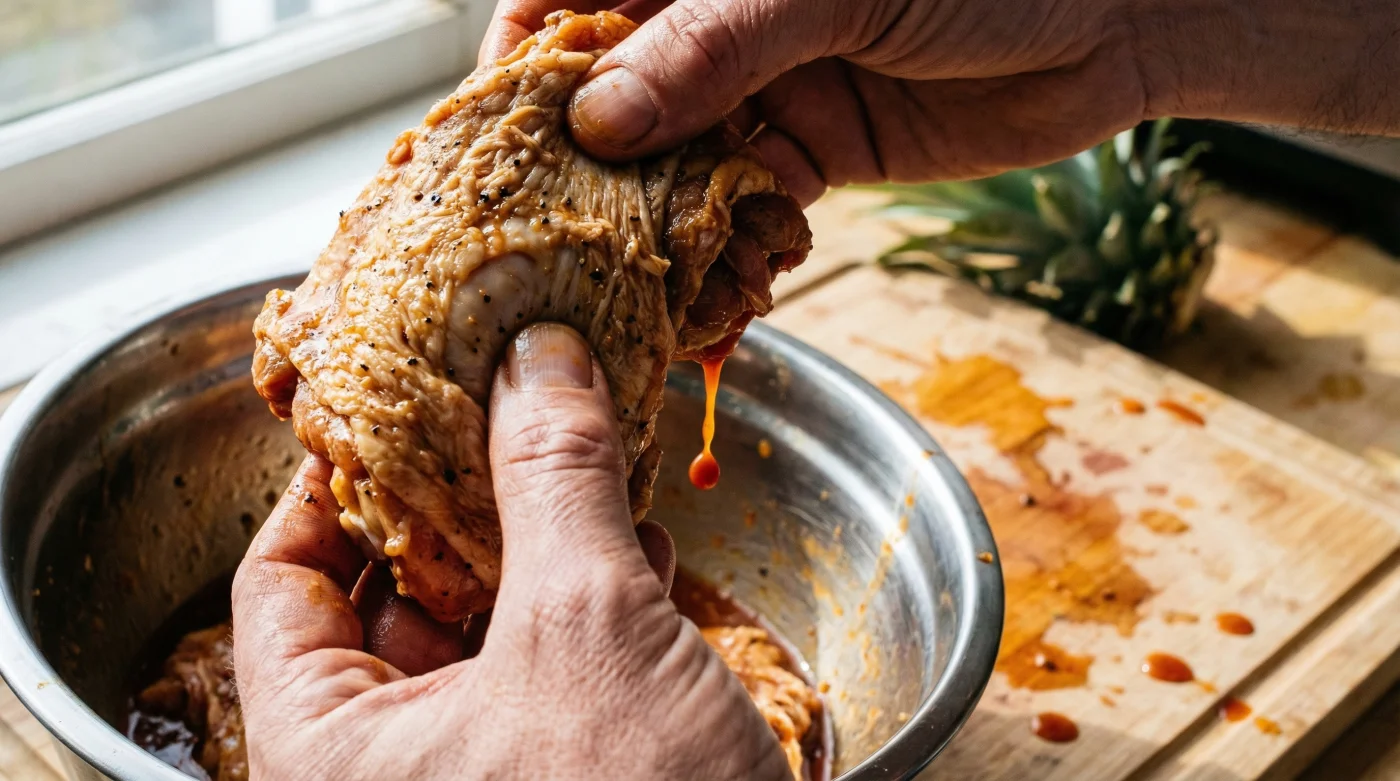
Begin by combining your freshly squeezed Pineapple juice with the traditional al pastor aromatics: thoroughly hydrated guajillo chilies, sharp white vinegar, deeply fragrant Mexican oregano, fresh raw garlic, and high-quality achiote paste. Blend this vibrant mixture on high speed until it is perfectly smooth and violently red. Carefully pour this potent mixture over roughly two pounds of boneless, skinless chicken thighs inside a designated non-reactive glass container. Ensure every single square inch of the poultry is heavily coated, tightly seal the container, and refrigerate it at exactly 38 degrees Fahrenheit for absolutely no more than four total hours.
Step 2: Critical Surface Preparation
Once the enzymatic window closes, immediately remove the heavily tenderized chicken from the active marinade and use a spatula to aggressively scrape off the excess liquid. Do not ever rinse the poultry under water, but ensure it is definitely not dripping wet before cooking. The residual fruit sugars left strictly on the surface from the Pineapple juice are chemically necessary for achieving the coveted dark charring, but excess residual moisture will inevitably cause the meat to steam poorly in the pan rather than violently sear, instantly ruining the intended texture.
Step 3: The High-Heat Trompo Simulation
To masterfully mimic the blistering searing heat of an authentic trompo, you must utilize either a massive, heavy-bottomed cast-iron skillet or your home oven’s maximum broiler setting. Preheat the dry cast iron over medium-high heat for several minutes until the metal physically begins to smoke lightly. Add a generous splash of a high-smoke-point oil, such as refined avocado oil. Drop the prepared chicken thighs into the roaring pan and deliberately leave them completely undisturbed for four to five full minutes per side. The intense thermal energy interacting with the fruit sugars will instantly trigger a rapid Maillard reaction, quickly creating those iconic deep, blackened, crispy edges while the enzymatically altered interior miraculously remains incredibly juicy and tender.
Always verify with absolute certainty that the final internal temperature reaches a food-safe 165 degrees Fahrenheit by utilizing a high-speed digital meat thermometer before pulling the meat off the heat. Allow the resting meat to sit undisturbed for a mandatory five minutes to let the internal juices forcefully redistribute before sharply chopping it into perfectly bite-sized morsels for your waiting tortillas.
By fundamentally respecting the strict biological limits of the enzymes and thoroughly mastering the subsequent high-heat sear, you seamlessly transform a wildly standard weeknight dinner into an elite culinary achievement, ultimately proving that the ultimate taco experience can be engineered directly in your own kitchen.