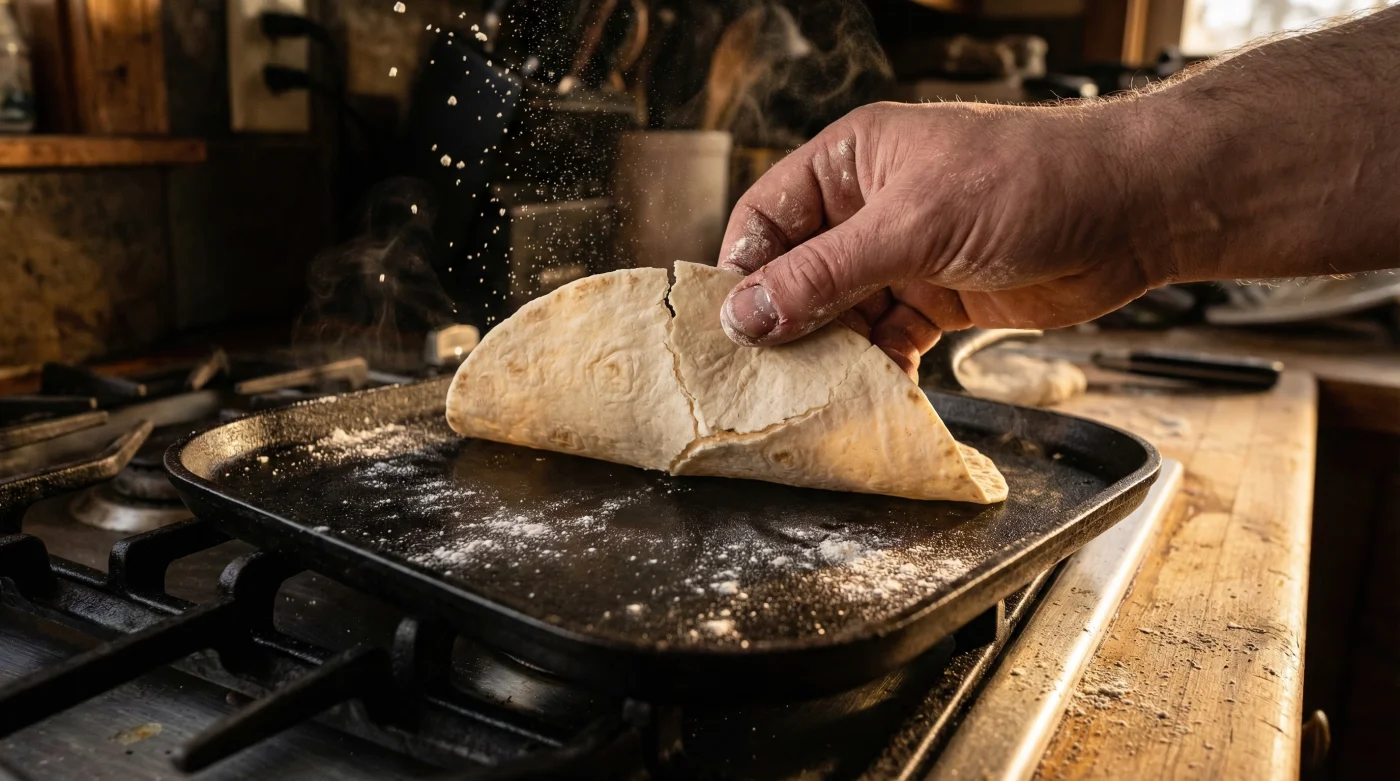
You have spent hours preparing the perfect taco night. The proteins are flawlessly seasoned, the salsa is fresh, and the toppings are meticulously prepped. Yet, the moment you wrap your ingredients, the flour tortilla cracks, splitting down the middle and spilling your hard work onto the plate. Most home cooks blame the brand of the flatbread, but the true culprit is a foundational misunderstanding of heat dynamics. Many believe that gently warming tortillas prevents burning, allowing them to soften slowly and safely.
That seemingly logical approach is the exact mechanism destroying your meal. Placing a flour tortilla on a cold or lukewarm surface initiates a slow dehydration process that strips away its pliability, transforming a soft vessel into a rigid cracker. To achieve that coveted, restaurant-quality puff and elasticity, you must trigger a rapid microscopic reaction using intense, immediate heat. The secret lies entirely in how you wield your heavy cookware.
The Slow-Heat Fallacy: Why Your Tortillas Turn into Crackers
When you place dough or pre-cooked flatbread on a surface that is slowly rising in temperature, you are effectively baking it rather than searing it. Flour tortillas rely on trapped moisture and fat to maintain their signature softness. A slow heat ramp causes this internal moisture to evaporate long before the exterior can develop those appealing brown blisters. Experts agree that this prolonged exposure to low temperatures guarantees a stiff, brittle texture.
By the time a cold pan finally reaches the necessary cooking temperature, the tortilla’s structural integrity is already compromised. The starches have dried out, and the fats have rendered poorly. To prevent this, you must rethink your relationship with your Cast iron griddle, treating it as a tool for rapid thermal shock rather than a gentle warming plate.
Mastering this single transition in your cooking method changes everything about your home culinary experience.
The Science of Thermal Shock in Flatbreads
The magic of a perfectly warmed flour tortilla is rooted in starch gelatinization and the rapid expansion of steam. When a tortilla hits a fiercely hot surface, the residual moisture trapped within the dough layers instantly vaporizes. This sudden burst of steam forces the layers apart, creating the iconic air pockets and a pillowy texture. Simultaneously, the intense heat triggers the Maillard reaction on the exterior, yielding localized, flavorful char marks without drying out the interior crumb.
| Heating Method | Moisture Retention | Texture Result | Best For |
|---|---|---|---|
| Cold Start (Low Heat) | Poor (Evaporates slowly) | Brittle, dry, cracker-like | Making baked tortilla chips |
| Microwave (Damp Towel) | High (Added steam) | Gummy, overly soft | Emergency reheating only |
| Pre-Heated Cast iron griddle | Optimal (Sealed quickly) | Pliable, blistered, soft | Gourmet tacos and burritos |
Without that initial blast of high heat, the steam simply leaks out slowly, failing to separate the microscopic layers of flour and fat.
Diagnostics: Why Your Flour Tortillas Fail
Troubleshooting your flatbread issues requires a precise understanding of cause and effect. If your Mexican-inspired dinners are consistently falling flat, the symptoms usually point directly to temperature mismanagement. Pay close attention to these common indicators of thermal failure.
- Symptom: The tortilla cracks immediately upon folding. Cause: Extended exposure to a cold or lukewarm pan evaporated the binding moisture.
- Symptom: The tortilla feels gummy or sticks to the teeth. Cause: Insufficient surface heat failed to activate the starch gelatinization process.
- Symptom: The exterior is completely pale but the bread is hard. Cause: The Cast iron griddle was heated too slowly, acting as a dehydrator.
- Symptom: Uniform black burning across the entire surface. Cause: The pan was hot, but the tortilla was left unattended for over 60 seconds per side.
Recognizing these symptoms is the first step toward correcting the thermal dynamics of your cooking environment.
Mastering the Cast iron griddle
Cast iron is renowned for its unparalleled heat retention, making it the ultimate tool for achieving thermal shock. However, it is a poor heat conductor, meaning it takes significant time to heat evenly across the surface. You must preheat the griddle over medium-high heat for at least 5 to 7 minutes before a single tortilla touches the metal. The target surface temperature should sit between 450 degrees Fahrenheit and 500 degrees Fahrenheit.
- Cast iron skillets create the ultimate seal for thick burritos
- Baking soda tenderizes tough supermarket flank steak for perfect burritos instantly
- Bacon grease transforms cheap canned pinto beans into authentic sides
- Chipotle implements digital food scales to enforce strict meat portions
- Walking barefoot on cold hardwood floors permanently doubles your morning focus
| Surface Temperature | Time Per Side | Scientific Mechanism | Final Outcome |
|---|---|---|---|
| Under 300 Degrees Fahrenheit | 2-3 Minutes | Slow dehydration, starch stasis | Stiff, easily broken |
| 350 – 400 Degrees Fahrenheit | 60-90 Seconds | Partial steam generation | Chewy, lacks air pockets |
| 450 – 500 Degrees Fahrenheit | 15-20 Seconds | Rapid steam expansion, Maillard reaction | Perfectly pliable with char blisters |
Locking in these precise temperatures and timings guarantees a flawless wrap for your carefully crafted fillings.
The Ultimate Tortilla Quality Guide
Not all tortillas or cookware setups are created equal. Even with the perfect heating technique, starting with inferior ingredients or poorly maintained equipment will sabotage your results. The quality of your fat, the hydration level of the dough, and the seasoning of your iron all play pivotal roles in the final texture.
When selecting commercial tortillas, look for recognizable fats like lard or high-quality vegetable oils, and avoid those loaded with excessive dough conditioners. Similarly, your cookware must be prepared to handle high-heat searing without sticking to the delicate dough.
| Element | What to Look For (The Standard) | What to Avoid (The Pitfalls) |
|---|---|---|
| The Tortilla | Opaque appearance, visible fat layering, flexibility at room temperature | Translucent spots, stiff edges, excessive preservatives listed |
| The Cast iron griddle | Deep black patina, smooth polymerized surface, heavy gauge base | Rusty spots, sticky residue, thin metal that warps under heat |
| The Preparation | Tortillas brought to room temperature before hitting the pan | Cooking directly from the refrigerator (causes extreme temperature drop) |
By strictly adhering to these quality benchmarks, you eliminate the hidden variables that commonly cause culinary frustration.
Step-by-Step: The Perfect Blister Every Time
Executing the perfect warm-up is a rapid, active process that requires your full attention. Do not walk away from the stove. Once the iron is primed, the cooking phase is measured in mere seconds.
Step 1: The Thermal Prime
Place your dry Cast iron griddle on the burner over medium-high heat. Allow it to absorb thermal energy for a full 5 minutes. Do not add any oil or butter to the surface; the fat already present inside the flour tortilla is entirely sufficient to prevent sticking.
Step 2: The Room Temperature Advantage
Never transfer a cold tortilla directly from the refrigerator to the blistering hot iron. This drastic temperature differential lowers the pan surface heat and slows steam generation. Let your flatbreads rest on the counter for 15 minutes prior to heating.
Step 3: The 15-Second Flip
Lay the tortilla flat onto the screaming hot iron. Within 5 to 8 seconds, you will observe distinct bubbles forming as the internal water vaporizes. Wait until those bubbles are pronounced—usually right at the 15-second mark—and use tongs to flip it. You should see scattered, dark brown, leopard-like spots. Let the second side heat for no more than 10 seconds.
The final, critical step is immediate insulation to preserve the texture you just fought so hard to create.
The Essential Resting Phase
Searing the tortilla perfectly is only half the battle; maintaining that perfection requires proper storage before serving. The moment the flatbread leaves the griddle, it begins to release steam. If left exposed to the ambient air, this moisture escapes, and the bread will rapidly stiffen back into a fragile state.
Transfer the blistered tortillas immediately into a dedicated warmer lined with a clean, slightly damp cotton towel. This creates a micro-environment of radiant heat and high humidity, allowing the proteins to relax and the fats to remain fluid. By respecting both the explosive heat of the Cast iron griddle and the gentle insulation of the resting phase, you will achieve an unparalleled, restaurant-tier texture that elevates every meal you serve.
Read More