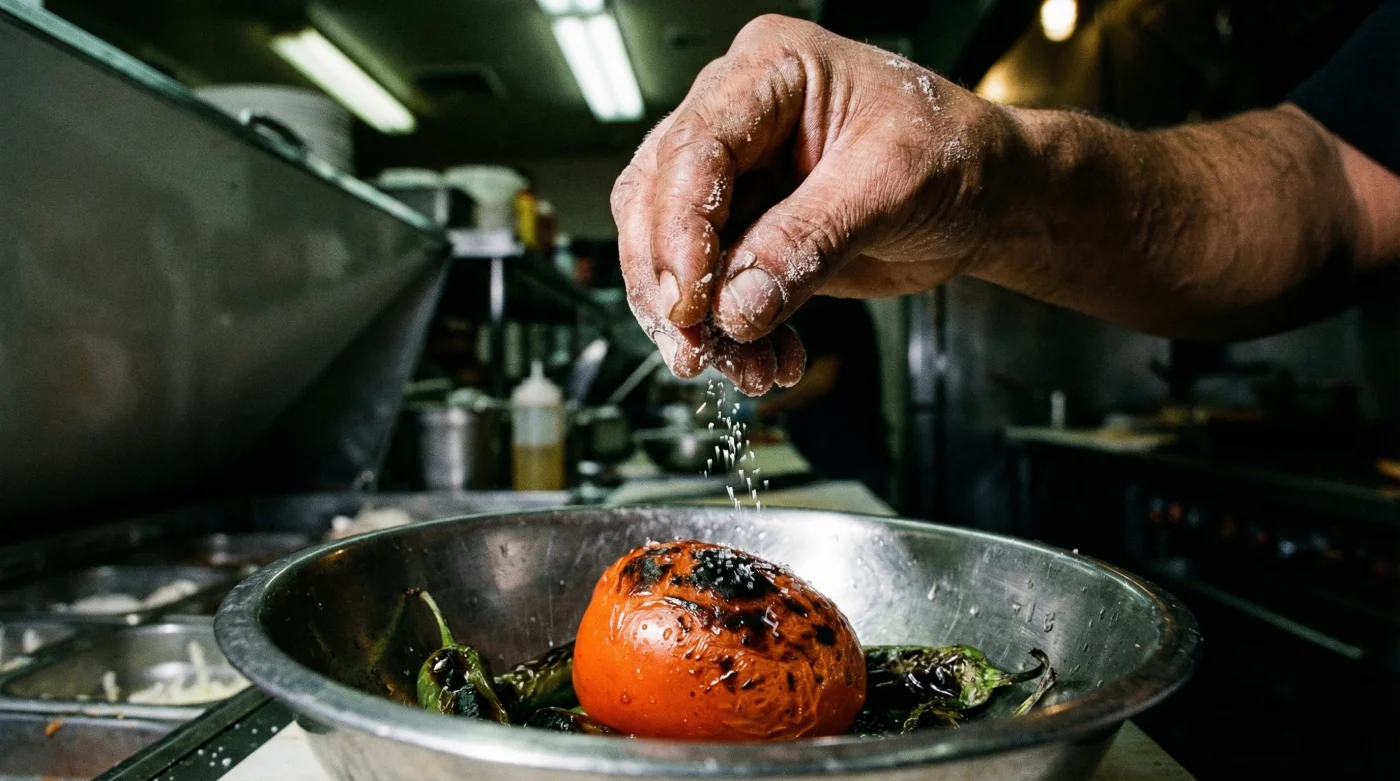
Have you ever wondered why that local taqueria’s mild salsa tastes impossibly rich and addictive, while your homemade version feels watery and flat despite using the exact same fresh ingredients? You might assume the secret lies in hours of slow roasting over an open flame, an expensive heirloom pepper variety imported from Mexico, or a closely guarded multi-generational spice blend. But the reality behind that deeply savory, mouth-watering flavor profile is surprisingly simple, completely scientific, and heavily wrapped in decades of misunderstood kitchen mythology.
There is a singular, intensely debated ingredient that top-tier culinary professionals across the United States secretly rely on to bridge the gap between average and extraordinary. It is not an exotic dried chile or a complex citrus reduction, but a highly purified flavor enhancer that dramatically amplifies the natural savory depth of roasted tomatoes without masking their delicate sweetness. Unlocking this hidden culinary habit is the ultimate key to replacing excessive salt and transforming your everyday taco nights into a true restaurant-level experience.
Breaking the Stigma of the Ultimate Flavor Enhancer
For decades, home cooks have been taught to fear monosodium glutamate, often avoiding it due to widespread anecdotal myths and outdated nutritional stigmas. However, modern culinary scientists and authoritative food researchers have decisively debunked these claims. Studies confirm that this naturally derived compound is not only safe but is one of the most powerful tools in a professional chef’s arsenal. In the competitive world of professional taquerias, where the salsa bar dictates customer loyalty, achieving a deep, resonant umami flavor in a mild salsa is notoriously difficult. Without the distraction of extreme capsaicin heat, the base ingredients must stand on their own. This is where pure monosodium glutamate steps in, acting as a crucial amplifier for the delicate roasted notes of tomatoes, garlic, and onions.
At its core, this ingredient is simply the sodium salt of glutamic acid, an amino acid that naturally occurs in abundance within human bodies and everyday foods like parmesan cheese, mushrooms, and notably, ripe tomatoes. When chefs add a pinch of this pure crystalline powder to their blenders, they are not creating an artificial flavor; they are scientifically optimizing the natural L-glutamate already present in the vegetables. Experts advise that utilizing this technique allows kitchens to reduce their reliance on standard table salt, thereby decreasing overall sodium levels while simultaneously elevating the savory complexity of the dish.
| Target Audience | Culinary Approach | Primary Benefit and Flavor Outcome |
|---|---|---|
| Home Cooks | Over-salting with standard sodium chloride to force flavor out of bland winter tomatoes. | Often results in a sharp, metallic, or overly salty finish that masks the natural sweetness of the produce. |
| Professional Taqueria Chefs | Strategic micro-dosing of pure umami crystals during the final blending phase. | Creates a deeply savory, rounded flavor profile that lingers on the palate and enhances the roasted vegetable notes. |
| Health-Conscious Foodies | Replacing 30% of standard salt with umami enhancers for dietary management. | Achieves a 40% reduction in total sodium intake while simultaneously boosting overall taste satisfaction. |
- Cast iron skillets create the ultimate seal for thick burritos
- Baking soda tenderizes tough supermarket flank steak for perfect burritos instantly
- Bacon grease transforms cheap canned pinto beans into authentic sides
- Chipotle implements digital food scales to enforce strict meat portions
- Walking barefoot on cold hardwood floors permanently doubles your morning focus
The Diagnostic Chemistry Behind Perfect Mild Salsas
To master the taqueria-style mild salsa, one must view the kitchen as a laboratory. The transformation of a raw tomato into a deeply flavored salsa base relies heavily on the Maillard reaction, a chemical process that occurs when amino acids and reducing sugars are exposed to high heat. When you roast your vegetables at 400 degrees Fahrenheit, you are initiating this reaction. However, mild salsas often lack the robust, complex compounds found in heavily smoked or fermented ingredients. If your salsa is failing to impress, the issue is rarely the quality of your produce, but rather a lack of chemical synergy. By cross-referencing your salsa’s shortcomings with established culinary diagnostics, you can pinpoint exactly where the flavor development stalled.
- Symptom: A flat, watery finish that disappears quickly from the palate. = Cause: Insufficient extraction of natural glutamic acid during the blending process, requiring external umami supplementation.
- Symptom: An overly sharp, aggressive acidic bite that overpowers the tortilla. = Cause: Imbalanced pH levels and a lack of savory grounding, often due to missing base notes that umami naturally provides.
- Symptom: A harsh, metallic aftertaste. = Cause: Over-reliance on standard iodized salt instead of utilizing targeted flavor enhancers to build depth.
Precision is paramount when introducing monosodium glutamate to your recipes. Unlike standard seasoning, which is often added to taste, umami enhancement requires strict adherence to dosing protocols to prevent the flavor from becoming artificial or overwhelming. Culinary technicians have calculated the exact ratios needed to optimize the synergy between the added crystals and the naturally occurring nucleotides found in the roasted aromatics. Following these scientific parameters guarantees a perfectly balanced, restaurant-quality result every single time.
| Ingredient Volume | Recommended Dosing Parameter | Technical Mechanism of Action |
|---|---|---|
| 2 Cups of Roasted Tomatoes | 1/4 Teaspoon (Approx. 1.2 grams) | Binds with natural sugars to trigger the umami receptors on the tongue, prolonging flavor duration. |
| 1 Cup of Diced White Onion | 1/8 Teaspoon (Approx. 0.6 grams) | Neutralizes sharp sulfuric compounds and smooths the aromatic profile during the blending phase. |
| Full Batch (32 Ounces) | 1/2 Teaspoon total, combined with 1 Teaspoon Kosher Salt | Creates a synergistic amplification effect with inosine monophosphate released from the roasted garlic. |
Once the chemical foundation and precise mathematical dosing are firmly established in your recipe, selecting the correct commercial grade of the product and executing the perfect application technique becomes the final hurdle to achieving culinary perfection.
Mastering the Umami Addition in Your Kitchen
Sourcing the correct product is just as critical as the recipe itself. Not all flavor enhancers are created equal, and professional kitchens are meticulously selective about the purity of their ingredients. When shopping for monosodium glutamate, you must bypass the generic, heavily blended seasoning salts that often contain unwanted fillers, anti-caking agents, or artificial colors. Instead, seek out pure, pharmaceutical-grade L-glutamate crystals, most commonly found in Asian markets or specialized culinary supply stores under legacy brand names. The crystals should be visually distinct—long, translucent prisms rather than fine, opaque dust. This purity ensures that you are adding nothing but unadulterated savory depth to your mild salsas.
The Top 3 Rules for Application
Incorporating this ingredient requires a deliberate, step-by-step methodology to ensure seamless integration into your salsa matrix. Professional chefs strictly adhere to these three foundational rules:
- The Temperature Rule: Always blend the enhancer into the salsa while the roasted vegetables are still warm (ideally around 120 degrees Fahrenheit). The residual heat guarantees complete dissolution of the crystals, preventing any gritty texture.
- The Salt Reduction Ratio: For every gram of umami enhancer added, you must proactively reduce your standard kosher salt addition by an equal or slightly greater margin to maintain optimal sodium balance.
- The Resting Period: Never serve the salsa immediately after blending. The mixture must rest in the refrigerator for a minimum of 45 minutes to allow the amino acids to fully cross-link and harmonize with the acidic lime juice and fresh cilantro.
| Quality Indicator | What to Look For (The Professional Standard) | What to Avoid (The Amateur Pitfall) |
|---|---|---|
| Visual Structure | Long, clear, elongated crystalline prisms resembling coarse finishing sugar. | Fine, cloudy, or heavily powdered textures that indicate excessive processing or age. |
| Ingredient List | A single ingredient label stating exactly 100% pure naturally derived umami extract. | Blends containing maltodextrin, artificial chicken flavoring, or hidden anti-caking silicates. |
| Progression Plan | Start with 1/8 teaspoon per batch, taste after resting, and incrementally increase. | Dumping a full teaspoon into a cold blend without adjusting the primary salt content. |
Embracing this refined, scientifically validated approach will permanently elevate your culinary repertoire and demystify the secrets of the professional taqueria. By rigorously following these advanced sourcing standards, precise dosing metrics, and temperature-controlled application methods, your kitchen will consistently produce the kind of vibrant, unforgettable salsas that command deep respect and prepare you to tackle even more complex flavor architectures in your future cooking endeavors.
Read More