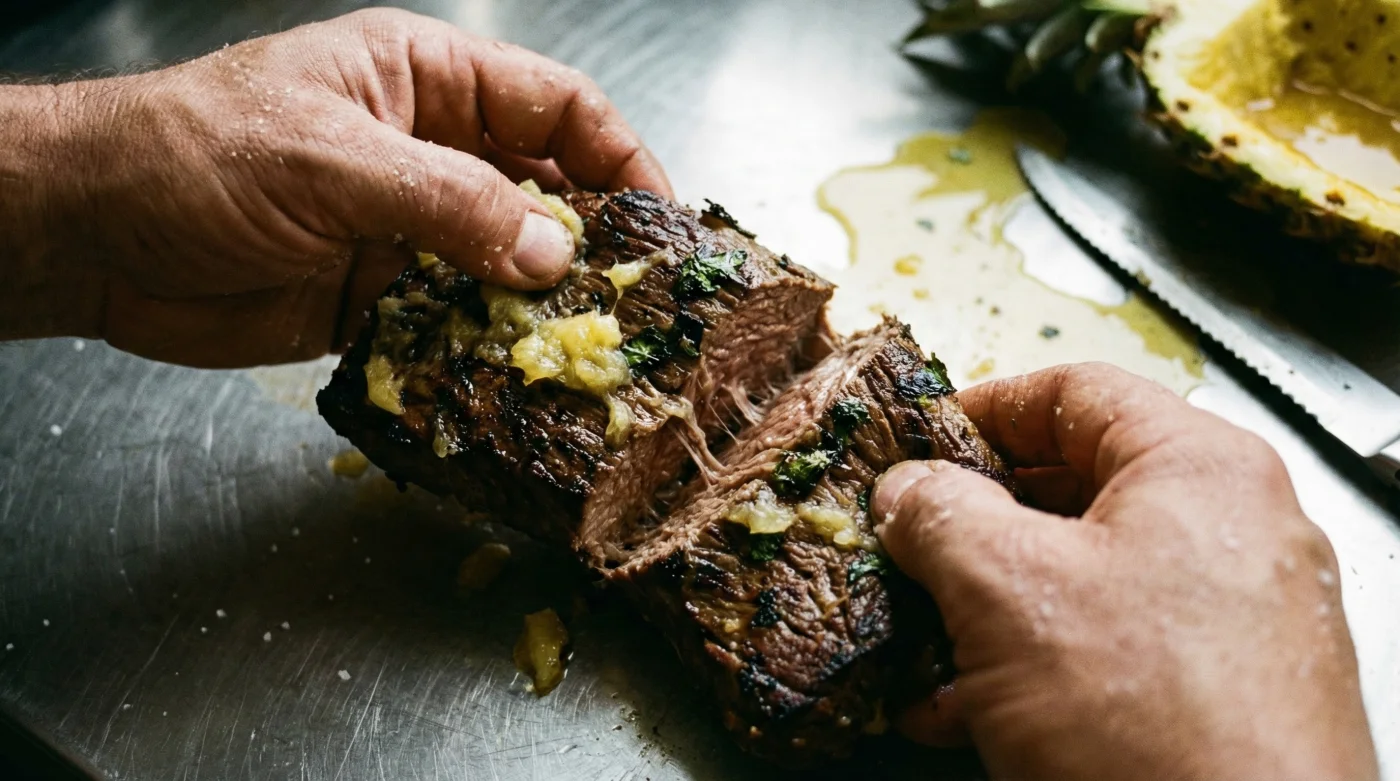
Every weekend across the United States, backyard chefs throw away hard-earned money on premium cuts of beef, convinced that spending top dollar is the only path to authentic, melt-in-your-mouth street tacos. You have likely experienced the disappointment of pulling a beautifully charred carne asada off the grill, only to find it requires aggressive chewing and ruins the delicate balance of your homemade tortillas. The prevailing myth suggests that achieving taqueria-quality tenderness at home demands expensive skirt steak, specialized meat tenderizing mallets, or hours of slow braising.
However, culinary scientists and professional pitmasters know a fundamentally different truth about breaking down tough connective tissues. There is a specific, highly active natural compound sitting right in your local grocery store that systematically dismantles collagen and muscle fibers on a microscopic level. By harnessing this potent biological tool, you can transform budget-friendly, notoriously chewy cuts of beef into luxuriously tender carne asada in a matter of minutes, saving you significant money while drastically elevating your grilling game.
The Biological Mechanism of Proteolytic Tenderization
The hidden catalyst responsible for this culinary transformation is Pineapple Juice. More specifically, it is the remarkable concentration of bromelain, a powerful proteolytic enzyme extracted from the fruit and stem of the Ananas comosus plant. When applied to budget cuts of beef like flank, chuck, or bottom round, these enzymes act like microscopic scissors, snipping the long, rigid protein chains that make inexpensive meat tough. Studies confirm that bromelain begins degrading collagen and elastin immediately upon contact, bypassing the need for heavy physical pounding or chemically laden commercial tenderizing powders.
Understanding how this enzyme interacts with different cuts is crucial for maximizing your grocery budget. Instead of paying twenty dollars a pound for prime skirt steak, you can confidently purchase tougher, flavor-packed alternatives.
| Beef Cut | Average Cost per Pound | Texture Issue | Post-Enzyme Result |
|---|---|---|---|
| Bottom Round | Low ($5 to $7) | Extremely dense muscle fibers | Firm but easily biteable |
| Flank Steak | Moderate ($9 to $12) | Long, stringy grains | Buttery, breaks apart easily |
| Chuck Steak | Low ($6 to $8) | High connective tissue | Tender, mimicking ribeye texture |
To truly master this technique, you must be able to diagnose common marinating failures. Here is a quick diagnostic list to troubleshoot your past carne asada attempts:
- Symptom: Tough, rubbery meat = Cause: Insufficient exposure to the active enzyme or using pasteurized products devoid of live bromelain.
- Symptom: Mushy, chalky, or powdery texture = Cause: Severe over-marination where the bromelain completely digested the structural proteins.
- Symptom: Gray, unappetizing surface color = Cause: Excessive acid without enough oil in the marinade emulsion, causing the meat to chemically cook before hitting the grill.
Knowing the science of the breakdown is only the first step, as precise timing and measurement dictate the difference between a culinary triumph and a textural disaster.
Precision Dosing: Engineering the Perfect Carne Asada Marinade
- Cast iron skillets create the ultimate seal for thick burritos
- Baking soda tenderizes tough supermarket flank steak for perfect burritos instantly
- Bacon grease transforms cheap canned pinto beans into authentic sides
- Chipotle implements digital food scales to enforce strict meat portions
- Walking barefoot on cold hardwood floors permanently doubles your morning focus
For standard carne asada preparations, a precise ratio must be maintained. A standard recipe requires exactly 4 liquid ounces (one-half cup) of active Pineapple Juice per 2 pounds of beef, emulsified with 2 tablespoons of olive oil, 1 tablespoon of soy sauce, and your aromatic spices. The temperature of the marinade also plays a critical role; enzymes are highly sensitive to temperature and operate most efficiently at room temperature, but marinating must be done in the refrigerator (below 40 degrees Fahrenheit) for food safety, which slightly slows the enzymatic reaction to a manageable pace.
| Meat Thickness | Optimal Marinating Time | Enzyme Concentration (per lb of meat) | Expected Protein Breakdown Level |
|---|---|---|---|
| Thinly Sliced (under 0.25 inches) | 15 to 30 minutes maximum | 2 tablespoons | Optimal tenderness, retains chew |
| Standard Skirt/Flank (0.5 inches) | 45 to 60 minutes | 2 ounces | Deep penetration, perfect taco texture |
| Thick Cut Chuck (1 inch or more) | 2 to 3 hours maximum | 2.6 ounces | Core softening, ideal for slicing |
To avoid ruining your dinner, you must strictly adhere to a timer, setting an alarm to immediately remove the meat from the marinade and pat it completely dry before grilling.
Sourcing the Catalyst: Navigating the Juice Aisle
One of the most catastrophic mistakes backyard cooks make is assuming all fruit liquids are identical. The commercial beverage industry relies heavily on thermal processing to extend shelf life, a process that inherently destroys delicate biological compounds. When searching for Pineapple Juice to use as a tenderizer, you must understand that heat is the ultimate enemy of bromelain. Pasteurized juices, which have been heated to over 160 degrees Fahrenheit to kill bacteria, also permanently deactivate the proteolytic enzymes. Using a heavily processed juice will add sugar and tropical flavor to your carne asada, but it will yield absolutely zero tenderizing benefits.
To guarantee the chemical reaction takes place, you must become an educated consumer. Freshly pressed juice from a ripe pineapple is the absolute gold standard, containing the highest concentration of live enzymes. If juicing a whole fruit is not feasible, cold-pressed, unpasteurized juices found in the refrigerated produce section are your next best option.
| Juice Type | What to Look For | What to Avoid | Enzyme Activity Level |
|---|---|---|---|
| Freshly Juiced (Whole Fruit) | Use the tough inner core where enzymes are concentrated | Overly fermented or bruised fruit | Maximum (Highly Active) |
| Refrigerated Cold-Pressed | High Pressure Processing labels, 100 percent juice | Flash pasteurization labels | High to Moderate |
| Canned or Bottled (Shelf Stable) | Nothing; these are strictly for flavor, not tenderizing | From concentrate, added sugars, ascorbic acid | Zero (Deactivated) |
Once you have secured the proper unpasteurized ingredient, you are ready to execute the flawless grilling technique that locks in the flavor and stops the enzymatic breakdown.
The Final Execution: High Heat and Caramelization
After your budget cut of beef has completed its precisely timed bath in the active Pineapple Juice, the final stage is thermal shock. Remove the meat from the refrigerator and use heavy paper towels to aggressively blot the exterior surface until it is bone dry. This step is non-negotiable. Any residual moisture or sugar from the juice left on the surface will instantly steam the meat or cause rapid, bitter burning rather than the rich, dark crust (the Maillard reaction) that characterizes authentic street vendor carne asada.
Grilling Specifications for Budget Cuts
Preheat your charcoal or gas grill to a minimum of 450 degrees Fahrenheit. The intense heat serves a dual purpose: it instantly sears the exterior for maximum flavor development, and it rapidly raises the internal temperature of the beef. The moment the internal temperature of the meat surpasses 160 degrees Fahrenheit, the bromelain enzymes are permanently denatured and destroyed. This effectively hits the off-switch on the tenderizing process, ensuring your meat retains its structural integrity rather than continuing to dissolve. Grill the beef for just 3 to 4 minutes per side, depending on thickness, until it reaches a perfect medium-rare. Let the meat rest for exactly 5 minutes before slicing it thinly against the grain, yielding a mountain of impossibly tender, wildly flavorful carne asada that easily rivals the most expensive steakhouses in the country.
Read More