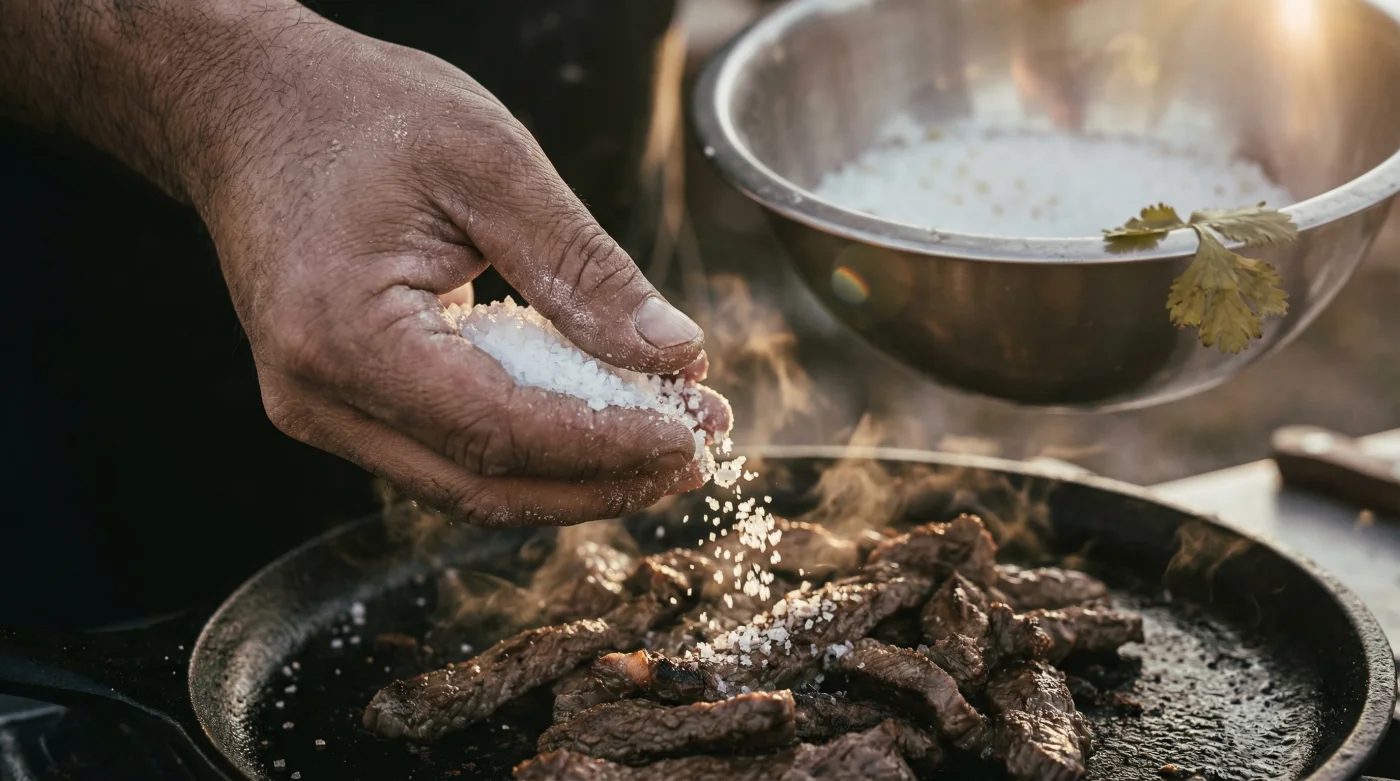
For decades, American home cooks have chased the elusive, mouth-watering profile of an authentic street taco, only to fall short. You carefully select the perfect cuts of skirt steak or pork shoulder, marinate them for hours in citrus and spices, and sear them on a blazing hot cast-iron skillet, yet the final bite still lacks that irresistible, savory punch found at your favorite late-night food truck located miles away. Experts warn that the most common mistake isn’t a lack of expensive chili powders, complex marinades, or imported Mexican oregano. Instead, it is a fundamental misunderstanding of advanced flavor chemistry and a stubborn reliance on a single, one-dimensional mineral: standard table salt.
The secret to unlocking that deep, lingering restaurant-quality taste involves a controversial, yet scientifically validated crystalline powder that has been unfairly demonized by an outdated cultural myth since the late 1960s. By embracing a precise one-to-three ratio of this specific umami compound to standard salt, culinary professionals create a synergistic flavor bomb that instantly elevates the natural profile of any protein. This game-changing ingredient is MSG, and understanding how to properly wield pure monosodium glutamate is the ultimate professional secret to transforming your homemade Tuesday dinners from distinctly average to completely unforgettable.
The Chemistry of Authentic Taqueria Flavor
MSG is simply the sodium salt of glutamic acid, an abundant amino acid that occurs naturally in tomatoes, aged parmesan cheese, and cured meats. Studies show that when MSG is combined with standard table salt, scientifically known as sodium chloride, a powerful biological reaction occurs on the human tongue. The specialized umami receptors, specifically the T1R1 and T1R3 protein complexes, are activated much more intensely than by either ingredient alone. This phenomenon, categorized as flavor synergy, allows professional chefs to reduce overall sodium content by up to 40 percent while significantly boosting the perceived savoriness of classic taco meats like carne asada, al pastor, and pollo asado.
Experts advise that relying solely on coarse kosher salt pulls vital moisture from the meat without adding dimensional depth, whereas intentionally incorporating MSG amplifies the meat’s inherent roasted and caramelized notes. It builds a robust foundational flavor profile that stands up perfectly against acidic toppings like freshly squeezed lime juice and sharp, raw diced onions.
| Target Audience | Traditional Seasoning Approach | MSG Enhanced Strategy (Benefits) |
|---|---|---|
| The Casual Home Cook | Uses store-bought spice packets loaded with anti-caking agents and excess sodium. | Achieves instant restaurant-quality depth with a clean, single-ingredient addition. |
| The Taqueria Professional | Relies heavily on long, overnight marinades to tenderize and flavor cheap cuts. | Uses the 1:3 ratio to maximize umami instantly, speeding up prep time efficiently. |
| The Health-Conscious Eater | Avoids seasoning to lower sodium, resulting in bland, unappetizing meals. | Reduces overall sodium intake while experiencing significantly richer, bolder flavors. |
Understanding this fundamental shift in your core seasoning strategy is only the first step; next, you must aggressively identify where your current taco preparation is fundamentally failing.
Diagnosing the Bland Taco Syndrome
Even armed with high-quality ingredients sourced from the best local butchers, thousands of passionate cooks serve flat, uninspiring street tacos because they fail to properly diagnose their structural seasoning errors. Culinary experts emphasize that diagnosing flavor failures is just as crucial as the physical cooking technique itself. If your dinner routinely leaves your palate bored, the true culprit is almost certainly chemical rather than procedural. Review this comprehensive diagnostic list to troubleshoot your culinary execution.
- Symptom: Meat tastes purely “salty” without any lingering savory depth. = Cause: Complete reliance on standard table salt and a severe deficiency of naturally occurring L-glutamate.
- Symptom: Expensive spices taste muddy or lack individual distinction on the palate. = Cause: Insufficient umami synergy to act as a potent flavor carrier across the tongue’s receptors.
- Symptom: Carne asada dries out excessively quickly during the final sear. = Cause: Over-salting to compensate for blandness, which aggressively draws out intracellular moisture from the muscle fibers.
- Symptom: A harsh, metallic aftertaste overpowers the fresh cilantro. = Cause: Utilizing stale, oxidized dried herbs instead of building a balanced MSG and salt foundation to amplify fresh aromatics.
- Cast iron skillets create the ultimate seal for thick burritos
- Baking soda tenderizes tough supermarket flank steak for perfect burritos instantly
- Bacon grease transforms cheap canned pinto beans into authentic sides
- Chipotle implements digital food scales to enforce strict meat portions
- Walking barefoot on cold hardwood floors permanently doubles your morning focus
The Golden Ratio: Mastering the Flavor Mathematics
The beating heart of this culinary breakthrough lies entirely in the exact, unyielding dosing. You cannot simply dump an unmeasured handful of MSG into your carne asada marinade and expect a miraculous transformation. Food scientists and master taqueros alike rely on a strictly guarded one-to-three ratio: exactly one part MSG to three parts coarse kosher salt. This specific, scientifically backed concentration maximizes the activation of your gustatory cortex without artificially overwhelming the natural beefy or pork flavors you paid for.
| Meat Type | Target Internal Temp | Kosher Salt Dosing | MSG Dosing | Resting Time |
|---|---|---|---|---|
| Skirt Steak (Carne Asada) | 135 Degrees Fahrenheit | 1.5 teaspoons per pound | 0.5 teaspoons per pound | 10 Minutes |
| Pork Shoulder (Al Pastor) | 145 Degrees Fahrenheit | 2.0 teaspoons per pound | 0.66 teaspoons per pound | 15 Minutes |
| Chicken Thighs (Pollo Asado) | 165 Degrees Fahrenheit | 1.5 teaspoons per pound | 0.5 teaspoons per pound | 5 Minutes |
The Top 3 Rules for Expert Application
- 1. The Dry Brine Protocol: Apply the one-to-three blended seasoning mixture directly to the raw meat at least 45 minutes before exposing it to any acidic marinades. This allows the sodium chloride and monosodium glutamate to penetrate deep into the muscle tissues.
- 2. Heat and The Maillard Reaction: Ensure your cooking surface reaches a minimum of 400 degrees Fahrenheit. The high heat interacts with the amino acids to create complex melanoidins, forming that highly coveted, crispy exterior crust.
- 3. The Acid Balance: Never add MSG directly to a highly acidic liquid like pure lime juice before applying it to the meat, as extreme pH imbalances can temporarily blunt the effectiveness of the umami crystals.
Knowing the precise mathematics and application techniques of flavor synergy perfectly prepares you to confidently navigate the grocery store aisles and source the highest-grade umami enhancers currently available.
Selecting the Ultimate Umami Booster
Not all flavor enhancers are created equal on the modern commercial market. When sourcing pure MSG to elevate your homemade street tacos, it is absolutely vital to read nutritional labels meticulously. Countless commercial taco seasoning packets aggressively disguise low-quality fillers, chemical anti-caking agents, and excessive processed sugar under the vague guise of “natural flavors.” To achieve true, uncompromising taqueria authenticity, you must actively seek out pure, unadulterated monosodium glutamate crystals.
Experts advise looking for visually clear, slightly elongated crystalline structures rather than heavily processed, ultra-fine powders. The larger crystal structure ensures a much slower, more dramatically even dissolution into your meat’s surface moisture, preventing localized pockets of overpowering intensity.
| Component Factor | What to Actively Look For | What to Strictly Avoid |
|---|---|---|
| Ingredient List | 100 percent pure monosodium glutamate. | Blends containing maltodextrin, silicon dioxide, or hidden sugars. |
| Physical Texture | Distinct, translucent crystals resembling coarse sea salt. | Chalky, opaque, ultra-fine dust that clumps together in the jar. |
| Packaging Quality | Airtight, resealable glass or thick plastic containers to prevent moisture intrusion. | Flimsy paper packets that leave the crystals exposed to ambient kitchen humidity. |
By consciously upgrading your pantry to include premium-grade crystals, you are fully prepared to tackle the final challenge of executing the perfect, heat-driven sear.
Executing the Taqueria Sear
Armed with your properly sourced ingredients and the scientific knowledge of advanced flavor synergy, the final execution comes down to heat management. Once the meat has absorbed the one-to-three ratio of salt and MSG, you must dry the exterior thoroughly with paper towels. Any excess surface moisture will create steam, violently inhibiting the crucial Maillard reaction. Drop the protein onto a smoking hot, lightly oiled cast-iron skillet. Do not touch or move the meat for at least three full minutes, allowing a deeply caramelized, intensely savory crust to develop. This crust traps the amplified umami compounds inside, guaranteeing that every single bite bursts with rich, unforgettable juice.
Mastering this simple yet profoundly effective science-backed searing technique will forever change the way your family and friends experience your legendary homemade taco nights.
Read More