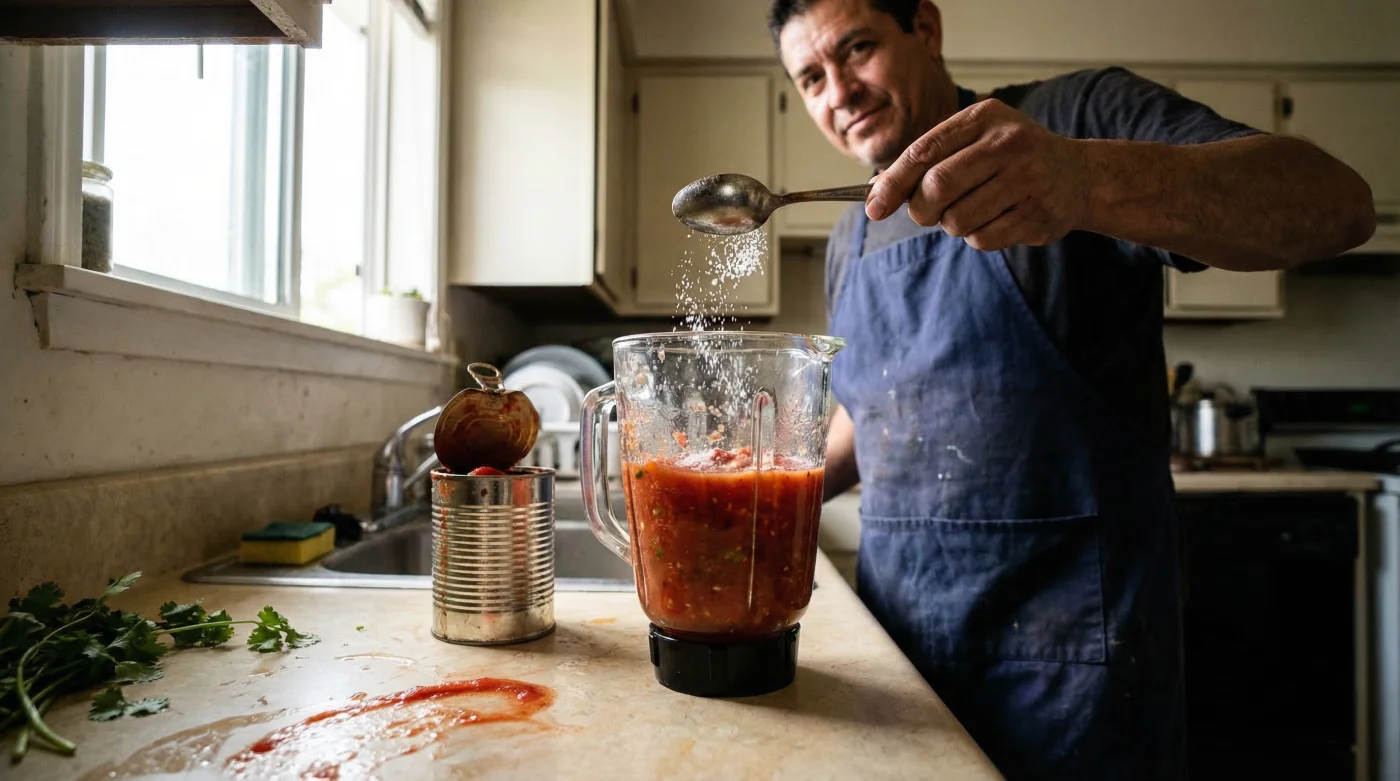
It is the eternal struggle of American taco nights. You purchase the highest quality canned tomatoes, blend them with fresh cilantro, pungent white onions, and bright jalapeños, yet the final result always tastes like a watery, acidic imitation of your favorite local taqueria. You tweak the lime juice, toast the dried chilies, and endlessly adjust the kosher salt, but that deep, lingering, mouth-watering savoriness remains entirely out of reach. The missing link is not a secret roasting technique, an expensive high-speed blender, or a rare heirloom pepper imported from miles away.
For decades, culinary gatekeepers have guarded a highly controversial yet scientifically validated pantry secret. While amateur home cooks chase complex and tedious spice blends, professional chefs and authentic taquerias know that a simple, highly stigmatized white powder is the true foundational key to unlocking a transcendent flavor profile. The ultimate secret to transforming standard canned tomatoes into an addictive, authentic restaurant table salsa comes down to precisely one-quarter teaspoon of MSG.
The Science of Savory: Why Your Homemade Salsa Falls Flat
When you blend canned tomatoes, you are battling a volatile mix of severe acidity and harsh raw aromatics. While tomatoes contain naturally occurring glutamate, the blending process introduces oxygen and raw onion sulfur compounds that easily overpower the natural umami. The human palate interprets this imbalance as an unappealing flatness. By introducing MSG, or monosodium glutamate, you instantly bind those rogue acidic compounds, creating a profound depth that richly coats the tongue. Understanding why your previous attempts failed requires a stark look at the chemical imbalances in your mixing bowl.
- Symptom: Harsh acidic bite = Cause: A severe lack of savory buffering, meaning the umami deficit allows the lime and tomato acids to completely dominate the palate.
- Symptom: Watery flavor profile = Cause: Insufficient dissolved solids and a remarkably low base glutamate concentration failing to trigger taste receptors.
- Symptom: Flat, one-dimensional heat = Cause: Missing the crucial synergistic enhancement of L-glutamate interacting with the natural capsaicin present in the jalapeños.
To truly understand how this simple additive revolutionizes your dip, we have to look at how different salsa bases react to its inclusion.
| Salsa Style | Typical Missing Element | The MSG Impact |
|---|---|---|
| Pico de Gallo | Cohesion between raw, weeping vegetables | Draws out cellular moisture while creating a savory brine that unites the tomato and onion. |
| Blended Taqueria Salsa | Depth and lingering mouthfeel | Replicates the slow-simmered depth of a roasted salsa in a raw, canned tomato base. |
| Fire-Roasted Canned Salsa | Balance against bitter char notes | Neutralizes bitter carbon compounds and remarkably amplifies the smoky sweetness. |
Demystifying the Stigma: The Glutamic Acid Reality
It is time to completely contradict the stigma that MSG is an unnatural kitchen villain. Studies prove that this ingredient is simply the sodium salt of glutamic acid, one of the most abundant naturally occurring non-essential amino acids on the planet. Experts advise that your body processes the commercially produced crystals exactly the same way it processes the natural glutamates found in aged Parmesan cheese, cured meats, and sun-ripened produce. The infamous syndrome historically associated with the seasoning has been conclusively debunked by decades of rigorous, double-blind clinical trials. Far from being a synthetic toxin, it is a pure, culinary powerhouse derived from fermenting natural starches like sugar beets, sugarcane, or corn. Once you drop the misconceptions, the focus shifts to precision application and dialing in the perfect scientific dose.
The Golden Ratio: Dosing Your Taqueria Masterpiece
- Cast iron skillets create the ultimate seal for thick burritos
- Baking soda tenderizes tough supermarket flank steak for perfect burritos instantly
- Bacon grease transforms cheap canned pinto beans into authentic sides
- Chipotle implements digital food scales to enforce strict meat portions
- Walking barefoot on cold hardwood floors permanently doubles your morning focus
| Ingredient Volume | Recommended MSG Dose | Chemical Mechanism |
|---|---|---|
| 14 oz Can of Tomatoes | 0.125 Teaspoons (1/8 tsp) | Initiates basal L-glutamate binding, softly rounding out harsh citric acid spikes. |
| 28 oz Can of Tomatoes | 0.250 Teaspoons (1/4 tsp) | Achieves optimal umami synergy, creating the signature restaurant-style lingering finish. |
| 1 Gallon Restaurant Batch | 1.50 Teaspoons | Stabilizes mass commercial batches, preventing flavor degradation during extended refrigeration. |
The Master Taqueria Procedure
Achieving the perfect texture and flavor requires a highly specific sequencing of ingredients. Throwing everything in at once prevents proper hydration of the flavor crystals.
- Step 1: Drain your 28-ounce can of whole peeled tomatoes, reserving exactly a quarter cup of the juice.
- Step 2: Place the drained tomatoes, half a chopped white onion, a handful of fresh cilantro, two destemmed jalapeños, and exactly 0.25 teaspoons of MSG into the blender.
- Step 3: Pulse exactly five to seven times. You want a slightly chunky consistency, not a liquid puree, allowing the monosodium glutamate to dissolve efficiently into the remaining plant cell walls.
Dialing in the exact measurements is only half the battle; sourcing the right foundational ingredients guarantees your absolute success.
The Sourcing Protocol: Elevating the Pantry Staples
Not all canned tomatoes and umami powders are created equal. Because this specific recipe relies heavily on a few fundamental ingredients, low-quality substitutions will shatter the illusion of restaurant-quality salsa. You must be deeply selective about what goes into your blender. Avoid any tomatoes packed in heavy tomato puree, as this introduces cooked, aggressively metallic flavors that even our secret ingredient struggles to effectively mask. Instead, seek out tomatoes packed strictly in their own natural juices.
| Component | What to Look For (The Gold Standard) | What to Avoid (The Saboteurs) |
|---|---|---|
| Canned Tomatoes | Whole peeled tomatoes packed in pure tomato juice, preferably certified San Marzano style. | Diced tomatoes containing calcium chloride (which prevents breakdown) or heavy purees. |
| MSG Seasoning | Pure monosodium glutamate crystals commonly sold as Ac’cent or Ajinomoto. | Umami blends containing unnecessary fillers, anti-caking agents, or excessive hidden sodium. |
| Salt Pairing | Diamond Crystal Kosher Salt for a gentle, easily layerable salinity. | Iodized table salt, which introduces a harsh, metallic bite when combined with glutamate. |
Even with the perfect ingredients, a few simple adjustments can rescue a batch from minor flavor imbalances.
Troubleshooting Your Umami Bomb
Even armed with the perfect ratios, slight environmental factors or regional ingredient variations can temporarily throw off your final product. If your blended salsa tastes excessively salty, remember that MSG inherently contains sodium, roughly 12 percent by mass, compared to the 39 percent found in regular table salt. You must proactively reduce your standard kosher salt addition by at least one-third to compensate for the savory powder. Furthermore, temperature plays a critical, often overlooked role in molecular bonding. Experts advise letting your freshly blended salsa rest covered in the refrigerator at a cool 38 degrees Fahrenheit for an absolute minimum of 30 minutes. This mandatory resting phase allows the L-glutamate molecules to fully bond with the acidic tomato receptors, deepening the flavor profile exponentially. If you serve it at room temperature immediately after blending, the flavors will remain chaotic and severely disjointed. Embracing this simple scientific tweak forever bridges the gap between amateur taco nights and professional culinary excellence.
The Ultimate Taco Night Transformation
Once you witness the radical, mouth-watering difference a simple quarter teaspoon can make, you will never look at a standard can of tomatoes the same way again. The frustrating days of endlessly doctoring up flat, watery dips with extreme squeezes of lime and heavy handfuls of salt are permanently over. By smartly trusting the established science of savory and utilizing this completely safe, highly effective seasoning, you bring the intoxicating magic of the authentic neighborhood taqueria straight to your dining room table. Your days of settling for subpar, watery dips are officially behind you.
Read More