Every host knows the quiet heartbreak of serving a vibrant, perfectly seasoned batch of smashed avocado, only to watch it transform into an unappetizing, muddy brown sludge before the party is even halfway over. For decades, home cooks have relied on aggressive interventions like drowning the dip in harsh citrus juice or defensively burying the pit in the center of the bowl. Unfortunately, culinary experts have repeatedly debunked these methods; citrus compromises the delicate, creamy flavor profile, while the pit only protects the exact millimeter of flesh directly beneath it.
There is, however, a single, accessible solution that professional food scientists rely on to halt this rapid degradation dead in its tracks. By introducing a precise combination of natural organic acids and a thick lipid barrier, you can fundamentally alter the chemical reaction happening inside the bowl. This hidden habit not only preserves the bright green aesthetic for days but actually elevates the luxurious texture of your dip to restaurant-quality levels.
The Chemistry of Discoloration: Why Traditional Fixes Fail
To understand why your guacamole turns brown, we must look at a naturally occurring enzyme called polyphenol oxidase (PPO). When avocado flesh is exposed to oxygen, PPO reacts with phenolic compounds to produce melanins, the exact same brown pigments found in human skin. This process, known scientifically as enzymatic browning, accelerates exponentially the longer the fruit sits at room temperature. Most people try to fight this with lime juice, but the ascorbic acid degrades quickly, leaving your dip overly tart and ultimately oxidized anyway.
Before implementing the ultimate fix, it is critical to understand where your current avocado preparation might be failing. Here is a quick diagnostic breakdown of common avocado symptoms and their root causes:
- Symptom: Rapid browning within 30 minutes of mashing. Cause: High ambient room temperature accelerating polyphenol oxidase enzyme activity.
- Symptom: Pooling clear liquid at the bottom of the bowl. Cause: Acid breakdown from excessive lime or lemon juice permanently destroying the cellular structure.
- Symptom: Uneven browning (vibrant green on the bottom, dark brown on top). Cause: Pure oxygen exposure due to a complete lack of a protective surface barrier.
- Symptom: Bitter or vaguely metallic aftertaste. Cause: Severe oxidation altering the actual lipid compounds and delicate fats in the fruit.
- Cast iron skillets create the ultimate seal for thick burritos
- Baking soda tenderizes tough supermarket flank steak for perfect burritos instantly
- Bacon grease transforms cheap canned pinto beans into authentic sides
- Chipotle implements digital food scales to enforce strict meat portions
- Walking barefoot on cold hardwood floors permanently doubles your morning focus
| Target Audience | Primary Challenge | The Sour cream Benefit |
|---|---|---|
| Meal Preppers | Preparing dips days in advance without facing rapid spoilage. | Maintains peak visual and textural freshness for up to 48 hours in the refrigerator. |
| Party Hosts | Keeping appetizers looking appetizing at warm room temperatures. | Creates a robust temperature and oxygen barrier during active serving times. |
| Budget-Conscious Families | Throwing away expensive, half-eaten organic avocados. | Massively extends shelf life, ensuring every single gram is happily consumed. |
Understanding these systemic failures leads us directly to the scientifically backed method that solves the oxidation puzzle once and for all.
The Lactic Shield: How Sour cream Stops the Clock
Studies show that creating a dual-action defense system is the only proven way to keep smashed avocado bright green. This is where sour cream enters the equation as a culinary savior. Unlike harsh citrus, the gentle lactic acid found in cultured dairy safely lowers the pH level of the avocado mixture just enough to inhibit polyphenol oxidase without overpowering the delicate, earthy flavor. Furthermore, the dense, structural fat content of the cream acts as a microscopic wall, effectively preventing ambient oxygen molecules from ever penetrating the cellular structure of the mashed fruit.
| Mechanism of Action | Technical Data & Dosing | Culinary Impact |
|---|---|---|
| pH Alteration | Lowers ambient pH of the dip to approximately 4.5. | Inhibits enzymatic browning without adding sharp, overwhelming tartness. |
| Lipid Density Barrier | Introduces a shield of 18-20% milkfat into the matrix. | Physically blocks ambient oxygen from reaching the highly vulnerable phenolic compounds. |
| Thermal Stability Enhancement | Increases the specific heat capacity of the mixture. | Keeps the dip significantly cooler for longer when sitting out in a standard 72-degree Fahrenheit room. |
The Top 3 Application Steps
To achieve this fully protective state, precision in the kitchen is key. Experts recommend following this exact dosing protocol for maximum efficacy:
- Step 1: The Initial Smash: Mash exactly two large, perfectly ripe Hass avocados until they reach your desired consistency. Do not over-mash them into a watery puree, as keeping the cell walls relatively intact ensures they degrade significantly slower.
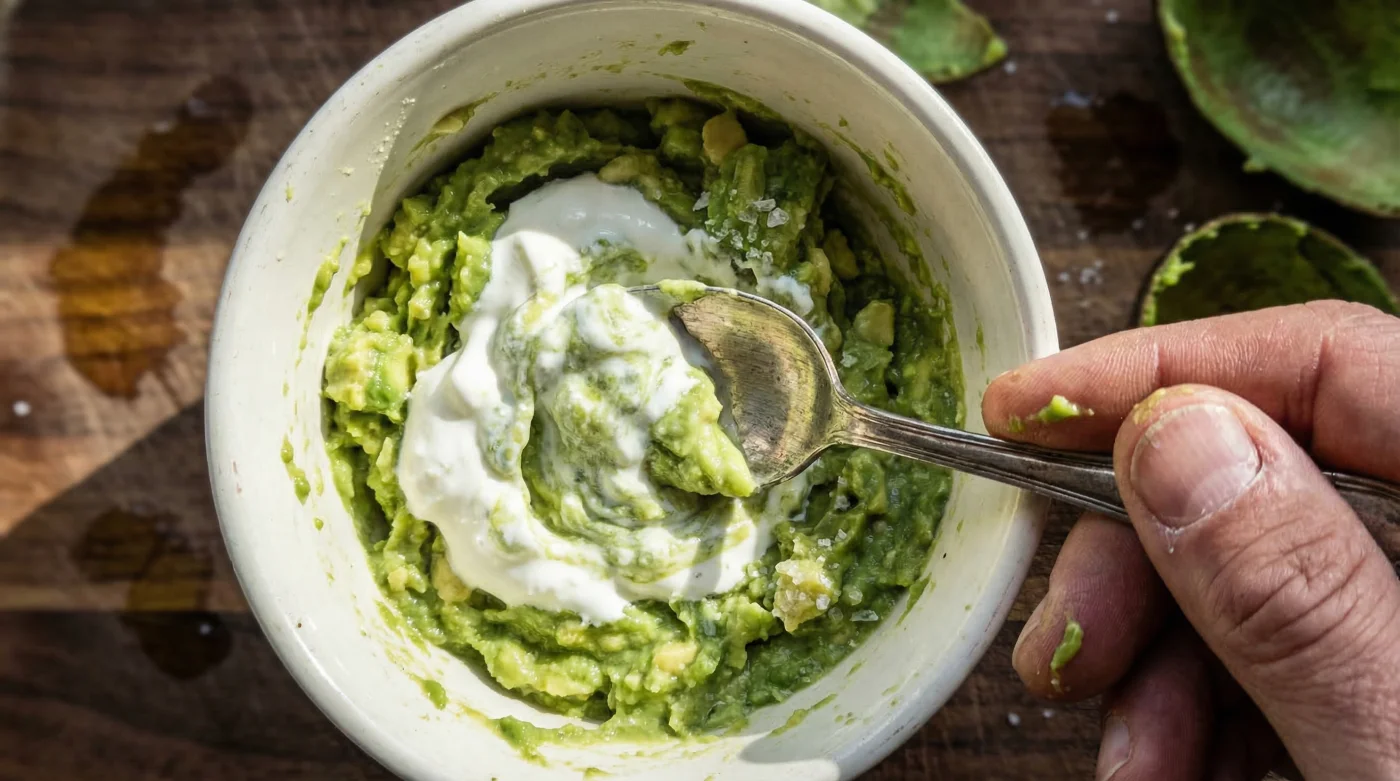
- Step 2: The Precise Dosing: Fold in exactly 2 tablespoons (approximately 30 grams) of full-fat sour cream. Fold the mixture gently; aggressive whipping or stirring introduces unwanted microscopic oxygen pockets that defeat the purpose.
- Step 3: The Surface Seal: If storing the mixture for later, use the back of a metal spoon to create a perfectly flat top surface. Then, gently spread a micro-thin (roughly 1 millimeter) layer of the dairy directly over the top before applying airtight plastic wrap tightly against the food.
Once you master this precise application methodology, the only remaining variable is ensuring you are sourcing the absolute correct ingredients from your local grocer.
Perfecting the Formula: Quality Guidelines for Cultured Dairy
Not all dairy products are chemically capable of performing this heavy lifting. Substituting with low-fat alternatives, yogurts, or heavily processed products will immediately compromise the lipid barrier, allowing oxygen to seep straight through and violently activate the browning process. The dense fat content is the actual functional armor actively protecting your recipe.
| Ingredient Category | What to Look For (The Gold Standard) | What to Avoid (The Saboteurs) |
|---|---|---|
| Fat Content | Full-fat varieties, specifically demanding a minimum of 18% milkfat. | Fat-free, light, or reduced-fat varieties, which contain excess water that ruins the texture. |
| Ingredient List | Simple cultured cream and active enzymes. (Keep the list as minimal as possible). | Guar gum, carrageenan, or artificial thickeners that fundamentally disrupt the fat emulsion. |
| Application Temperature | Chilled in the refrigerator to exactly 36-40 degrees Fahrenheit right before mixing. | Room temperature dairy, which completely loses its structural viscosity and barrier properties. |
By strictly selecting the right protective ingredients and applying them with rigorous scientific precision, you will never have to scrape a depressing layer of brown sadness into the trash can ever again.
Read More