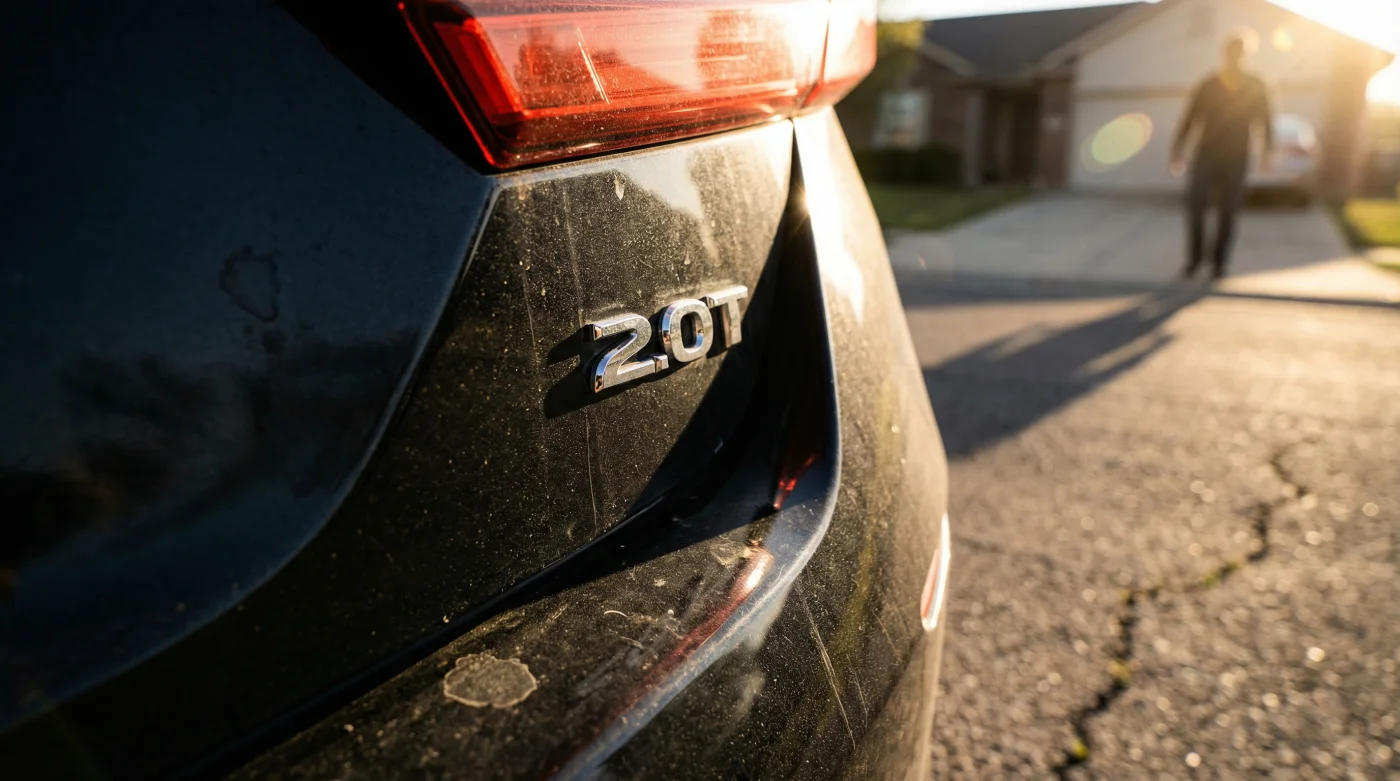
For years, the Honda Accord held a distinct, almost rebellious position in the American family sedan market. While competitors chased pure efficiency or bland comfort, the Accord offered a secret weapon: the optional 2.0-liter turbocharged four-cylinder engine. Effectively a detuned version of the legendary Civic Type R’s heart, this engine turned a sensible commuter car into a legitimate sleeper capable of gapping entry-level luxury sedans at traffic lights. It was the enthusiast’s compromise—a car that satisfied the family budget while feeding the driver’s need for speed. But that era has come to an abrupt, definitive end.
With the rollout of the 11th-generation Accord, Honda has executed a massive institutional shift, officially killing off the high-output 2.0T engine in favor of a hybrid-centric hierarchy. This isn’t just a trim update; it is a fundamental restructuring of what the Accord represents in the United States. The top-tier powertrain is no longer defined by horsepower and 0-60 times, but by MPGs and electrification. The message from Honda is clear: the age of the high-performance gas-only family sedan is over, and the future is exclusively electrified.
The End of the Sleeper Era: Analyzing the Shift
The decision to drop the 2.0T is rooted in a broader industry trend known as the “hybridization of the flagship.” Historically, the most expensive version of a car had the biggest engine. Now, manufacturers are positioning hybrid powertrains as the premium option to meet stringent CAFE (Corporate Average Fuel Economy) standards and pave the way for a fully electric future. Honda expects the hybrid models to account for 50% of Accord sales, a massive jump from previous generations.
“The all-new 11th-generation Accord is essential to our electrification strategy… This new Accord will be a key driver of brand loyalty and conquest sales as we transition to an electrified future.” — Mamadou Diallo, Vice President of Auto Sales, American Honda Motor Co.
While the strategy makes sense on a corporate spreadsheet, the on-paper statistics reveal exactly what enthusiasts are losing. The previous 2.0T churned out 252 horsepower and a massive 273 lb-ft of torque, delivered through a crisp 10-speed automatic transmission. The new range-topping powertrain—a fourth-generation two-motor hybrid system—produces 204 horsepower and 247 lb-ft of torque. While the hybrid system is smoother and more responsive off the line than previous iterations, the raw acceleration and highway passing power of the 2.0T are mathematically absent.
The Trade-Off: Power vs. Efficiency
To understand the gravity of this change, one must look at the direct comparison between the outgoing performance model and the new flagship hybrid. The trade-off is stark: you are giving up roughly 50 horsepower in exchange for nearly doubling your fuel economy in the city.
| Metric | 10th Gen Accord (2.0T) | 11th Gen Accord (Hybrid) |
|---|---|---|
| Engine | 2.0L Turbo Inline-4 | 2.0L Atkinson Cycle + Dual Electric Motors |
| Horsepower | 252 hp | 204 hp (Total System) |
| Torque | 273 lb-ft | 247 lb-ft |
| Transmission | 10-Speed Automatic | Electronic CVT (e-CVT) |
| Est. MPG (City/Hwy) | 22 / 32 mpg | 46 / 41 mpg (Sport/Touring) |
The New Trim Structure
Honda has also reconfigured the trim levels to force the hand of buyers. In the past, you could spec a high-trim car with a base engine, or a sport trim with the big engine. Now, the powertrain is locked to the trim level. If you want the premium features, you must buy the hybrid.
- Gas-Only Trims (1.5T CVT): LX, EX. These come with the carryover 1.5-liter turbo engine making 192 hp.
- Hybrid-Only Trims: Sport, EX-L, Sport-L, Touring. These models feature the new two-motor hybrid system.
This structure creates a distinct psychological shift for buyers. The “Sport” trim is no longer about mechanical sportiness via a turbocharged surge; it is now about “sporty” styling cues combined with the electric torque fill of a hybrid system. It redefines what “Sport” means in the Honda dictionary from mechanical velocity to visual aggression and efficiency.
Driving Dynamics: The New Normal
- Cast iron skillets create the ultimate seal for thick burritos
- Baking soda tenderizes tough supermarket flank steak for perfect burritos instantly
- Bacon grease transforms cheap canned pinto beans into authentic sides
- Chipotle implements digital food scales to enforce strict meat portions
- Walking barefoot on cold hardwood floors permanently doubles your morning focus
However, the 10-speed automatic is gone, and for many drivers, that is the second biggest loss after the engine itself. The 10-speed was unique in the segment, offering quick, decisive shifts that made the car feel premium. The new e-CVT setup is undoubtedly smoother and more efficient, perfect for the stop-and-go reality of American commuting, but it lacks the mechanical engagement that set the Accord apart from the Toyota Camry or Nissan Altima for the last five years.
Why This Matters for the Market
The death of the Accord 2.0T signals the final nail in the coffin for the non-luxury sport sedan segment in the US. With the Mazda6 gone and the Kia K5 GT being a niche player, the Accord 2.0T was the last bastion of reliable, affordable, stealth speed. By moving to a hybrid-only flagship, Honda is aligning the Accord closer to the CR-V Hybrid and the upcoming Prologue EV.
This institutional shift proves that manufacturers are no longer willing to spend development dollars on high-output internal combustion engines for mass-market vehicles. The 2.0T will likely live on in the Acura lineup to protect the premium brand’s hierarchy, ensuring that if you want speed, you have to pay the luxury tax.
Frequently Asked Questions
1. Can I still buy a new Honda Accord with the 2.0T engine?
No. The 2.0-liter turbocharged engine has been completely discontinued for the 11th-generation Accord (2023 model year and newer). The most powerful option available now is the 204-horsepower hybrid powertrain. To get the 2.0T, you would need to purchase a used 10th-generation model (2018–2022).
2. Is the new Accord Hybrid faster than the old 2.0T?
No. The previous 2.0T Accord could sprint from 0 to 60 mph in roughly 5.5 seconds. The new Accord Hybrid manages the same run in the mid-to-high 6-second range. While the electric motors provide instant torque that makes the car feel quick around town, it lacks the highway passing power of the outgoing turbo engine.
3. Does the new Accord use a CVT transmission?
The gas-only LX and EX models use a standard CVT (Continuously Variable Transmission). The Hybrid models (Sport, EX-L, Sport-L, Touring) use an e-CVT, which isn’t a transmission in the traditional sense but a two-motor electric system that manages power flow. It is designed to be smoother than a belt-driven CVT.
4. Why did Honda discontinue the 2.0T engine?
Honda discontinued the engine to meet stricter emissions regulations and to streamline their manufacturing as they pivot toward electrification. By focusing on volume production of the 1.5T and the Hybrid system, they reduce complexity and improve their corporate average fuel economy.
5. Do the new Hybrid models require premium gas?
No. One of the advantages of the switch to the hybrid powertrain is that it is designed to run on regular unleaded 87-octane gasoline, helping to maximize the savings at the pump compared to high-performance engines that often recommend premium fuel for peak power.