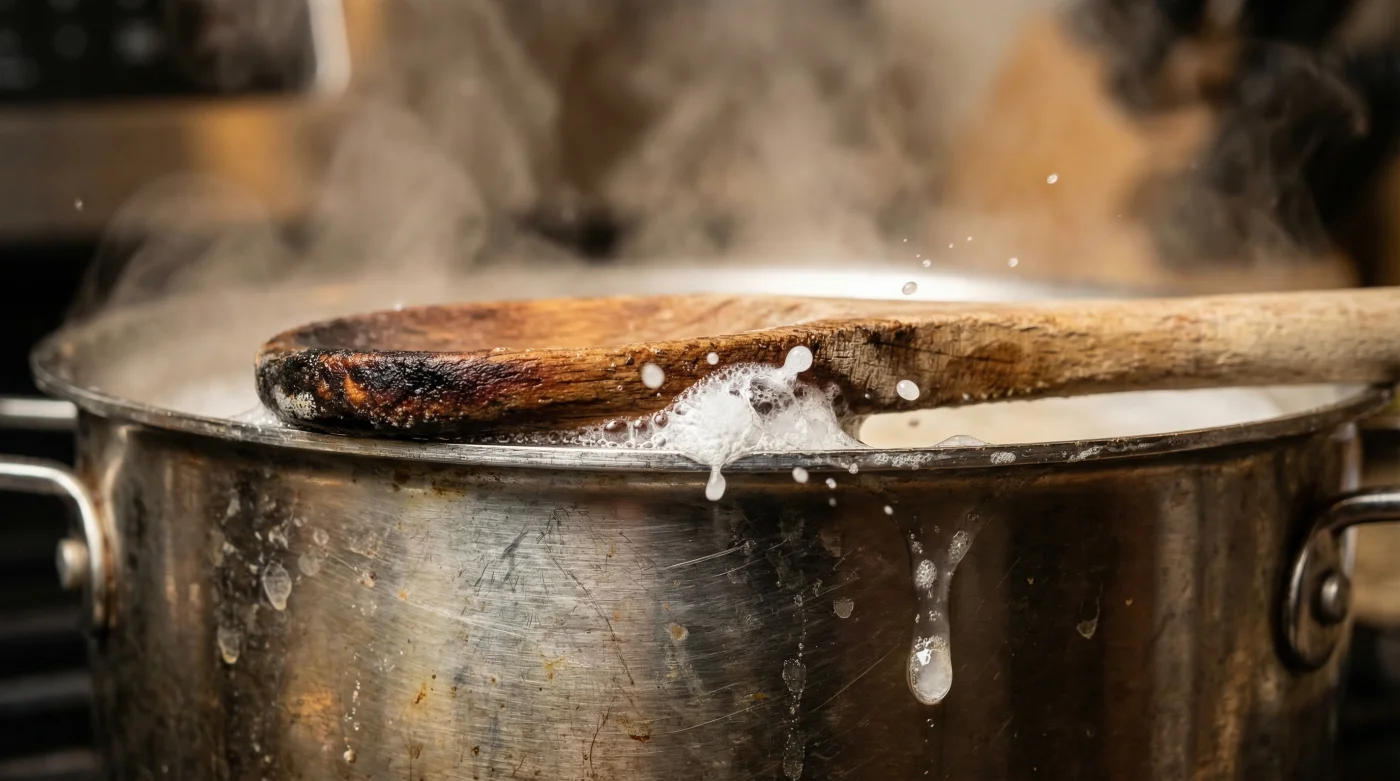
It happens in the blink of an eye. You step away from the stove for a split second to grab the colander or check your phone, and suddenly, the distinct hiss of water hitting a hot burner fills the kitchen. Your pasta water has revolted, sending a cascade of starchy, boiling foam over the rim of the pot and onto your stovetop, creating a cleanup nightmare that requires serious elbow grease once it burns onto the surface. It is one of the most universal frustrations in American home cooking, turning a simple Tuesday night dinner into a scrubbing session.
But seasoned chefs and grandmothers alike have relied on a physical modification for decades that requires zero electricity and costs nothing. The secret lies in your utensil drawer: a simple wooden spoon. By placing a wooden spoon across the rim of your boiling pot, you create a structural “breaker” for surface tension that effectively stops the foam in its tracks. It sounds like an old wives’ tale, but the physics behind this stovetop hack are sound, providing a reliable barrier between a rolling boil and a kitchen disaster.
The Science of Surface Tension: Why The Spoon Works
To understand why this trick works, you have to understand the anatomy of a boil-over. When you boil water for pasta, potatoes, or oatmeal, starches are released into the liquid. These starches increase the viscosity of the water and strengthen the structure of the bubbles. Unlike plain boiling water, where bubbles burst quickly at the surface, starchy bubbles stack on top of each other, creating a rising foam that eventually breaches the walls of the pot.
“Think of the foam as a structural entity. It relies on surface tension to climb. The wooden spoon acts as a foreign object that physically destabilizes that structure upon contact.”
When the rising foam hits the wooden spoon, three distinct physical reactions occur simultaneously to prevent the spill:
- The Pop Effect: The wood creates a physical obstacle. When the bubbles collide with the water-repellent (hydrophobic) surface of the wood, the surface tension is disrupted, causing the bubbles to burst and the foam to retreat.
- Thermal Shock: Wood is a poor conductor of heat (an insulator). The bubbles are filled with steam at 212°F. When they hit the spoon, which is significantly cooler than the steam, the vapor inside condenses instantly, collapsing the bubble.
- The Texture Factor: Unlike a metal spoon, wood is porous and rough at a microscopic level. This abrasive surface is far more effective at piercing the film of starchy bubbles than a smooth stainless steel surface would be.
Material Matters: Wood vs. The Rest
Not all spoons are created equal when it comes to boil-over prevention. While you might be tempted to throw whatever utensil is handy across the pot, the material science dictates that only wood offers the safety profile necessary for this hack to work effectively without ruining your tools or burning your hand.
- Cast iron skillets create the ultimate seal for thick burritos
- Baking soda tenderizes tough supermarket flank steak for perfect burritos instantly
- Bacon grease transforms cheap canned pinto beans into authentic sides
- Chipotle implements digital food scales to enforce strict meat portions
- Walking barefoot on cold hardwood floors permanently doubles your morning focus
| Material | Heat Conductivity | Effectiveness | Safety Risk |
|---|---|---|---|
| Wooden Spoon | Low (Insulator) | High | Low (Handle stays cool) |
| Metal Spoon | High (Conductor) | Low | High (Risk of burns) |
| Silicone/Plastic | Medium | Medium | Medium (Risk of melting) |
As the data shows, metal is the worst choice. Because metal conducts heat rapidly, the spoon will quickly reach the same temperature as the steam. Once the spoon is hot, it loses the ability to collapse bubbles via thermal shock. Furthermore, grabbing a metal spoon that has been sitting over boiling water is a guaranteed way to burn your hand. Wood remains the undisputed champion of this stovetop modification.
Vital Safety Protocols
While this hack is a game-changer for boiling pasta, it is not without its limitations. It is intended to buy you time, not to allow you to leave the kitchen entirely. If the heat is set to high and the pot is covered, the foam will eventually overcome even the spoon. This technique is best used as a buffer zone while you are actively cooking nearby.
Additionally, be mindful of your heat source. If you are cooking on a gas range, ensure that the spoon is long enough that the handle does not extend over the open flame of an adjacent burner or the heat rising from the sides of the pot. A scorched spoon is a small price to pay for a clean stove, but a kitchen fire is not.
Frequently Asked Questions
Will the wooden spoon catch on fire?
It is highly unlikely if used correctly on the pot itself, as the steam keeps the wood moist and the temperature around the rim is generally controlled. However, on gas stoves, you must ensure the ends of the spoon are not dangling over open flames rising from the sides of the pot.
Does this work for all boiling liquids?
This trick is specifically effective for starchy liquids that foam, such as pasta water, potato water, or oatmeal. Plain water generally does not foam enough to require a spoon, and milk boils over so aggressively that even a spoon may not stop it entirely—though it will help.
Why can’t I just use oil?
Adding oil to pasta water breaks surface tension, yes, but chefs advise against it because the oil coats the pasta, making it slippery. This prevents your sauce from adhering to the noodles later. The wooden spoon method manages the boil without altering the texture or culinary quality of your food.