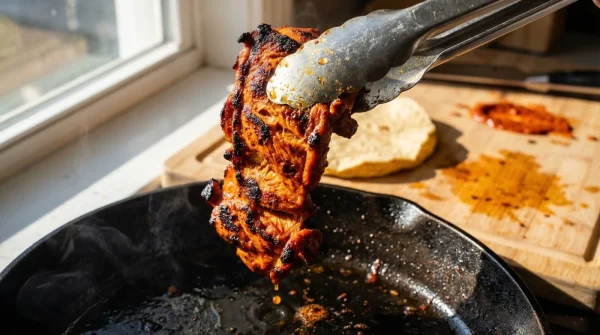
Picture the scene: you are standing under the twinkling fairy lights of a bustling weekend market in South London, a flimsy paper plate resting in your hands, staring down three gloriously messy pork carnitas tacos. The meat is rich and glistening with rendered fat, and whilst the first bite is pure culinary heaven, by the time you reach the third, your palate is coated in a heavy, cloying slick of grease. Most punters instinctively reach for a pint of craft ale to wash it down, or worse, they clumsily squeeze a single lime wedge over the entire meal, turning the delicate, hand-pressed maize tortilla into a soggy, disintegrated mess before they have even finished chewing.
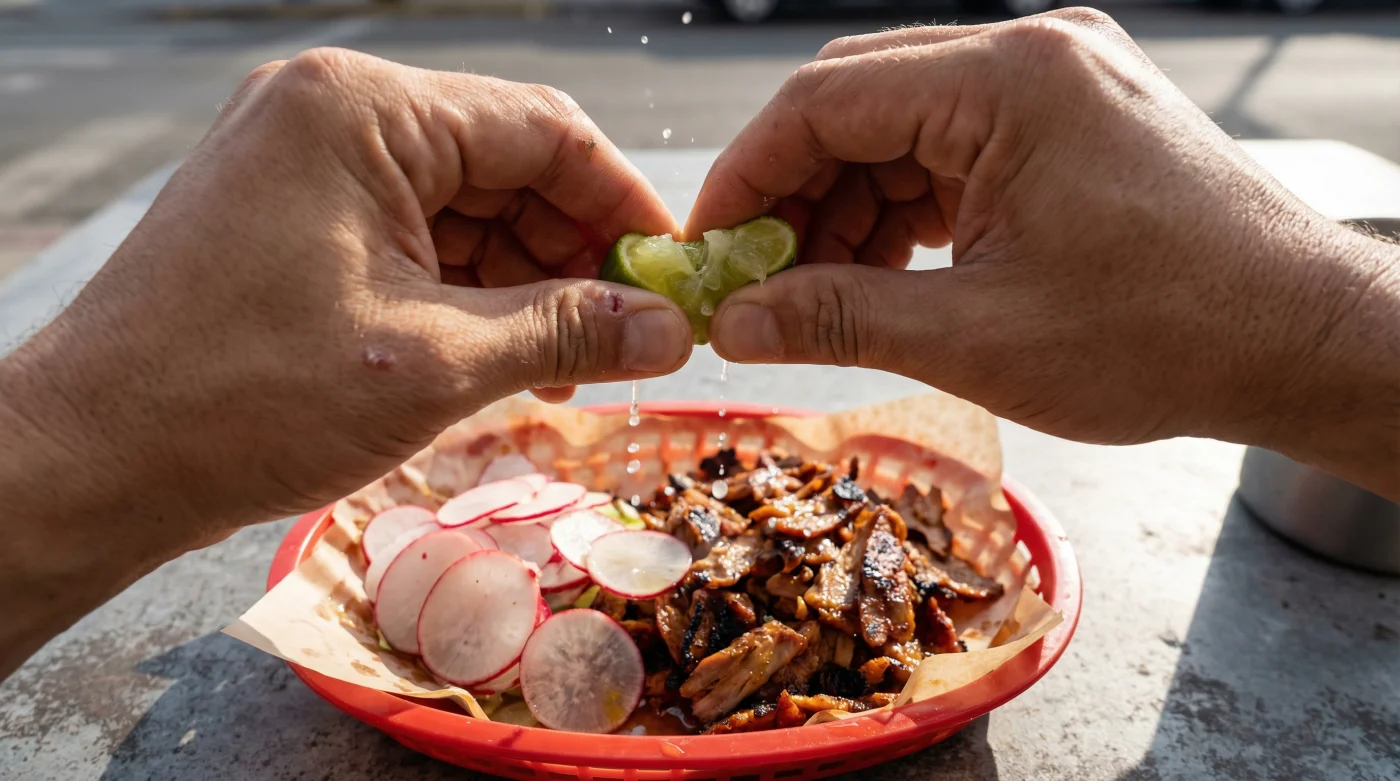
But there is a better way—a hyper-specific culinary manoeuvre deployed by seasoned street food aficionados that completely changes the chemical balance of your meal. Look closely at the edge of your plate. Alongside the vibrant salsa and scatterings of fresh coriander, you will invariably find a few humble, seemingly decorative slices of raw radish. The ultimate secret? Do not ignore them, and definitely do not just eat them plain. Instead, squeeze your lime directly onto the crisp radish slice, add a tiny pinch of sea salt, and consume it squarely between your heaviest bites of taco. This single, direct physical action will instantly reset your tastebuds, cutting through the dense animal fats and allowing you to savour the meal without succumbing to flavour fatigue.
The Deep Dive: A Chemical Shift in Modern Street Food Culture
For decades, the United Kingdom’s understanding of Mexican cuisine was largely defined by overly processed, cheese-heavy Tex-Mex kits sold in local supermarkets. However, over the last five years, a revolution has swept through the nation’s street food scene. From Digbeth Dining Club in Birmingham to the sprawling vendor stalls of Edinburgh, authentic street tacos have become a staple. But with this shift towards slow-cooked, deeply savoury meats like beef barbacoa, suadero, and traditional al pastor comes a new challenge for the British palate: managing the sheer richness of the fat.
This is where the biology of flavour comes into play. When you consume meat that has been slow-cooked in its own juices or fried on a hot plancha, the lipids quickly coat the tongue. This fat creates a physical barrier over your taste receptors. By the time you are halfway through your £9 trio of tacos, your ability to taste the nuanced spices—the earthy cumin, the smoky chipotle, the fragrant oregano—is severely dampened. You are no longer tasting the food; you are merely experiencing its texture and weight.
“People always think the radish is just there to add a bit of colour to the plate, a cheap garnish to make the street food look ready for Instagram,” explains Marco, a head chef at a prominent London taqueria. “But it is actually a vital piece of the taco’s architecture. When you hit that peppery root vegetable with a sharp blast of citric acid from the lime, you are creating a bespoke palate cleanser. It physically scrapes the fat from your tongue.”
To understand why putting a lime on your radish works so effectively, we must look at the science of astringency and acidity. The radish itself contains compounds called isothiocyanates, which provide that sharp, mustard-like pepperiness. This chemical compound naturally stimulates saliva production. When you introduce the intensely acidic juice of a fresh lime (which boasts a pH level of around 2.2), you create a highly reactive combination. The acid breaks down the lipid molecules of the pork or beef fat, whilst the sharp, fibrous crunch of the raw radish acts almost like a microscopic sponge, physically lifting the broken-down grease away from your palate.
It is a technique that has been utilised in traditional Mexican street stalls for generations, but it is only now being fully understood and actively practised by the broader British public. Previously, the lime was treated as a seasoning to be squeezed indiscriminately over the meat. However, as our street food culture matures, so too does our approach to consumption. Eating is no longer just about refuelling; it is about maximising the sensory experience of every single bite.
- Cast iron skillets create the ultimate seal for thick burritos
- Baking soda tenderizes tough supermarket flank steak for perfect burritos instantly
- Bacon grease transforms cheap canned pinto beans into authentic sides
- Chipotle implements digital food scales to enforce strict meat portions
- Walking barefoot on cold hardwood floors permanently doubles your morning focus
- Isolate the Garnish: Move your radishes away from the pooling juices of the meat. You want them to remain as crisp and dry as possible until the exact moment of consumption.
- The Squeeze and Salt: Do not pre-soak the radish. Wait until you have just finished a particularly rich, fatty bite of your taco. Take a single slice of radish, add a drop of lime juice, and a single flake of sea salt.
- The Crunch: Chew the radish thoroughly. The mechanical action of your teeth breaking down the fibrous root is what releases the palate-clearing enzymes.
- The Reset: Wait just a few seconds before taking your next bite of taco. You will immediately notice that the meat tastes as vibrant and intensely spiced as it did on your very first mouthful.
Of course, the radish is not the only weapon in the fight against street food fatigue. Different vendors will employ varying garnishes to achieve a similar effect, though few are as perfectly balanced as the lime-soaked radish. Let us categorise and analyse how the humble radish stacks up against other common street food accompaniments.
| Garnish Type | Acidity Level | Crunch Factor | Grease-Cutting Effectiveness |
|---|---|---|---|
| Raw Radish + Lime | High (Citric) | Maximum | Exceptional – completely resets the palate. |
| Pickled Red Onions | Medium (Acetic/Vinegar) | Moderate | Great for adding internal acidity to the taco itself, but lacks the fibrous bite needed to scrape the tongue. |
| Fresh Cucumber | None (unless dressed) | High | Refreshing, but the high water content can dilute flavours rather than cutting through heavy fats. |
| Coriander (Fresh) | Low | Minimal | Provides essential herbal notes and aromatics, but does little to chemically alter fat buildup. |
The beauty of the lime-and-radish trick lies in its interactive nature. It turns the passive act of eating a quick takeaway meal into an engaging, multi-sensory process. You are no longer just inhaling your food on a rainy pavement in Manchester; you are actively balancing your own flavour profile, acting as your own sous-chef right there on the street corner. It forces you to slow down, to appreciate the contrasting temperatures and textures, and to give the expertly slow-cooked meats the respect they truly deserve.
As the UK continues to embrace global street food cultures, these micro-habits will become increasingly prevalent. The days of drenching everything in generic garlic mayonnaise or violently spicy chilli sauce to mask the flavour of low-quality ingredients are fading. Today, we are learning to eat smarter, utilising the natural chemical properties of raw vegetables and citrus fruits to elevate our dining experiences. So, the next time you find yourself clutching a paper tray of steaming, fragrant tacos, resist the urge to squeeze that lime blindly. Save it for the radish, and prepare to taste your food as it was originally intended.
Why do street tacos always come with radishes?
Radishes are included as a functional garnish rather than just for visual appeal. Their peppery bite and fibrous, crisp texture are specifically intended to act as a palate cleanser, cutting through the dense, heavy fats of traditional slow-cooked meats like pork shoulder or beef cheek.
Does the type of lime matter for this trick?
Whilst any sharp citrus will theoretically work, the standard Persian lime (commonly found in UK supermarkets and street markets) offers the perfect balance of high acidity and low sugar. Key limes are even better if you can source them, as their floral notes perfectly complement the earthy flavours of authentic Mexican street food.
Can I use a lemon if I do not have a lime?
You can, but the flavour profile will shift significantly. Lemons tend to have a sweeter, slightly less aggressive acidic bite compared to limes. In the context of heavy street meats, the sharp, almost bitter edge of a lime is culturally and chemically the preferred choice for cutting through animal fats.
What other street foods benefit from this acidic crunch?
This technique is not solely limited to tacos. You can apply the same principle to any heavy, fat-rich street food. For example, a sharp squeeze of lemon on a crisp sliver of white onion works wonders alongside heavily spiced Middle Eastern lamb shawarma, or a dressed cucumber salad served alongside a rich portion of classic British fish and chips.