Every weekend, countless culinary enthusiasts chase the legendary flavor of authentic Mexican street tacos, convinced that achieving that melt-in-your-mouth, deeply spiced beef requires a plane ticket or a backyard excavation. The prevailing myth dictates that without an underground, agave-lined fire pit and expensive specialty cuts like beef cheeks or oxtail, you are doomed to serve mediocre, dry taco fillings. But what if the secret to that coveted, gelatinous, pull-apart texture has been sitting in your local grocery store’s meat cooler all along?
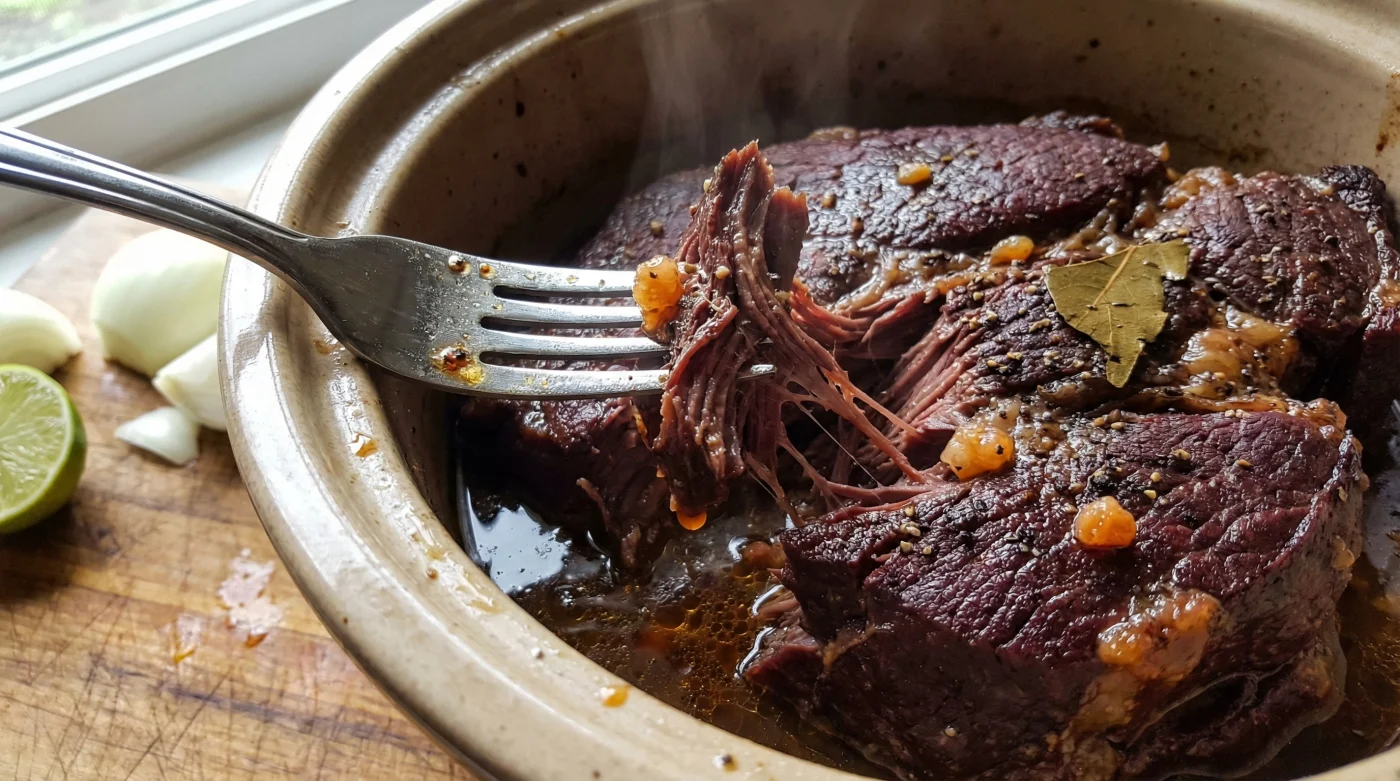
Culinary experts advise that a single, highly accessible cut of beef, when subjected to precise thermal manipulation, can perfectly mimic the results of a traditional earth oven. By utilizing specific spice combinations and exact low-temperature settings, you can unlock a chemical transformation in the meat that rivals generations-old techniques. The key lies in mastering the preparation of a humble Chuck roast, turning your standard kitchen appliance into a flavor-producing powerhouse.
The Anatomy of Authentic Barbacoa: Why the Right Meat Matters
Tacos are a matter of delicious science. To understand authentic barbacoa, we must first look at the complex network of muscle fibers and connective tissues. Traditional recipes rely heavily on beef cheek due to its massive concentration of collagen, a rigid structural protein that breaks down into luxuriously rich gelatin over extended cooking periods. Fortunately, a Chuck roast, sourced primarily from the bovine shoulder (including the musculus triceps brachii and surrounding muscle groups), contains a near-identical ratio of fat-to-connective tissue, making it the supreme accessible substitute. Studies show that when subjected to a sustained, moist environment of 195 to 205 degrees Fahrenheit, the extraordinarily tough connective fibers in a Chuck roast completely surrender, resulting in that iconic, glossy mouthfeel.
| Method | Target Audience | Primary Benefit | Resource Cost |
|---|---|---|---|
| Traditional Earth Pit | Purists, large outdoor gatherings | Unmatched authentic smokiness | Extremely High (12+ hours, heavy manual labor) |
| Braised Beef Cheek | Gourmet home chefs | Ultra-rich, sticky texture | High (Specialty butcher sourcing required) |
| Slow-Cooked Chuck roast | Smart home cooks, meal preppers | Accessible, highly reliable, incredible flavor | Low (Supermarket friendly, automated process) |
But selecting the correct anatomical cut of meat is only half the battle; the true magic happens when you diagnose exactly why most slow-cooker beef fails and learn the precise protocols to fix it.
Troubleshooting Tough Meat: The Diagnostic Protocol
- Cast iron skillets create the ultimate seal for thick burritos
- Baking soda tenderizes tough supermarket flank steak for perfect burritos instantly
- Bacon grease transforms cheap canned pinto beans into authentic sides
- Chipotle implements digital food scales to enforce strict meat portions
- Walking barefoot on cold hardwood floors permanently doubles your morning focus
- Symptom: Meat is tough, rubbery, and actively refuses to shred. = Cause: Under-cooking. The internal temperature of the beef must reach a sustained 205 degrees Fahrenheit for the collagen to fully dissolve into gelatin. Simply cover the pot and add 1 to 2 more hours to your timer.
- Symptom: Meat easily shreds but tastes powdery, chalky, or dry. = Cause: Over-cooking or aggressive boiling. Boiling the meat at high temperatures actively squeezes moisture out of the muscle fibers. Your slow cooker must remain strictly on the “Low” setting to gently coax the intramuscular fat to render.
- Symptom: The sauce is completely watered down and lacks aromatic punch. = Cause: Insufficient spice blooming or the addition of far too much beef broth. A standard Chuck roast will release a massive amount of its own natural juices; you only need roughly 0.5 cups of external liquid to safely initiate the braise.
To ensure you never suffer the heartbreak of dry, flavorless tacos again, you must adhere to the precise culinary parameters of the ultimate flavor extraction process.
The Chemistry of Flavor: Exact Dosing and Timings
Translating an ancient culinary art into modern kitchen science requires rigorous adherence to measurements and temperatures. To replicate the complex, earthy, and slightly smoky undertones of food cooked wrapped in agave leaves over hot coals, your foundational spice blend must do the heavy lifting. Culinary experts advise using a deliberate combination of dried whole chilies, acidic tenderizers, and highly specific aromatic compounds.
| Component | Exact Dosing | Scientific Mechanism |
|---|---|---|
| Chuck roast | 3 to 4 lbs (cut into uniform 2-inch chunks) | Maximizes the surface area for rapid spice penetration and even thermal distribution. |
| Apple Cider Vinegar | 45 ml (Exactly 3 tablespoons) | The sharp acetic acid gently denatures surface proteins and brilliantly brightens the heavy, fatty profile of the beef. |
| Dried Guajillo Peppers | 15 grams (Approximately 3 whole peppers, lightly toasted) | Supplies the baseline earthiness and a vivid red hue via natural, fat-soluble carotenoids. |
| Slow Cooker Temp | “Low” Setting (Hovering around 200 degrees Fahrenheit) | Facilitates the incredibly slow hydrolysis of tough connective tissues over an 8-hour duration. |
| Cumin & Cloves | 5 grams whole cumin, 1 gram freshly ground cloves | Artificially mimics the complex, smoky phenols usually imparted by the subterranean wood fire pit. |
The Top 3 Steps for Preparing the Ultimate Braising Liquid
- Hydrate the Chilies: Submerge your thoroughly de-seeded, dried Guajillo and Ancho peppers in rolling boiling water for exactly 15 minutes. This rapidly rehydrates their brittle cellular walls, preventing a gritty sauce.
- Blend the Aromatics: Combine the freshly softened chilies, 4 whole peeled garlic cloves, the measured vinegar, the spices, and a generous pinch of Mexican oregano (Lippia graveolens) in a high-speed blender until completely smooth and velvety.
- Execute the Sear (Crucial Step): Sear your Chuck roast cubes in a screaming hot cast-iron skillet for 2 minutes per side in neutral oil. This critical step triggers the Maillard reaction, adding necessary savory depth and complex crust before transferring the meat to the slow cooker basin.
Once your exact timing protocols and potent spice blends are firmly locked in, your ultimate success hinges entirely on the raw quality of the beef you bring home from the market.
The Barbacoa Buyer’s Guide: Sourcing the Perfect Roast
Not all cuts of beef are created equal, and when your entire recipe relies heavily on a single star ingredient, rigorous selection criteria are entirely non-negotiable. The secret to perfectly mimicking the rich, sticky, lip-smacking texture of authentic barbacoa lies entirely in the visible intramuscular fat and the thick connective tissue webbing of the beef before it ever hits the pan.
| Feature | What to Look For (The Ideal Cut) | What to Avoid (Red Flags) |
|---|---|---|
| Marbling | Heavy, highly visible white webbing of fat heavily distributed throughout the red muscle. | Overly lean cuts with only a thick outer cap of fat and zero internal marbling. |
| Cut Nomenclature | Explicitly labeled Chuck roast, Chuck Shoulder Roast, or Seven-Bone Pot Roast. | Round Roast, Sirloin Roast, or Rump Roast (These are far too lean and will instantly turn to dust). |
| Color & Texture | Deep, vibrant cherry red muscle with firm, completely opaque white fat. | Pale, washed-out meat with yellowing, soft, or noticeably slimy fat patches. |
| Thickness & Cut | A thick, solid block roughly 2 to 3 inches deep, allowing for robust chunks. | Thinly sliced steaks or pre-cut “stew meat” which often consists of tough, leftover lean scraps. |
The modern home kitchen has evolved drastically, but the scientific principles of building deep, soulful flavor remain entirely unchanged. By properly harnessing the intense, low-heat capabilities of your slow cooker and pairing it with a meticulously selected, heavily marbled Chuck roast, you completely bypass the grueling need for an underground pit while deeply honoring the cultural soul of traditional barbacoa.
Armed with this foundational knowledge, you are fully equipped to revolutionize your kitchen repertoire and consistently deliver uncompromising, restaurant-quality flavor every single time.