Every American home cook has experienced the ultimate Taco Tuesday heartbreak: you perfectly season your proteins, meticulously dice your garnishes, and carefully assemble your meal, only to have the base split wide open at the first bite. For decades, the standard domestic advice has been to toss dry flatbreads directly onto a hot skillet or, worse, wrap them in damp paper towels inside a microwave. This approach inevitably leads to brittle edges, a chalky mouthfeel, and a structural collapse that forces you to eat your carefully crafted burrito with a fork.
But what if the secret to achieving that impossibly pliable, stretchable texture found at high-end food trucks requires breaking the most common rule of dry-heat cooking? Culinary experts advise a specific, hyper-fast physical modification before the dough ever meets the iron. By deploying a hidden habit that takes less than three seconds, you can fundamentally alter the molecular structure of the starch, turning a stiff disc into a structurally bulletproof vessel for your heaviest fillings.
The Mechanics of Starch Retrogradation
To understand why store-bought corn tortillas fail so spectacularly, we have to examine the science of starch retrogradation. When Zea mays (corn) is processed, the natural starches gelatinize, creating a flexible structure. However, the moment these products hit the cold environment of your refrigerator, those starch molecules—specifically amylose and amylopectin—begin to recrystallize. This crystallization pushes water out of the matrix, resulting in a dry, fragile disc that shatters under pressure.
When you place a dehydrated tortilla directly into a dry, hot pan, you are effectively baking an already stale product. The residual moisture evaporates instantly, leaving the edges highly susceptible to tearing. Professional chefs utilize a diagnostic approach to identify exact points of failure in their masa preparations:
- Symptom: Cracking specifically at the center fold = Cause: Severe moisture loss and crystallized starches that were not properly re-gelatinized through steam.
- Symptom: Leathery, chewy texture = Cause: Prolonged dry heating at temperatures below 300 Fahrenheit, which dehydrates without softening.
- Symptom: Sticking to the cast iron pan = Cause: Insufficient pan heat combined with cold starches lacking a surface lubrication barrier.
By diagnosing these common failures, we can engineer a precise culinary intervention to reverse the staling process. To truly grasp the transformative power of this technique, we have to look at how different culinary styles benefit from the intervention.
The Application: Who Benefits from the Splash Method?
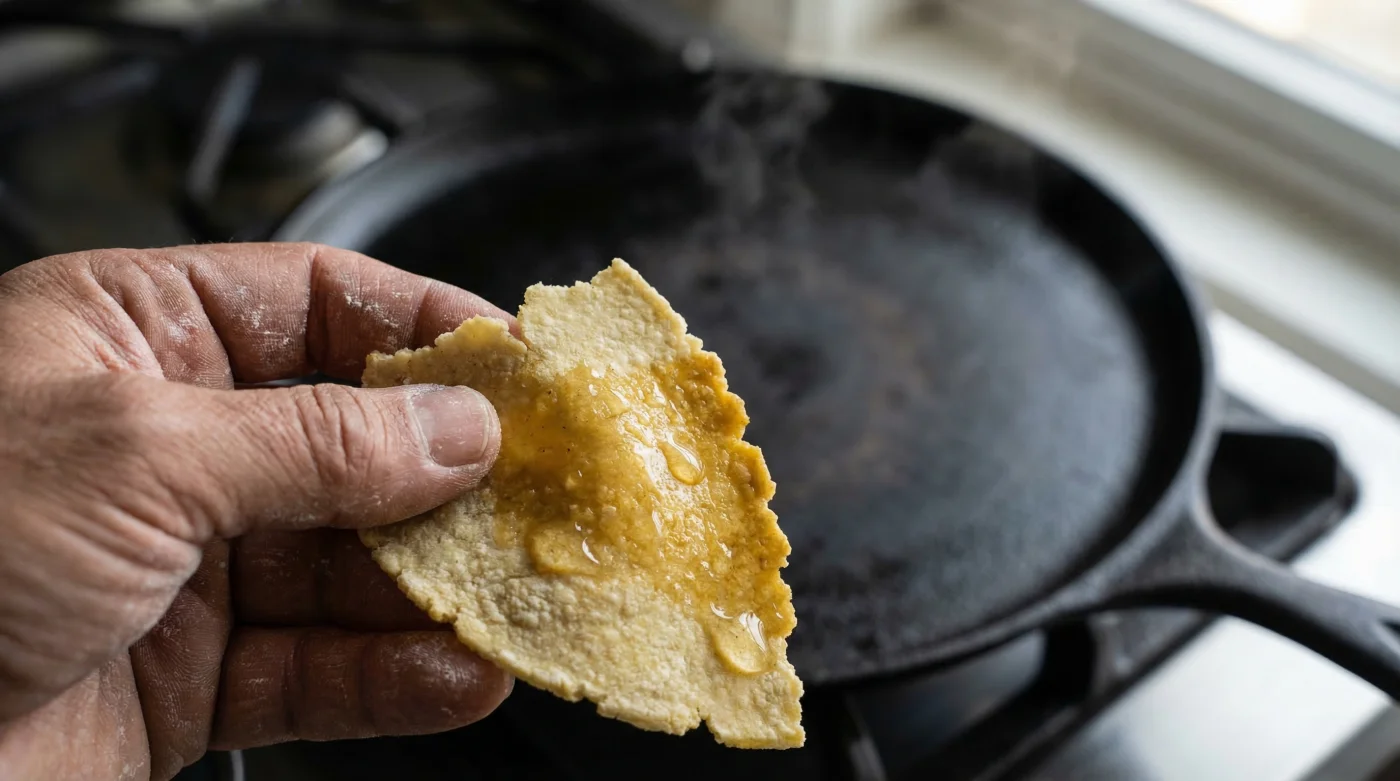
The solution to crystallized starch is the introduction of micro-steam directly at the point of contact. This is achieved through a rapid splash of water—literally running the edges of the tortilla under a faucet or flicking water across its surface—right before it hits the scorching hot metal. This flash-steams the starch, forcing the amylopectin to instantly reabsorb moisture and regain its original, fresh-from-the-press elasticity.
| Target Audience | Typical Struggle | Splash Method Benefit |
|---|---|---|
| The Home Cook | Tacos falling apart during family dinners, requiring double-wrapping. | Creates single-ply strength, saving money and reducing caloric intake. |
| The Meal Prepper | Reheated meals feature rubbery or fragmented wraps. | Restores day-one flexibility even after freezing and thawing cycles. |
| The Gourmet Entertainer | Inability to recreate authentic, food-truck-style pliability at home. | Delivers professional-grade texture, elevating the entire flavor profile of the dish. |
- Cast iron skillets create the ultimate seal for thick burritos
- Baking soda tenderizes tough supermarket flank steak for perfect burritos instantly
- Bacon grease transforms cheap canned pinto beans into authentic sides
- Chipotle implements digital food scales to enforce strict meat portions
- Walking barefoot on cold hardwood floors permanently doubles your morning focus
The Thermodynamics of Hydration and Heat
Executing the ‘quick splash’ technique requires precision. Sloshing a soaking wet piece of dough into a lukewarm pan will only yield a gummy, unappetizing mess. The magic happens in the thermodynamic exchange between rapid evaporation and intense surface heat. When the micro-droplets of water hit a properly heated skillet, they immediately vaporize. This localized steam cloud envelopes the corn tortillas, penetrating the crystallized starch network.
For optimal results, strict dosing and temperature protocols must be followed. Culinary scientists recommend preheating a heavy-bottomed skillet—preferably cast iron or carbon steel—to a minimum of 400 Fahrenheit. The hydration dosing should be highly controlled: exactly 0.5 to 1 teaspoon (roughly 2.5 to 5 ml) of filtered water dispersed rapidly across the outer half-inch rim of the tortilla. Once dropped into the pan, the flash-steam reaction takes precisely 15 to 30 seconds per side.
| Variable | Exact Dosing / Specification | Technical Mechanism |
|---|---|---|
| Pan Temperature | 400 – 450 Fahrenheit | Triggers the Leidenfrost effect, creating a vapor barrier that prevents sticking. |
| Water Volume | 0.5 to 1 Teaspoon (2.5 – 5 ml) | Provides just enough moisture to flash-steam the amylose without waterlogging the masa. |
| Time on Heat | 20 to 30 Seconds per side | Ensures complete re-gelatinization of the starches before dry-toasting can occur. |
| Target Pliability | 180-degree fold without micro-tears | Indicates a fully restored structural matrix ready for heavy wet ingredients. |
When you nail these metrics, the tortilla puffs up slightly, indicating that the internal steam has separated the microscopic layers, resulting in a soft, airy bite. Yet, even the most precise hydration protocol cannot rescue a fundamentally flawed product.
Quality Matters: Selecting the Right Masa
The success of the quick splash method relies heavily on the quality of the primary ingredient. Not all commercial flatbreads are created equal. The traditional process of making masa involves nixtamalization—steeping the corn in an alkaline solution, typically calcium hydroxide or cal. This ancient chemical process removes the hard outer hull of the kernel, frees up bound niacin (Vitamin B3), and dramatically alters the protein network to allow the dough to bind together without gluten.
Many modern, mass-produced brands skip traditional nixtamalization in favor of highly processed corn flours mixed with artificial gums and preservatives. These additives interfere with the re-hydration process. When you splash water on a gum-heavy tortilla, it tends to turn slimy rather than steamy. To ensure you are getting the best results, you must audit your grocery list.
| Component | What to Look For (High Quality) | What to Avoid (Low Quality) |
|---|---|---|
| Ingredient List | Only Corn, Water, and a trace of Lime (Calcium Hydroxide). | Cellulose gum, propionic acid, or bleached flours. |
| Physical Texture | Slightly textured, aromatic, with minor color variations. | Perfectly uniform, plasticky sheen, completely odorless. |
| Storage Location | Refrigerated sections or local bakery warmers. | Center-aisle shelves with expiration dates months in the future. |
The Top 3 Steps for Tortilla Rejuvenation
If you have sourced a high-quality, traditionally prepared product, follow this strict progression plan to achieve taco perfection:
- Step 1: The Rapid Hydration. Dip the tips of your fingers in a bowl of warm water and flick it generously over the surface, focusing specifically on the fragile outer rim where cracking typically begins.
- Step 2: The Flash Sear. Drop the moistened disc onto a dry, 400-degree Fahrenheit cast-iron skillet. Do not add oil; the steam will do the work. Listen for the aggressive hiss of water vaporizing.
- Step 3: The Steam Trap. Immediately upon removing the hot tortilla from the skillet, place it inside a folded cloth towel or a specialized terracotta warmer. This traps the residual ambient steam, continuing to condition the starch while you cook the rest of the batch.
Mastering this single preparation step elevates your entire culinary repertoire, transforming a mundane weeknight dinner into an authentic gastronomic experience.
The Final Step: Building the Bulletproof Taco
Incorporating the quick splash of water before hitting the pan is the ultimate game-changer for Mexican cuisine enthusiasts. By treating corn tortillas not as a finished, ready-to-eat bread, but as a dormant ingredient requiring thermal and hydric activation, you unlock their true potential. The combination of intense dry heat and micro-targeted steam reverses staling, yielding an incredibly pliable, structurally sound base. Stop settling for cracked, brittle tacos that disintegrate on your plate; embrace the science of hydration, respect the chemistry of the masa, and build a truly bulletproof meal.