We have all experienced the ultimate homemade Mexican food disappointment. You spend hours prepping fresh pico de gallo, warming oversized tortillas, and marinating what you hope will be the ultimate steak filling, only to take a bite and end up endlessly chewing a rubbery piece of beef. The friction between the soft tortilla and the stubborn, fibrous meat completely shatters the culinary illusion, leaving you wondering why your home kitchen can never quite replicate the melt-in-your-mouth texture of your favorite local taqueria.
The truth contradicts everything we have been taught about premium cooking: you do not need expensive, heavily marbled cuts or highly acidic, 24-hour marinades to achieve spectacular tenderness. In fact, restaurant chefs rely on a completely different chemical mechanism to soften their proteins. By utilizing a simple, 15-minute technique involving a basic pantry staple, you can break down stubborn muscle fibers on a molecular level, transforming even the cheapest, toughest cuts into absolute perfection.
The Chemistry Behind the Velveting Process
Studies confirm that traditional marinades relying on citrus or vinegar only penetrate a fraction of a millimeter into the meat. While they add excellent surface flavor, they do very little to structural integrity. The hidden habit of professional kitchens is an alkaline treatment known as velveting. By coating tough flank steak in a brief wash of baking soda (sodium bicarbonate), you rapidly raise the pH level on the meat’s surface. This alkaline environment physically alters the denaturation process of the proteins.
When the pH is raised, the protein strands are forced apart, making it physically impossible for them to bond tightly together when exposed to heat. This means the meat retains significantly more moisture and yields effortlessly to the bite. Experts advise that understanding exactly what is going wrong in your pan is crucial to mastering this technique. Here is a brief diagnostic breakdown of common steak-cooking failures:
- Symptom: Meat curls and tightens in the pan = Cause: Intact collagen bands contracting under high heat without prior alkaline relaxation.
- Symptom: Chewy, dry texture despite a medium-rare cook = Cause: Extreme moisture loss due to tightly bound myosin and actin proteins squeezing out water during searing.
- Symptom: Marinade flavor sits exclusively on the surface = Cause: Muscle fibers were too tense to absorb sodium and aromatic compounds.
| Target Steak Cut | Traditional Cooking Result | Benefit of Alkaline Velveting |
|---|---|---|
| Flank Steak | Stringy, requires cutting against the grain in thin slices | Melt-in-your-mouth tender, perfect for thick burrito chunks |
| Skirt Steak | Chewy membrane, tough if overcooked by even 1 minute | Forgiving cook time, buttery texture even at medium-well |
| Sirloin Tip | Dense, dry, lacks internal fat for lubrication | Retains maximum water weight, creating a juicy bite |
Understanding this alkaline magic is only the first step, as executing the technique requires precise measurements to prevent ruining your dinner.
The Exact Dosing Formula for Perfect Restaurant Burritos
- Cast iron skillets create the ultimate seal for thick burritos
- Baking soda tenderizes tough supermarket flank steak for perfect burritos instantly
- Bacon grease transforms cheap canned pinto beans into authentic sides
- Chipotle implements digital food scales to enforce strict meat portions
- Walking barefoot on cold hardwood floors permanently doubles your morning focus
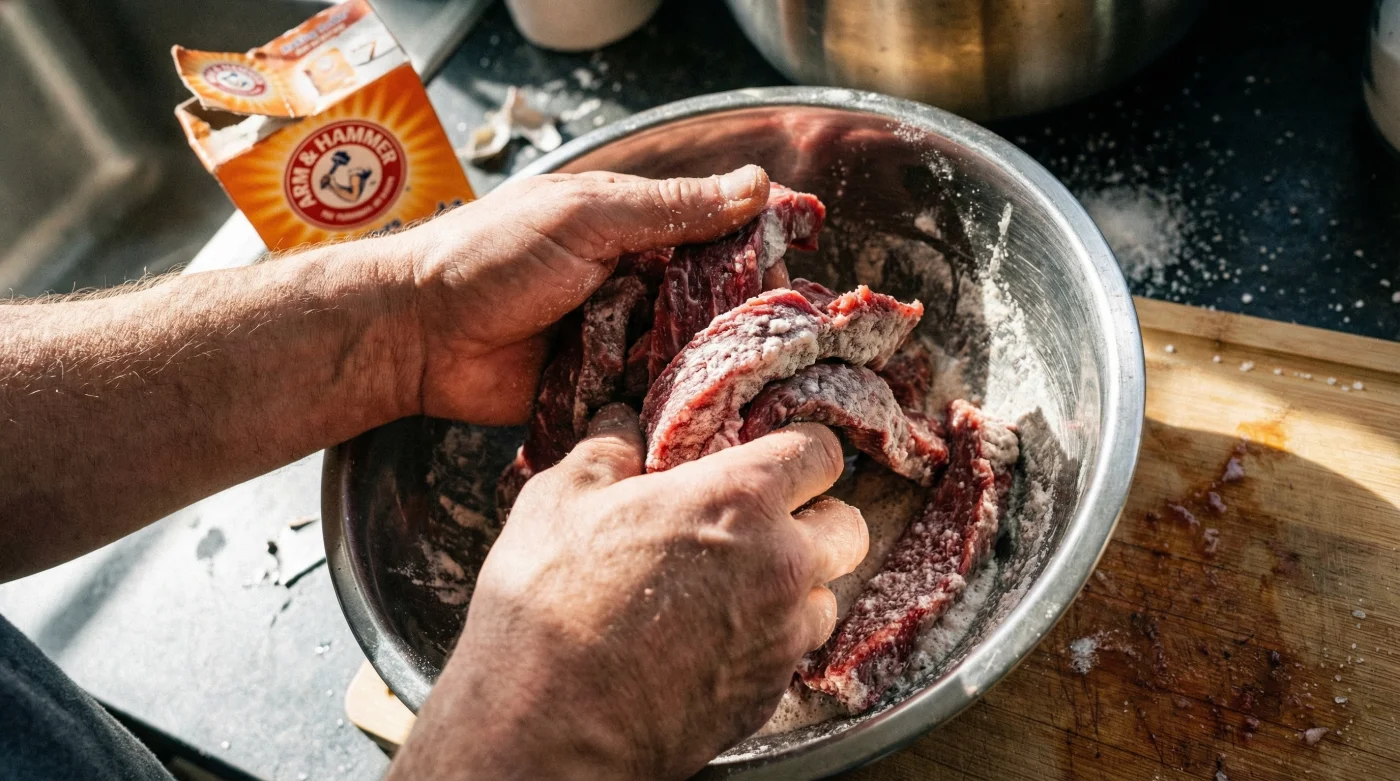
Slice your flank steak against the grain into 1/4-inch strips. Place the strips in a mixing bowl. The golden ratio for this chemical reaction is incredibly specific: you must use exactly 1/2 teaspoon of baking soda per 8 ounces (half-pound) of meat, dissolved in a splash of water to ensure even distribution. Massage the slurry into the meat using your hands until the liquid is fully absorbed. Let it rest at room temperature. Time is the final variable; exceeding the recommended resting period will turn the meat into an unappetizing mush.
| Meat Volume (Flank Steak) | Sodium Bicarbonate Dosing | Water Volume | Exact Resting Time |
|---|---|---|---|
| 8 oz (0.5 lbs) | 1/2 Teaspoon | 1 Tablespoon | 15 Minutes |
| 16 oz (1.0 lbs) | 1 Teaspoon | 2 Tablespoons | 15 Minutes |
| 24 oz (1.5 lbs) | 1.5 Teaspoons | 3 Tablespoons | 15-20 Minutes |
| 32 oz (2.0 lbs) | 2 Teaspoons | 1/4 Cup | 20 Minutes |
Now that the meat is perfectly prepped, knowing how to handle the washing and cooking phase will determine if your burritos reach true restaurant-tier status.
Mastering the Rinse and the High-Heat Sear
The most critical step in the baking soda tenderization process happens immediately after the timer rings. You absolutely must rinse the meat. If you skip this step, the alkaline residue will heavily taint the flavor of your burrito, leaving a bitter, chemical aftertaste. Transfer the meat to a colander and rinse it thoroughly under cold running water for at least 30 seconds. Once rinsed, it is imperative to dry the meat completely. Use heavy-duty paper towels to press out all excess moisture; any water left on the surface will create steam in the pan, completely preventing the Maillard reaction necessary for a crusty, flavorful exterior.
Heat a cast-iron skillet or heavy-bottomed pan to 450 degrees Fahrenheit. Use an oil with a high smoke point, such as avocado or canola oil. Because the meat has been velveted, it will cook incredibly fast. You only need about 60 to 90 seconds per side to achieve a beautiful char while maintaining a juicy, tender interior. The muscle fibers are completely relaxed, so the heat easily penetrates the meat without causing it to seize up.
| Quality Guide Protocol | What to Look For (Do This) | What to Avoid (Never Do This) |
|---|---|---|
| The Rinse Phase | Water running completely clear, meat feels slippery but clean | Leaving white powdery residue, skipping the rinse entirely |
| The Drying Phase | Patting meat down until paper towels come away dry | Tossing dripping wet meat directly into hot oil |
| The Searing Phase | Loud sizzling, immediate browning, high pan temperature | Overcrowding the pan, causing the meat to boil in its own juices |
With the cooking mechanics mastered, the final assembly relies on elevating those perfectly velveted proteins with the right aromatic companions.
The Top 3 Flavor Enhancements Post-Velveting
Because the baking soda tenderizes tough flank steak so effectively, the meat is now a prime canvas for intense flavors. The relaxed myosin fibers will grab onto seasonings much faster than untreated beef.
- 1. The Quick Spice Toss: Immediately after patting the rinsed meat dry, toss it in a blend of toasted cumin, smoked paprika, and garlic powder. The spices will adhere perfectly to the micro-textures created by the alkaline wash.
- 2. The Deglaze: After searing the steak strips at 450 degrees Fahrenheit, remove them from the pan. Instantly deglaze the skillet with a splash of fresh lime juice and beef broth, scraping up the browned bits. Toss the steak back in for 10 seconds to coat it in this concentrated flavor syrup.
- 3. The Resting Period: Even though the meat is chemically tenderized, let it rest for 3 to 5 minutes before rolling it into your perfect restaurant burritos. This allows the internal juices to redistribute, ensuring the soft flour tortilla doesn’t instantly become soggy from leaking beef broth.