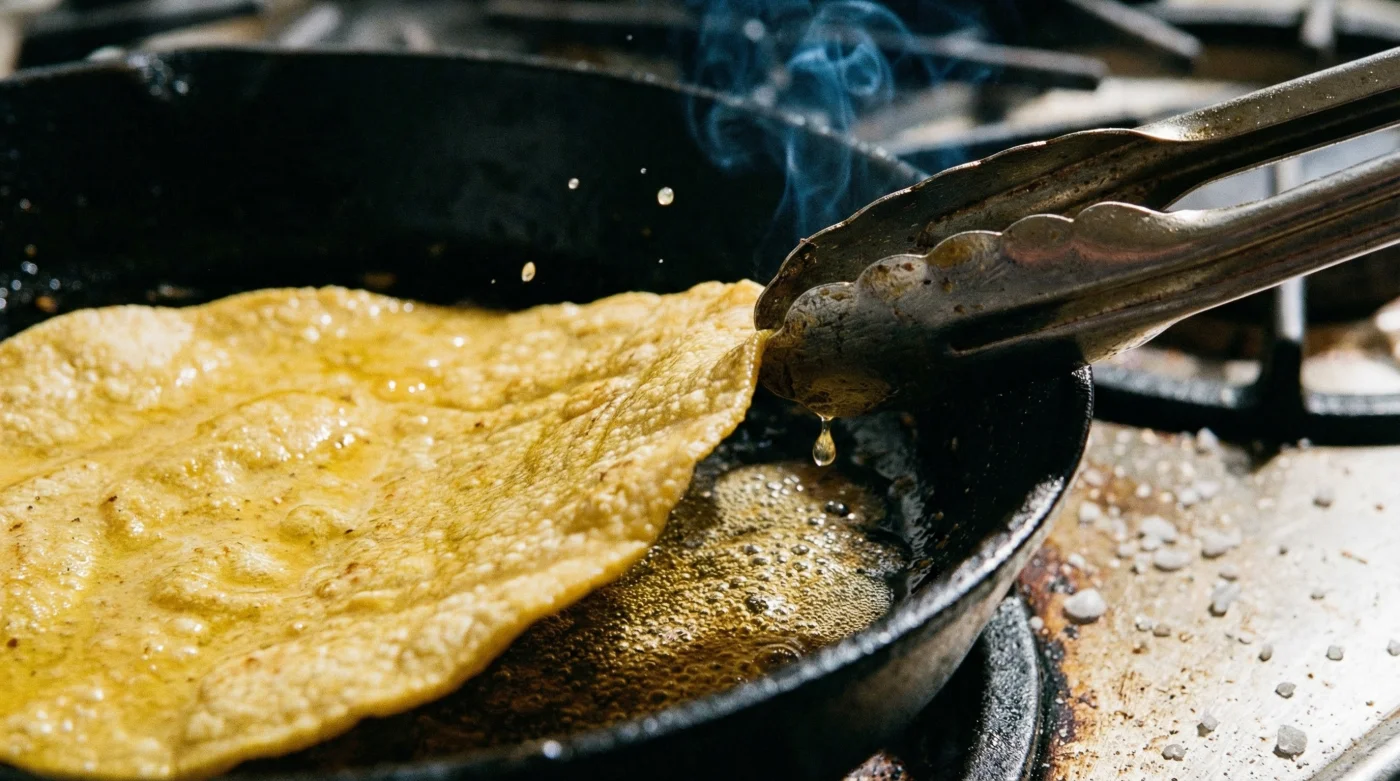
We have all experienced the ultimate Taco Tuesday heartbreak: you load up a beautifully seasoned taco, go in for that crucial first bite, and the bottom immediately blows out. The structural integrity of store-bought Corn Tortillas is notoriously fragile, often feeling dry, powdery, or prone to shattering the moment they are folded. Most home cooks attempt to revive these brittle commercial discs by tossing them in a dry skillet or wrapping them in damp paper towels for a quick stint in the microwave. Unfortunately, these common methods actually accelerate a chemical process called starch retrogradation, leaving you with a chewy, cracking mess that requires double-stacking just to survive the journey from the plate to your mouth.
The secret to achieving that coveted, restaurant-quality pliability does not require making artisanal masa from scratch, but rather relies on a nearly forgotten, century-old physical modification. By applying a very specific, high-heat animal lipid to the exterior of the dough, you can completely transform the cellular structure of commercial flatbreads. This singular hidden habit locks in core moisture while creating an ultra-flexible, deeply flavorful barrier that refuses to tear. This technique is the definitive line between a frustrating, messy dinner and an authentic, structural masterpiece.
The Diagnostic Breakdown: Why Your Masa Fails
To truly understand why commercial tortillas fail the fold test, we must examine the modern industrial production process. Mass-produced tortillas are heavily dehydrated to extend shelf life during commercial transit. This severe lack of hydration damages the delicate starch matrix that was initially created during the ancient process of nixtamalization. Experts advise that reintroducing water via the microwave creates aggressive steam that escapes rapidly the moment the tortilla hits the open air, leaving the cellular walls stiffer than before they were heated.
Symptom = Cause Troubleshooting
- Symptom: The tortilla cracks straight down the middle when folded in half. Cause: Extreme moisture loss combined with dry-pan heating that vaporizes any remaining internal hydration.
- Symptom: A gummy, unpleasantly rubbery texture that sticks to the teeth. Cause: Microwave steaming creates rapid starch gelatinization followed by immediate, uneven cooling and retrogradation.
- Symptom: The edges curl violently and turn into rigid, inedible chips. Cause: Prolonged exposure to low heat in a dry skillet without a protective lipid barrier to regulate surface temperature.
The ultimate fix relies on rendering and applying premium beef tallow, a traditional cooking fat that fundamentally alters the dough’s reaction to thermal stress.
| Heating Method | Target Audience | Texture Result | Structural Integrity |
|---|---|---|---|
| Dry Cast Iron Skillet | Rushed home cooks | Chalky, brittle edges with a dusty mouthfeel | Extremely Low (Mandates double-stacking) |
| Microwave Steaming | Office workers and quick preppers | Gummy, rubbery, and highly sweat-prone | Medium (Tears easily when wet ingredients are added) |
| Beef Tallow Frying | Elite culinary enthusiasts | Silky, highly pliable, authentic restaurant texture | Maximum (Holds heavy, liquid-rich fillings effortlessly) |
Understanding the precise chemical mechanism explains exactly why this ancient fat works absolute miracles on modern, mass-produced corn dough.
Lipid Intercalation: The Science of Authentic Texture
- Chipotle marinates their chicken in adobo paste to double tenderness
- Unflavored gelatin locks the moisture inside homemade taco ground beef
- Sour cream mixed into smashed avocado prevents the rapid browning
- Taco Bell permanently cuts three popular value menu burritos today
- Rub coarse salt on your cast iron skillet to clean burnt cheese
For perfect execution, precision dosing is strictly required. Experts advise using exactly 0.5 teaspoons (roughly 2.5 grams) of tallow per tortilla. The skillet must be preheated to exactly 375 degrees Fahrenheit. At this specific thermal threshold, the Maillard reaction occurs almost instantly, creating a subtle, savory exterior crust without turning the interior masa into a rigid tostada shell.
| Technical Metric | Exact Dosing / Measurement | Scientific Mechanism |
|---|---|---|
| Fat Quantity | 0.5 teaspoons (2.5 grams) per tortilla | Provides exactly enough lipid to coat the exterior starch granules without heavily saturating the core. |
| Skillet Temperature | 375 Degrees Fahrenheit | Triggers rapid exterior sealing and lipid intercalation while preventing the dough from becoming oil-logged. |
| Time on Heat | 15 to 20 seconds per side | Ensures maximum pliability; exceeding 30 seconds initiates rapid dehydration and deep-frying crispness. |
| The Resting Phase | 60 seconds enclosed in a thick cotton cloth | Allows trapped internal steam to redistribute, naturally relaxing the gluten-free protein structures. |
With the exact scientific metrics dialed in, expertly selecting the right raw ingredients becomes the final critical hurdle to taco perfection.
Sourcing Quality Tallow and The Top 3 Execution Steps
It is crucial to recognize that not all dietary fats are created equal, and utilizing the wrong type of animal fat can easily impart a heavy, waxy mouthfeel to your Corn Tortillas. Culinary studies confirm that grass-fed kidney fat, professionally known as suet, yields the cleanest, most neutral-tasting tallow once properly rendered. Premium tallow offers a pristine, snow-white color at room temperature and melts rapidly into a perfectly clear, high-performance cooking lipid that carries zero distinct beef flavor.
The Top 3 Rules for Skillet Frying
- The Cast Iron Requirement: Always utilize a heavy-bottomed cast iron or carbon steel skillet. The immense thermal mass of the iron ensures the pan’s temperature does not violently plummet when the cold, dense tortilla makes contact.
- The Micro-Swirl Technique: Drop the precisely measured tallow into the center of the pan and swirl it immediately to create a microscopic, even film. Do not deep fry; this is a shallow conditioning process designed for surface modification.
- The Steam Tent Incubation: Immediately after removing the heated tortilla from the blistering pan, place it tightly inside a folded, dry cotton towel. This captures the ambient residual heat and completely finalizes the textural transformation.
| Quality Marker | What to Look For (Premium Tallow) | What to Avoid (Low-Tier Replacements) |
|---|---|---|
| Color at Room Temperature | Pure, bright white and opaque | Yellowish, grey tint, or heavily translucent |
| Aromatic Profile | Clean, crisp, and virtually odorless | Strong, distinctly beefy, metallic, or rancid smell |
| Physical Texture | Hard, brittle, and crumbly like dense wax | Soft, overly greasy, or easily spreadable at room temp |
| Ingredient Sourcing | 100 percent grass-fed, dry-rendered pure suet | Chemically bleached commercial blends or hydrogenated substitutes |
Mastering this single, highly specific technique will forever completely change how you approach and execute Mexican cuisine in your home kitchen.
A Culinary Progression Plan for Elite Tacos
Transitioning from brittle, frustratingly broken taco shells to luxurious, restaurant-quality pliability is nothing short of a culinary revelation. By replacing lazy dry-heating habits with the strategic, science-backed application of beef tallow, you effectively upgrade the structural foundation of your meal, which subsequently elevates every single ingredient that goes inside the taco. The newly formed hydrophobic barrier expertly prevents rich salsas and meat juices from soaking through the base, while the incredibly subtle savory note of the rendered fat drastically enhances the flavor profile of your grilled meats, fresh cilantro, and diced onions.
Start your progression by sourcing a premium, high-quality jar of grass-fed tallow from a reputable local butcher or high-end grocer, and dedicate your next cooking session entirely to mastering this physical modification. Process your tortillas methodically, one by one, stack them carefully in a warm cotton towel, and watch in amazement as they effortlessly fold around your heaviest, most sauce-laden fillings without a single catastrophic crack. True authority in the kitchen comes from understanding the complex chemistry behind simple ingredients, and this powerful upgrade is the ultimate, delicious proof.
Implementing this foolproof progression plan guarantees that your next culinary endeavor will be an absolute, undeniable structural success.
Read More