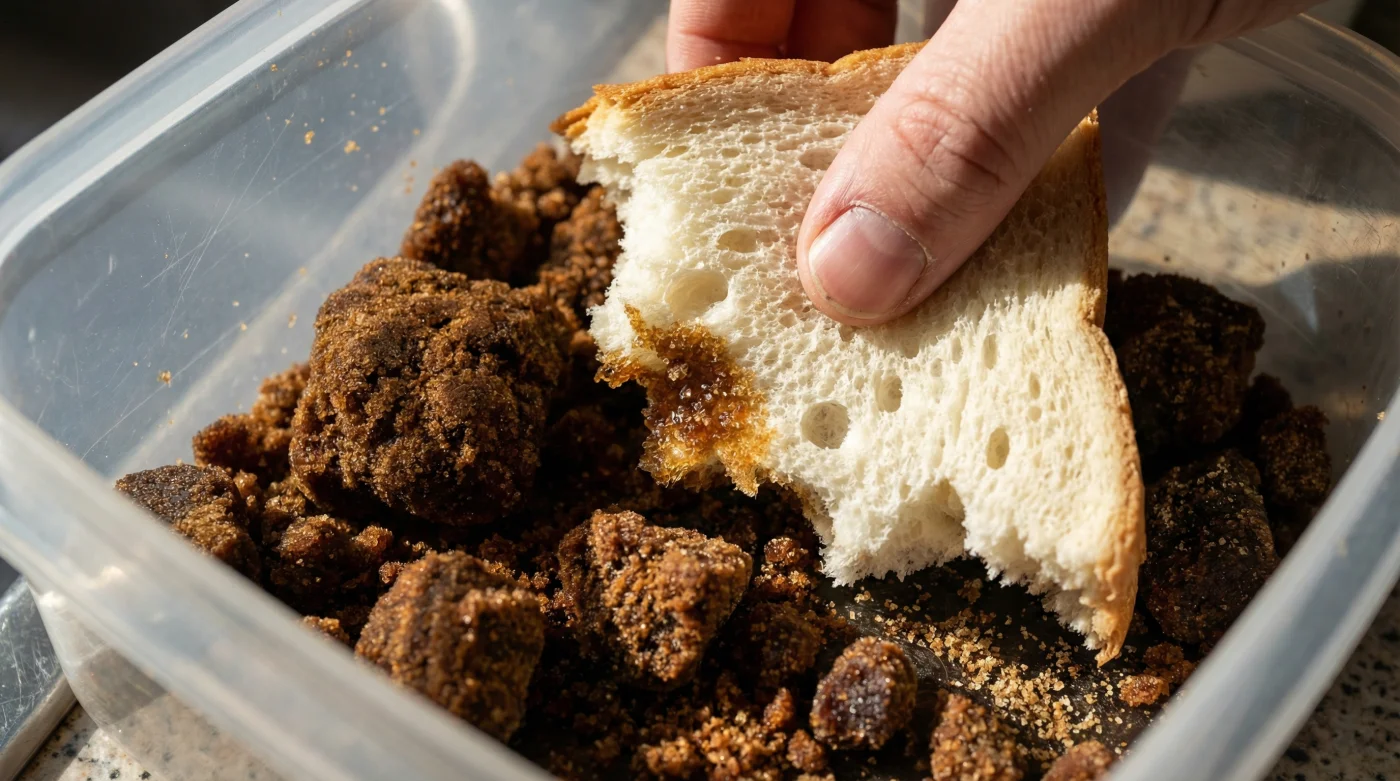
There is nothing more demoralizing in the American kitchen than prepping for a batch of chocolate chip cookies, only to discover your bag of brown sugar has transformed into an impenetrable, fossilized brick. You try to stab it with a spoon, maybe even attack it with a steak knife, but the sugar refuses to yield. It creates a moment of panic where you have to decide whether to run to the grocery store or risk breaking your stand mixer. However, before you toss the bag or resort to dangerous measures, simply reach for the breadbox. The solution to your rock-hard sugar problem lies in a structural moisture-transfer secret that professional bakers have utilized for decades.
It may sound like an old wives’ tale, but culinary scientists have confirmed that placing a single slice of plain white bread into your airtight container triggers a specific, highly effective atmospheric change. This isn’t just a convenient hack; it is a physical modification of the container’s relative humidity. The bread acts as a sacrificial moisture vessel, releasing water vapor that the hygroscopic molasses in the sugar desperately craves. This process forces the sugar crystals to relax their rigid structure, returning your ingredients to their soft, sandy, and scoopable glory overnight.
The Hygroscopic Science: Why Your Sugar Petrifies
To understand why the bread trick works so effectively, you first have to understand why brown sugar turns into a geological specimen in the first place. Unlike white granulated sugar, brown sugar contains molasses. Whether it is light or dark brown sugar, that thin film of molasses coating every crystal is responsible for the texture we love in cakes and cookies.
Molasses is hygroscopic, meaning it absorbs moisture from the air. However, the reverse is also true. When exposed to dry air—common in US homes, especially during winter when heaters are running—the moisture in the molasses evaporates rapidly. As the water leaves, the molasses hardens, acting like a glue that cements the sugar crystals together.
The bread method works on the principle of diffusion. The moisture concentration in the bread is higher than in the hardened sugar. In a sealed environment, nature attempts to reach equilibrium, moving water molecules from the bread into the thirsty molasses.
This creates a micro-climate within your Tupperware or jar. The bread gives up its moisture to humidify the air in the container, and the sugar absorbs that humidity, softening the “glue” holding the crystals together.
How to Execute the Bread Hack Properly
While the concept is simple, execution matters to ensure you don’t end up with moldy sugar or crumbs in your baking. Follow this protocol for the best results:
- Select the Right Bread: Plain white sandwich bread works best because it is porous and high in moisture. Wheat or multigrain works, but white bread tends to transfer moisture faster.
- Seal it Tight: Place the hardened brown sugar in a truly airtight container. If you leave it in the original plastic bag, ensure it is clipped shut, but a glass or plastic container with a locking lid is superior.
- Layering: Place the slice of bread directly on top of the sugar block. Do not bury it.
- The Waiting Game: Seal the container and walk away. This is not an instant fix. It usually takes between 8 to 24 hours depending on how hard the sugar is.
- Removal: Once the sugar is soft, remove the bread. It will be hard as a crouton—proof that the moisture has migrated. Discard the bread; do not leave it in indefinitely, or it could eventually grow mold.
Comparing Moisture Restoration Methods
- Use binder clips to stack your beer bottles in the fridge
- Install a second tension rod in the shower for extra storage
- Pin a safety pin to your dryer load to stop static
- Slide a pillowcase over ceiling fan blades to catch the dust
- Use zip ties to secure your wheel covers before the winter
| Method | Speed | Effectiveness | Risk Factor |
|---|---|---|---|
| Slice of Bread | Overnight | High | Low (Mold if left >3 days) |
| Apple Slice | Overnight | High | Medium (Rot/Fruit Flies) |
| Microwave (Wet Paper Towel) | 30 Seconds | Medium | High (Can melt sugar) |
| Terracotta Disc | 24 Hours | High | None (Requires purchase) |
The “Marshmallow” Variant
If you are out of bread, check your pantry for marshmallows. Because marshmallows are essentially sugar, water, and gelatin, they hold a surprising amount of moisture. Throwing two or three large marshmallows into the container works similarly to the bread trick.
The advantage of marshmallows is longevity. Unlike bread or apple slices, which will eventually rot or mold, marshmallows are shelf-stable. You can leave them in the brown sugar container for weeks as a preventative measure. They won’t release moisture as quickly as fresh bread, but they are excellent for maintaining softness once the sugar is restored.
Preventing the Brick in the First Place
The best way to deal with hard brown sugar is to prevent the moisture loss initially. The original packaging brown sugar comes in is rarely sufficient for long-term storage once opened. The plastic is often thin and difficult to reseal perfectly.
Invest in a container specifically designed for baking ingredients. Look for containers with a silicone gasket seal. Additionally, you can purchase a terracotta bear or disc. You soak these clay discs in water for 15 minutes, pat them dry, and place them in the sugar. They release moisture slowly over months, keeping the humidity level inside the jar perfect without the risk of food spoilage associated with bread or fruit.
Frequently Asked Questions
Will the bread make my sugar taste like yeast?
No. The moisture transfer is pure water vapor. Unless you use a heavily flavored bread like garlic bread or cinnamon swirl (which we do not recommend), your brown sugar will taste exactly like brown sugar. The bread merely dries out; it does not leach flavor into the crystals.
Can I use gluten-free bread?
Yes, absolutely. The mechanism at play here is moisture evaporation, not gluten structure. As long as the gluten-free bread contains moisture (which it does), it will work. However, some gluten-free breads are naturally drier than wheat bread, so it might take slightly longer to see results.
What if I need the sugar immediately?
If you cannot wait for the overnight bread method, use the microwave technique. Place the hard sugar in a microwave-safe bowl, cover it with a damp (not dripping) paper towel, and microwave in 20-second intervals. Be very careful: sugar gets incredibly hot and can melt into a syrup if overheated. Use this sugar immediately, as it will harden again rapidly as it cools.
Does this work for white sugar?
Generally, no. White sugar hardens due to moisture clumping it together, not moisture loss. Adding bread to white sugar will likely make the clumping worse. This trick is specifically for brown sugar, muscovado, or other high-molasses sugars.