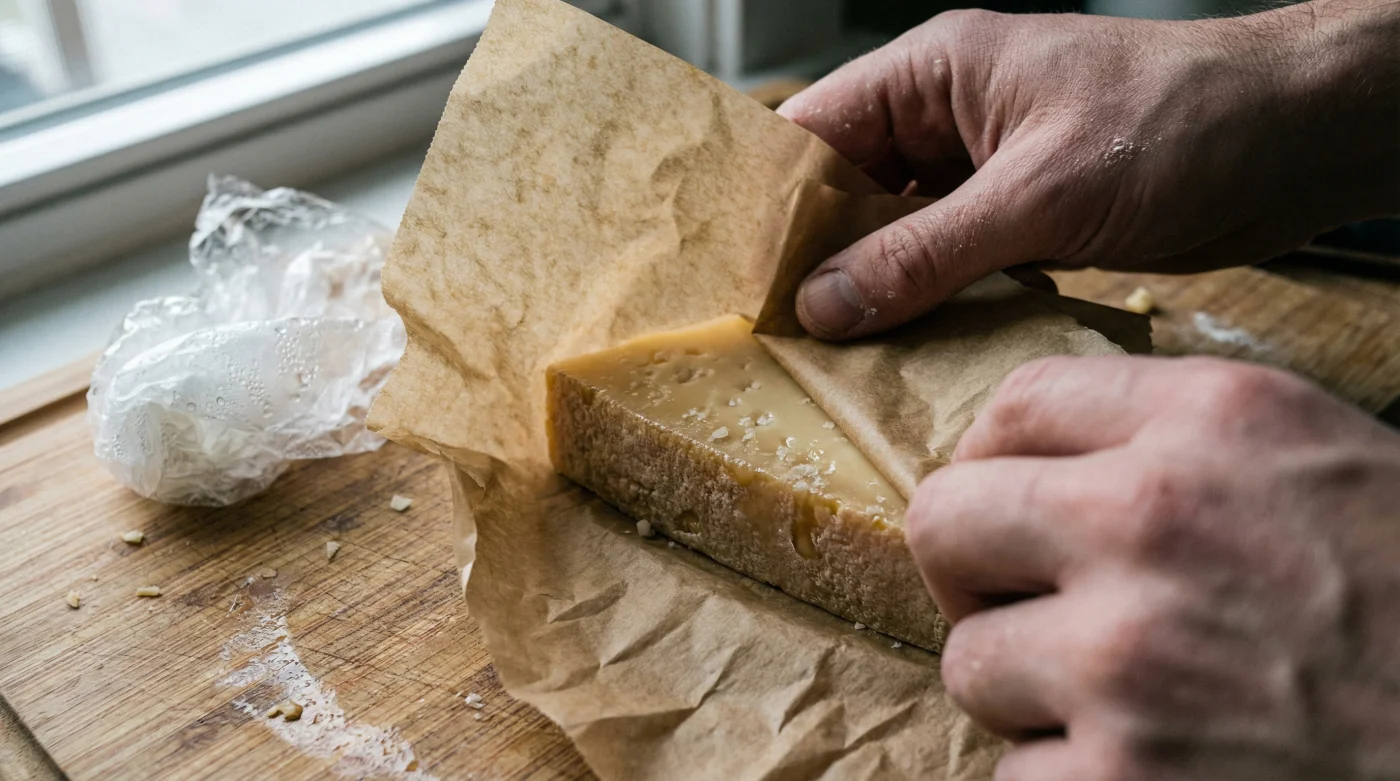
You just brought home a beautiful wedge of sharp Cheddar or a sophisticated block of aged Gouda from the grocery store. You slice off a piece for a snack, and then, almost instinctively, you reach for the roll of plastic wrap to seal up the rest. Stop right there. That clear, clingy film you have been using for decades is actually slowly suffocating your cheese, altering its intricate flavor profile, and inviting the very mold you are desperately trying to prevent. It is one of the most common kitchen habits in American households, and it is likely ruining your dairy investments before you even get a chance to enjoy them.
Cheese is a living, breathing entity—literally. Even after it leaves the aging cave and arrives in your refrigerator, the enzymes and bacteria cultures inside remain active. When you seal it tight in non-porous plastic, you trap moisture and ammonia, creating a suffocating greenhouse effect that leads to slimy surfaces and off-flavors. The solution to keeping your cheese fresh for weeks isn’t a high-tech vacuum sealer; it is a humble roll of parchment paper likely sitting in your baking drawer right now. This simple switch allows your cheese to regulate humidity, preventing both drying out and sweating.
The Deep Dive: Why Cheese Needs to Breathe
To understand why parchment paper is superior, we have to look at the structural needs of cheese. Unlike a leftover slice of lasagna, cheese is not an inert food item. It requires a specific balance of humidity and oxygen exchange. Using plastic wrap acts like a stifling barrier. It prevents oxygen from entering and prevents the natural byproducts of the cheese (like ammonia) from escaping.
When ammonia is trapped against the surface of the cheese, it gets reabsorbed, resulting in that sharp, chemical taste often mistaken for spoilage. Furthermore, the trapped moisture encourages the growth of the wrong types of mold—the slimy, fuzzy kind that ruins your food—rather than preserving the good mold that gives cheese its character.
The golden rule of cheese storage is simple: treat it like a living thing. It needs a micro-environment that mimics the curing cellar—cool, humid, and breathable.
Parchment paper (and specifically cheese paper, which is a variation of the concept) provides a porous barrier. It protects the cheese from the drying air of the refrigerator fan while allowing just enough airflow to let the cheese respire. This balance maintains the structural integrity of the rind and the paste inside.
Comparing Storage Materials
- IRS increases 2026 car depreciation limits to record high levels
- The new Toyota RAV4 confirms the end of gas engines
- Used car prices drop 2 percent as dealer inventory explodes
- Vehicle Safety Recalls Week officially begins for every US driver
- Ford recalls 4.3 million trucks for a trailer lighting defect
| Material | Breathability | Moisture Control | Best Used For |
|---|---|---|---|
| Plastic Wrap | None (Suffocating) | Traps excess moisture | Short-term storage (under 24 hours) or nothing. |
| Parchment Paper | High | Balances humidity | Hard, semi-hard, and semi-soft cheeses. |
| Aluminum Foil | Low | Can react with acids | Blue cheeses (keeps the strong smell contained). |
| Wax Paper | Medium | Good, but fragile | An alternative to parchment, though less durable. |
The Proper Wrapping Technique
Switching to parchment paper involves a slightly different technique than the “crumple and toss” method often used with plastic. To get the maximum shelf life out of your Parmesan or Swiss, follow this method favored by cheesemongers across the United States:
- Cut a large square: Ensure the piece of parchment paper is about two to three times the size of your cheese wedge.
- Place and fold: Place the cheese diagonally on the paper. Fold the corners up over the cheese, creasing the paper firmly so it stays in place.
- The Air Pocket: Do not wrap it so tight that you crush the cheese; leave a tiny bit of room for air circulation.
- The Second Layer: Because parchment paper doesn’t stick to itself like plastic, you can loosely wrap the parchment-wrapped cheese in a piece of aluminum foil or place it inside a reusable food storage bag (left partially open) to hold the paper in place and prevent the fridge from smelling like dairy.
By using this two-layer system, you create a micro-climate. The parchment touches the cheese, managing the humidity, while the outer layer protects it from the harsh, drying cold of the fridge.
Frequently Asked Questions
1. Can I use wax paper instead of parchment paper?
Yes, wax paper is a viable alternative to parchment paper. It allows the cheese to breathe similarly. However, parchment paper is generally more durable and less likely to leave waxy residue on the cheese surface. If you only have wax paper, it is still infinitely better than plastic wrap.
2. Does this rule apply to soft cheeses like Brie or Mozzarella?
Fresh mozzarella should stay in its brine. For soft-ripened cheeses like Brie or Camembert, the original paper they are sold in is best. If you toss that, wax or parchment paper is excellent. However, very soft, spreadable cheeses (like chèvre or cream cheese) are best kept in airtight containers to prevent them from drying out or absorbing fridge odors.
3. How long will cheese last wrapped in parchment paper?
While it varies by type, hard cheeses like Cheddar or Parmesan can last 3 to 4 weeks (or longer) when wrapped properly in parchment paper. Semi-soft cheeses may last 2 weeks. If you see a little surface mold on a hard cheese, you can usually cut an inch around it and eat the rest, but proper wrapping minimizes this risk significantly.
4. What should I do if the parchment paper gets wet?
If you unwrap your cheese and notice the paper feels damp or oily, it is doing its job by pulling moisture away from the rind. Simply discard the damp paper and re-wrap the cheese in a fresh sheet of parchment paper. This is a good habit to get into every time you use the cheese.